

 E-Paper


Tracking Harappans in Haryana
1 / 11

 View Photos in a new improved layout
Updated on May 17, 2015 12:31 pm IST
Rakhigarhi village in Hisar district is situated on the dry bed of River Saraswati. (Saumya Khandelwal/ HT Photo)
2 / 11
 View Photos in a new improved layout
Updated on May 17, 2015 12:31 pm IST
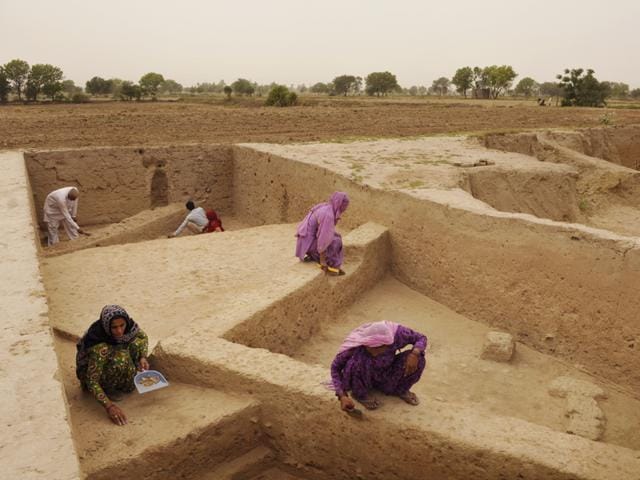
Mound 6 in this village is the site of a complex structure of a Harappan home. (Saumya Khandelwal/ HT Photo)
3 / 11
 View Photos in a new improved layout
Updated on May 17, 2015 12:31 pm IST
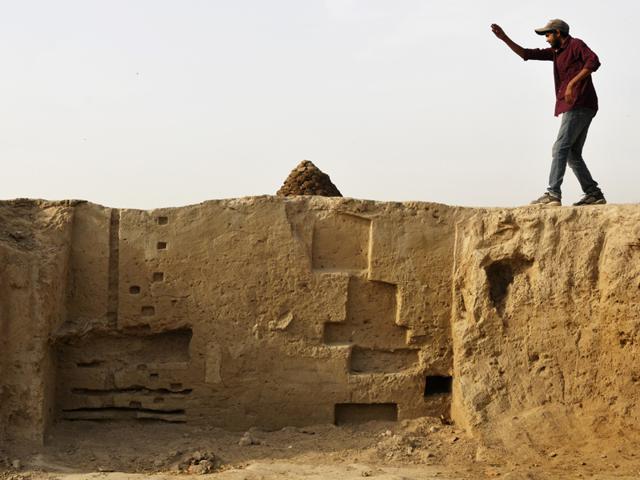
Excavations revealed the outer wall of a Harappan house. (Saumya Khandelwal/ HT Photo)
4 / 11
 View Photos in a new improved layout
Updated on May 17, 2015 12:31 pm IST
A toy animal made of clay found in the excavation. (Saumya Khandelwal/ HT Photo)
5 / 11
 View Photos in a new improved layout
Updated on May 17, 2015 12:31 pm IST
An ancient business seal bearing the pattern of a tiger is among the antiquities found in the excavation. (Saumya Khandelwal/ HT Photo)
6 / 11
 View Photos in a new improved layout
Updated on May 17, 2015 12:31 pm IST
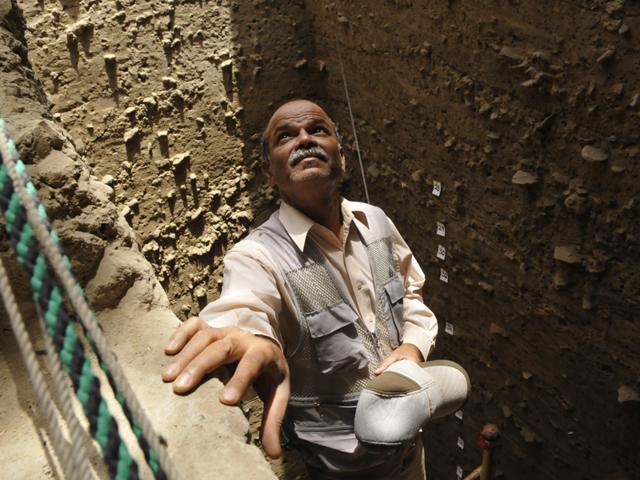
Prof Vasant S Shinde, Vice Chancellor of Deccan College and head archaeologist for the excavations inspects Mound #4. (Saumya Khandelwal/ HT Photo)
7 / 11
 View Photos in a new improved layout
Updated on May 17, 2015 12:31 pm IST
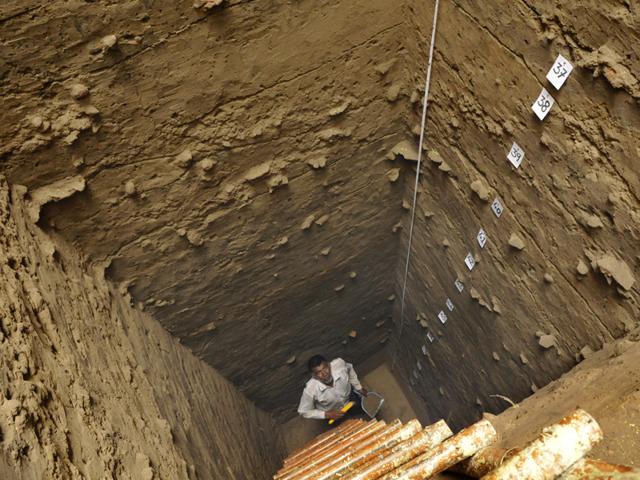
Mound #4 dug up to the natural level of earth, at 22 metres, reveals the various stages of Harappan culture. (Saumya Khandelwal/ HT Photo)
8 / 11
 View Photos in a new improved layout
Updated on May 17, 2015 12:31 pm IST
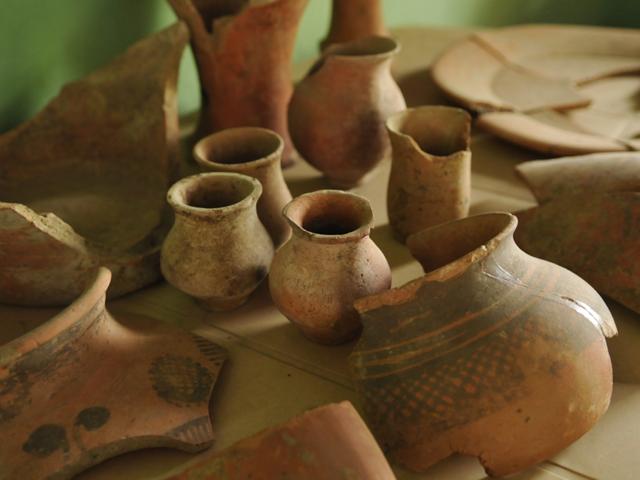
Painted Harappan pottery found during the excavation. (Saumya Khandelwal/ HT Photo)
9 / 11
 View Photos in a new improved layout
Updated on May 17, 2015 12:31 pm IST
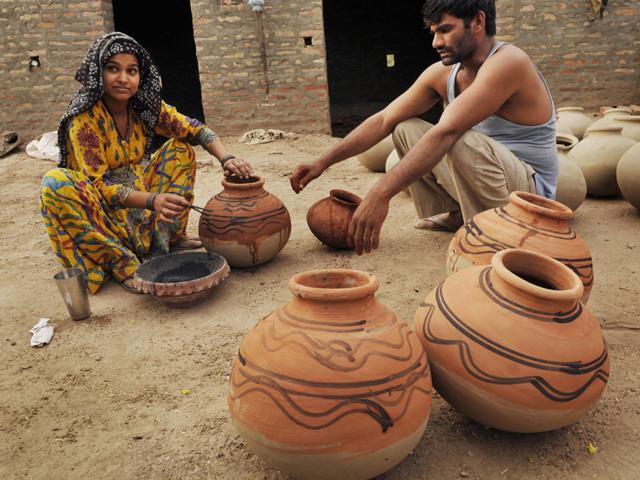
Modern-day pottery in Rakhigarhi bear resemblance to the ones found in excavation. (Saumya Khandelwal/ HT Photo)
10 / 11
 View Photos in a new improved layout
Updated on May 17, 2015 12:31 pm IST
This wall in Rakhigarhi, Hisar district created naturally over the years shows the different stages of Harappan culture. (Saumya Khandelwal/ HT Photo)
11 / 11
 View Photos in a new improved layout
Updated on May 17, 2015 12:31 pm IST