
 E-Paper



Photos: 50th anniversary of independent Bangladesh
Bangladesh is celebrating fifty years of independence on March 26, 2021. On the night of March 25, 1971, Pakistan's military launched a violent crackdown on the city of Dhaka, then part of East Pakistan, to quell a rising nationalist movement seeking independence for what is today known as Bangladesh. Soldiers stormed the dormitories of students and teachers at Dhaka University, dragging them out and blindfolding them before killing them. Elsewhere in the city, soldiers attacked a police barracks and shot civilians on the streets. Just hours later amid the violence and chaos — early on March 26 — the Bengali nationalist politician Sheikh Mujibur Rahman declared independence for Bangladesh, sparking a nine-month war.
Published on: Mar 26, 2021 4:00 PM IST


Share via


Copy link

1/8
 View Photos in a new improved layout
Published on Mar 26, 2021 4:00 PM
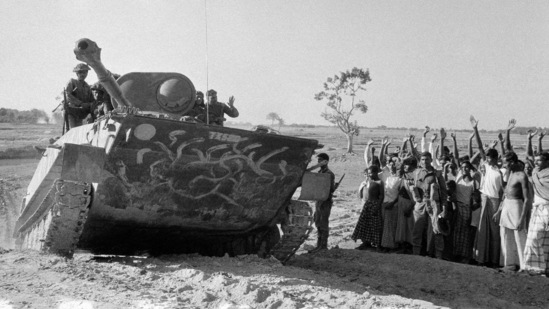
East Pakistani villagers cheer at an advancing Indian army tank, as it moves towards Bogra, East Pakistan, on December 14, 1971. It was 50 years ago on the night of March 25, 1971, that Pakistan's military launched a violent crackdown on the city of Dhaka, then part of East Pakistan, to quell a rising nationalist movement seeking independence for what is today known as Bangladesh. (AP)
2/8
 View Photos in a new improved layout
Published on Mar 26, 2021 4:00 PM
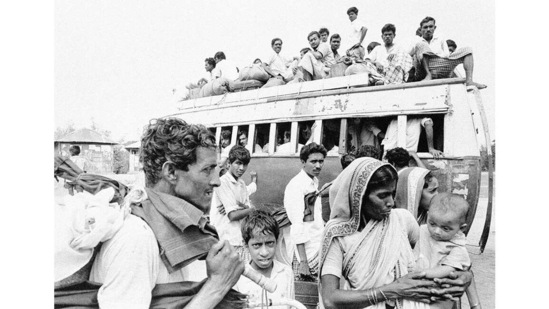
A bus fully laden with refugees prepares to leave as more of them wait for transport in a suburb of Dacca, on April 11, 1971. (Michel Laurent / AP)
3/8
 View Photos in a new improved layout
Published on Mar 26, 2021 4:00 PM
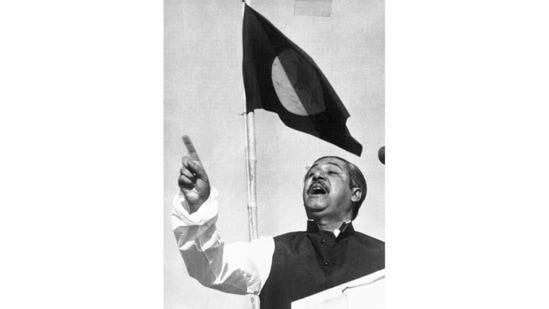
East Pakistan's Awami League party leader Sheikh Mujibur Rahman, addresses a mass gathering beneath the flag proposed for a new country, on March 7, 1971. At the time this photo was taken, the government in the Bengali speaking Eastern province of Pakistan was running on an informal basis under Rahman's leadership. (AP)
4/8
 View Photos in a new improved layout
Published on Mar 26, 2021 4:00 PM
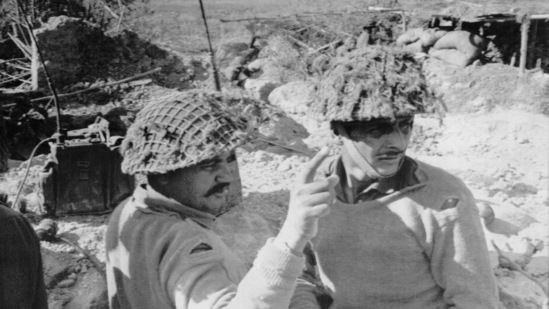
Indian army’s forward artillery observers direct fire in East Pakistan, on December 7, 1971. The fight for independence can be traced back Britain's colonial rule of the Indian subcontinent and the new nations that were carved out after its end in 1947. There was India and Pakistan, the latter split into West Pakistan and East Pakistan. (AP)
5/8
 View Photos in a new improved layout
Published on Mar 26, 2021 4:00 PM
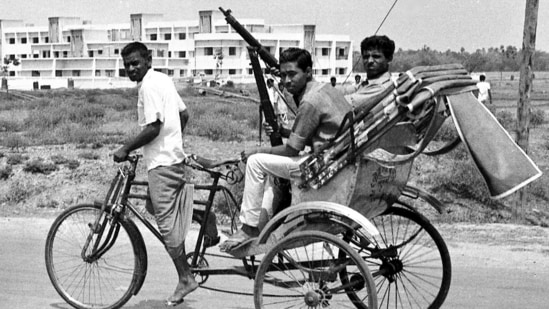
Armed East Pakistan fighters head for the battlefront by pedicab, in Jessore, East Pakistan, on April 2, 1971. While most in West Pakistan and East Pakistan shared a common religion — Islam — there were key differences, including language, with Bengali being widely spoken in East Pakistan and Urdu in West Pakistan. That became a point of tension in East Pakistan as the West's Urdu-speaking elite rose to power. (AP)
6/8
 View Photos in a new improved layout
Published on Mar 26, 2021 4:00 PM
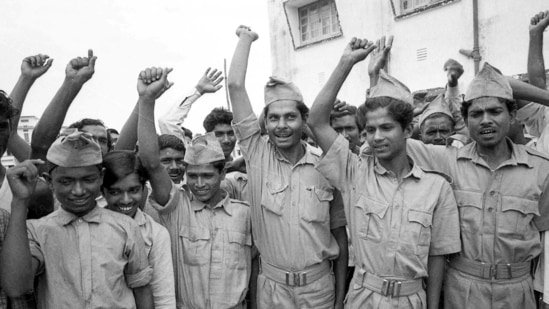
Bengali nationalist leader Sheikh Mujibur Rahman’s Bengali Liberation Army troops chant 'Joy Bangla' slogans in Kushtia, East Pakistan, on April 8, 1971. For years, hostilities and strikes dominated East Pakistan as calls for independence grew louder. A watershed moment occurred in 1970, when Rahman's Awami League swept the polls in a national election. (Michel Laurent / AP)
7/8
 View Photos in a new improved layout
Published on Mar 26, 2021 4:00 PM
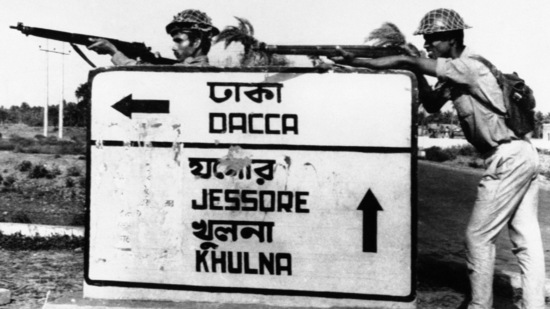
Indian troops stand guard at a road crossing to Dacca after capturing Jessore town, in East Pakistan, on December 8, 1971. The military rejected the results of 1970 national polls, leading to a civil disobedience movement and more calls for independence.
8/8
 View Photos in a new improved layout
Published on Mar 26, 2021 4:00 PM


