
 E-Paper



Photos: The Chinese take to the streets over country’s 'zero COVID' strategy
Beijing and Shanghai witnessed public outrage against the state yesterday and today, with the public shouting slogans such as "Xi Jinping, step down! CCP, step down!" in a rare display of public opposition to the Chinese Communist Party's top leadership. A deadly fire in Urumqi on Thursday sparked new public outrage, with many blaming lengthy Covid lockdowns for impeding rescue efforts, despite authorities' denial. Amid widespread anger and protests among people in China against the Zero-Covid policy to contain the pandemic, authorities on Monday eased anti-virus rules in scattered areas. However, officials continue to stand by the Zero-Covid policy as they refused to make any comment on the mounting protests and the criticism of President Xi Jinping, a report by news agency Associated Press said.
Published on: Nov 28, 2022 6:24 PM IST


Share via


Copy link

1/8
 View Photos in a new improved layout
Published on Nov 28, 2022 6:24 PM
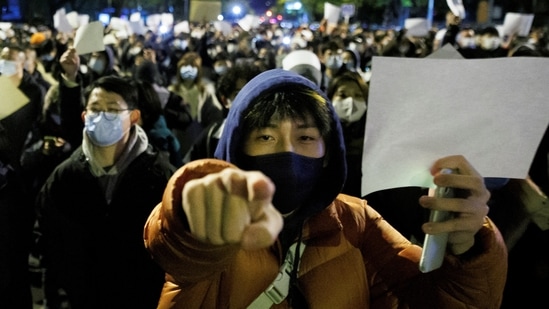
Protesters demonstrate over the coronavirus disease (Covid-19) restrictions, in Beijing, on November 27. Most protesters focused their anger on restrictions that can confine families to their homes for months. Some complained the system is failing to respond to their needs. (Thomas Peter / REUTERS)
2/8
 View Photos in a new improved layout
Published on Nov 28, 2022 6:24 PM
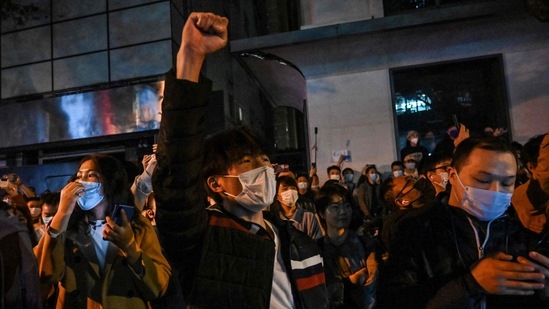
Demonstrators raise slogans on a street in Shanghai on November 27. There were cries heard for the resignation of Xi and the end of the Communist Party that has ruled China for 73 years, which could be deemed as sedition, and is punishable by prison. (Hector Retamal / AFP)
3/8
 View Photos in a new improved layout
Published on Nov 28, 2022 6:24 PM
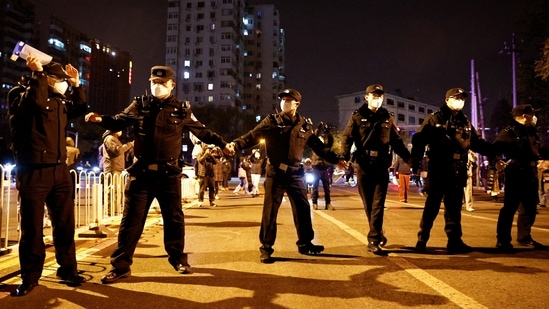
Police personnel stand guard during a protest over the Covid-19 restrictions, in Beijing, on November 27. In response to the protesters, police in Shanghai used pepper spray to drive away demonstrators. China’s vast internal security apparatus is also famed for identifying people it considers troublemakers and picking them up later when few are watching, AP reported. (Thomas Peter / REUTERS)
4/8
 View Photos in a new improved layout
Published on Nov 28, 2022 6:24 PM
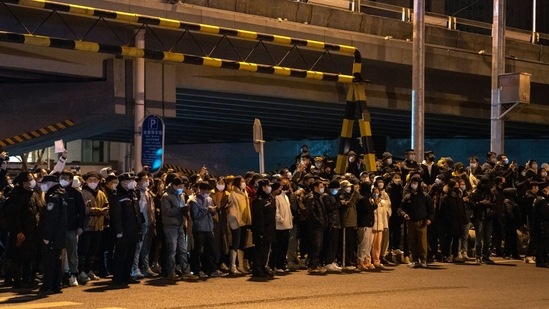
Onlookers stand by the road during the protest in Beijing, on November 28. The normally supportive head of the World Health Organization has called “Zero COVID” unsustainable. Beijing dismissed his remarks as irresponsible, but public acceptance of the restrictions has worn thin, AP reported. (Bloomberg)
5/8
 View Photos in a new improved layout
Published on Nov 28, 2022 6:24 PM
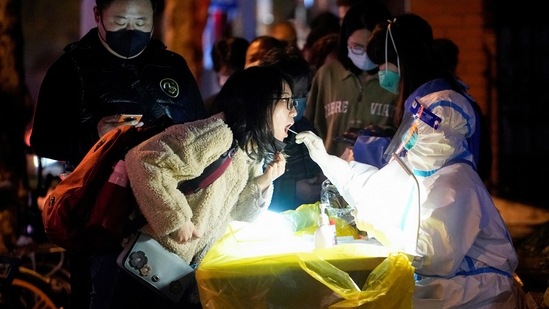
A woman gets tested at a nucleic acid testing site, in Shanghai, on November 28. China's stringent measures were originally accepted for minimizing deaths while other countries suffered devastating waves of infections, but that consensus has begun to fray in recent weeks. (Aly Song / REUTERS)
6/8
 View Photos in a new improved layout
Published on Nov 28, 2022 6:24 PM
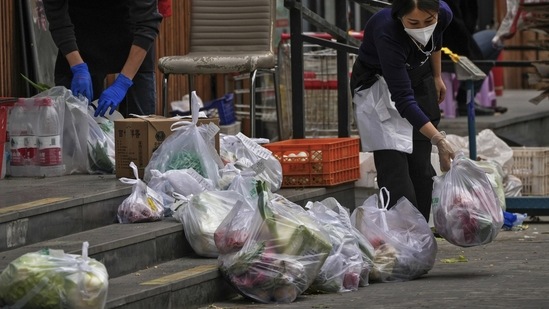
Workers wearing face masks prepare their customer's online order groceries outside a supermarket in Beijing, on November 28. Xi's unelected government doesn't seem too concerned with the hardships brought by the policy. This spring, millions of Shanghai residents were placed under a strict lockdown that resulted in food shortages, restricted access to medical care and economic pain. (Andy Wong / AP)
7/8
 View Photos in a new improved layout
Published on Nov 28, 2022 6:24 PM
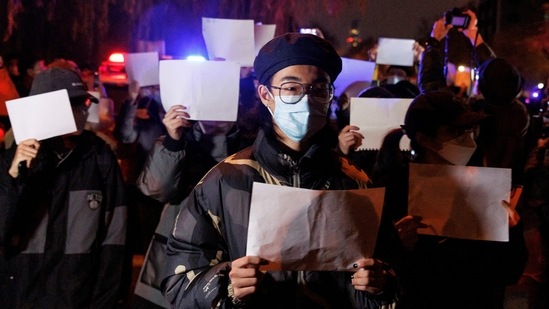
People hold white sheets of paper in protest over the Covid-19 restrictions, in Beijing, on November 27. The protests across China erupted aftera fire on November 24 that killed at least 10 people in an apartment building in the city of Urumqi, where some residents were locked in their homes for four months. That prompted an outpouring of angry questions online about whether firefighters or people trying to escape were blocked by locked doors or other pandemic restrictions. (Thomas Peter / REUTERS)
8/8
 View Photos in a new improved layout
Published on Nov 28, 2022 6:24 PM


