
 E-Paper



#puneinpixels: Election code of conduct kicks in, Pune cleans up
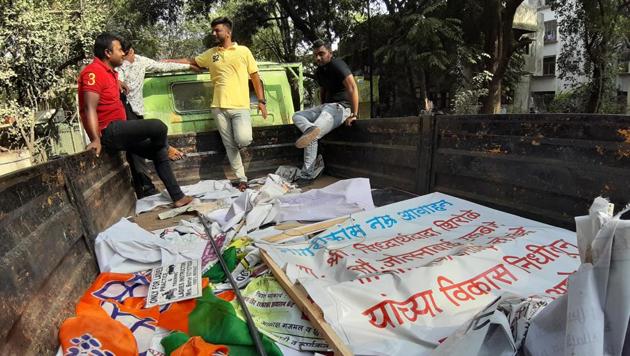
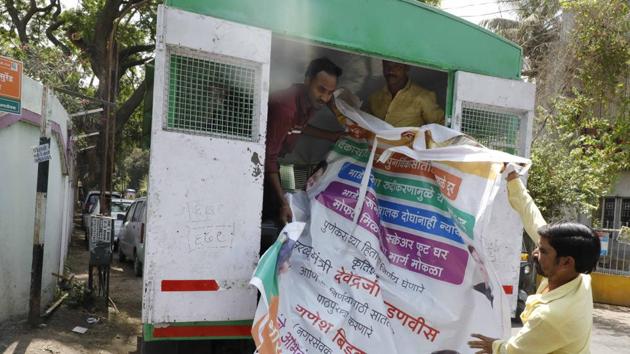
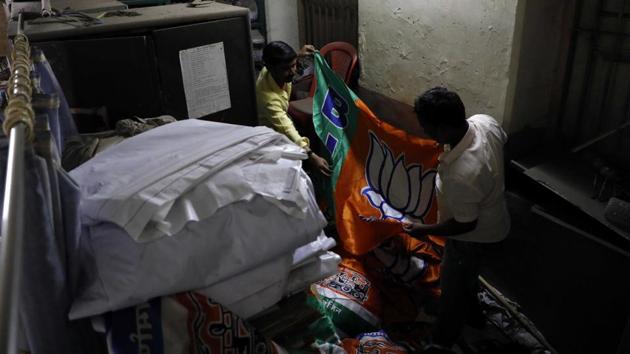
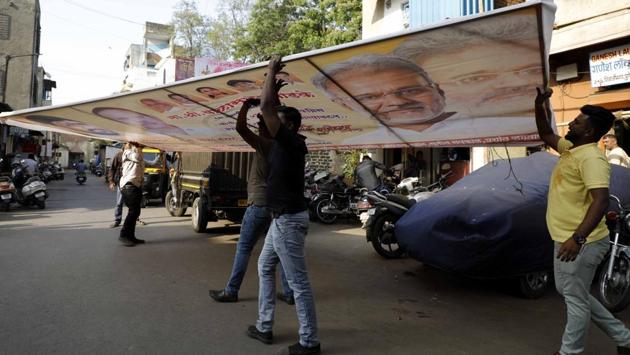
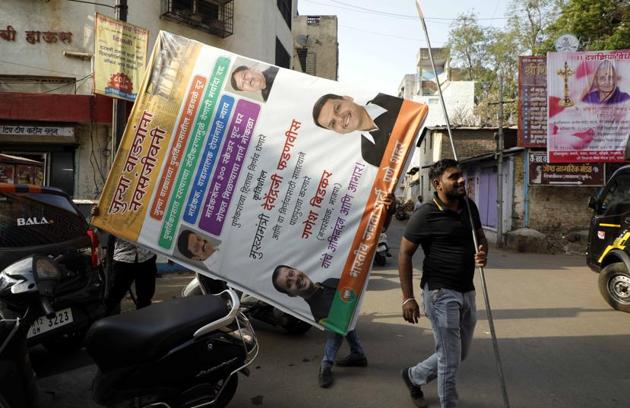
As model code of conduct comes in picture since the election are declared, Pune Municipal Corporation team get into action in removing posters and banners of different political parties across the city. (RAHUL RAUT/HT PHOTO)
Updated on: Mar 14, 2019 5:57 PM IST

Share via


Copy link

1/10
 View Photos in a new improved layout
Updated on Mar 14, 2019 5:57 PM
As model code of conduct comes in picture since the election are declared, Pune Municipal Corporation team get into action in removing posters and banners of different political parties across the city. (RAHUL RAUT/HT PHOTO)
2/10
 View Photos in a new improved layout
Updated on Mar 14, 2019 5:57 PM
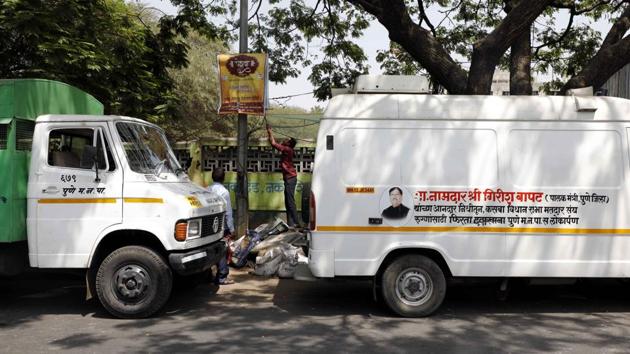
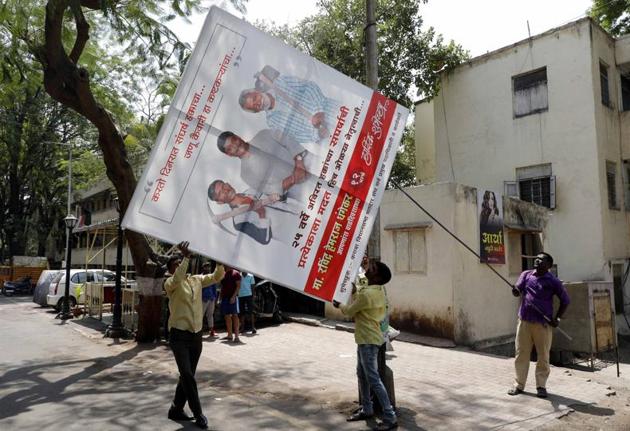
As per Pune Municipal Corporation’s (PMC) pedestrian policy, hoardings are not permitted on footpaths. It is also stipulated in the policy that minimum vertical clearance of 2.5 metres for walking should be maintained throughout the length and width of the footpath (RAHUL RAUT/HT PHOTO)
3/10
 View Photos in a new improved layout
Updated on Mar 14, 2019 5:57 PM
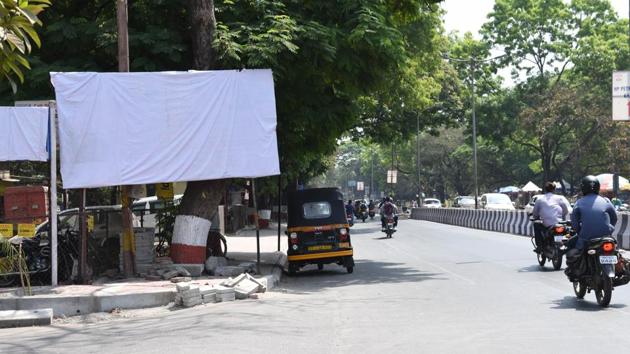
Pune, India -Wednesday,March,13,2019 in view of the announcement of the dates for elections to Lok Sabha, the political parties temporary covered existing sign boards and flex in various parts of the city.photo at Aundh -Khadki raod near HDFC khadki branch in Pune, India, on Wednesday,March, 13, 2019. (HT PHOTO)
4/10
 View Photos in a new improved layout
Updated on Mar 14, 2019 5:57 PM
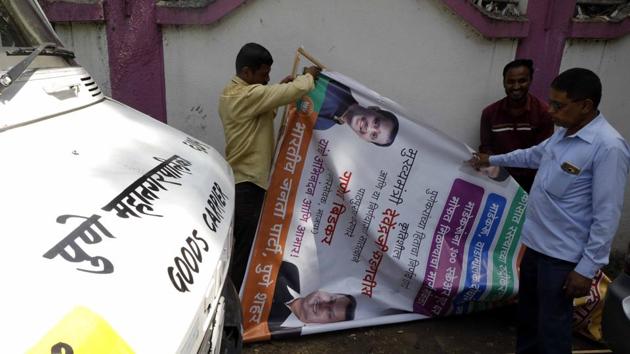
The model code is a set of norms laid down by the Election Commission of India, with the consensus of political parties. It spells out the dos and don’ts to be followed by political parties, candidates and polling agents during the election procedure. They are expected to observe these guidelines on the content of election manifestos, their speeches and processions and overall general conduct. (RAHUL RAUT/HT PHOTO)
5/10
 View Photos in a new improved layout
Updated on Mar 14, 2019 5:57 PM
It was introduced during the assembly elections in Kerala in 1960 as a small set of dos and don’ts. The EC circulated the code to all recognised parties during the simultaneous polls to the Lok Sabha and assemblies in several states in 1962 and the state governments were requested to secure the acceptance of the code by the parties. In 1967, the code was followed in the Lok Sabha and assembly elections. (RAHUL RAUT/HT PHOTO)
6/10
 View Photos in a new improved layout
Updated on Mar 14, 2019 5:57 PM
The code comes into force as soon as the EC announces the poll schedule and remains operational until the process is concluded, as provided in the notification. It is also applicable to a ‘caretaker’ government on the premature dissolution of a state assembly. (RAHUL RAUT/HT PHOTO)
7/10
 View Photos in a new improved layout
Updated on Mar 14, 2019 5:57 PM
The EC has devised several mechanisms to take note of the offences, which include joint task forces of enforcement agencies and flying squads. The introduction of the cVIGIL mobile app through which audio-visual evidence of malpractices can be reported is the latest step. (RAHUL RAUT/HT PHOTO)
8/10
 View Photos in a new improved layout
Updated on Mar 14, 2019 5:57 PM
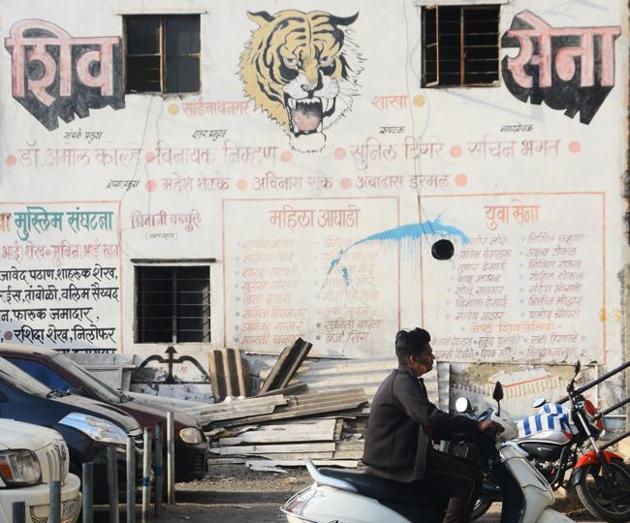
According to the EC, the code states that the party in power at the Centre and in the states should ensure that it does not use its official position for campaigning. Ministers and other government authorities cannot announce financial grants in any form. (SHANKAR NARAYAN/HT PHOTO)
9/10
 View Photos in a new improved layout
Updated on Mar 14, 2019 5:57 PM
Any activity aggravating existing differences or creating mutual hatred or causing tension between different castes and communities, religious or linguistic, is a corrupt practice under the Representation of the People Act. Making an appeal to caste or communal feelings to secure votes and using places of worship for campaigning are offences under the Act. (RAHUL RAUT/HT PHOTO)
10/10
 View Photos in a new improved layout
Updated on Mar 14, 2019 5:57 PM


