
 E-Paper



The colourful people of Omo Valley, Ethiopia
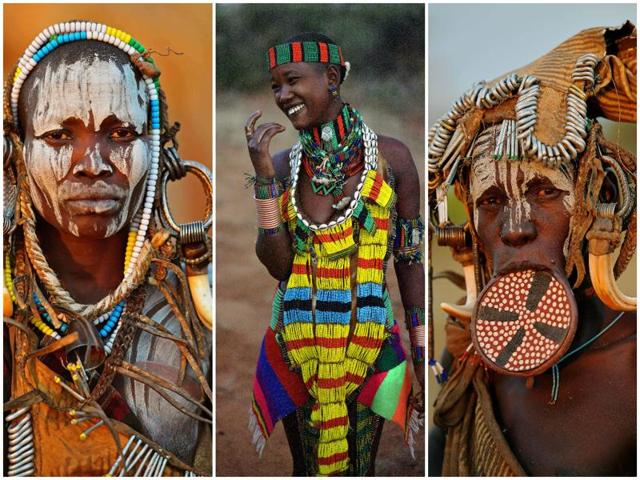
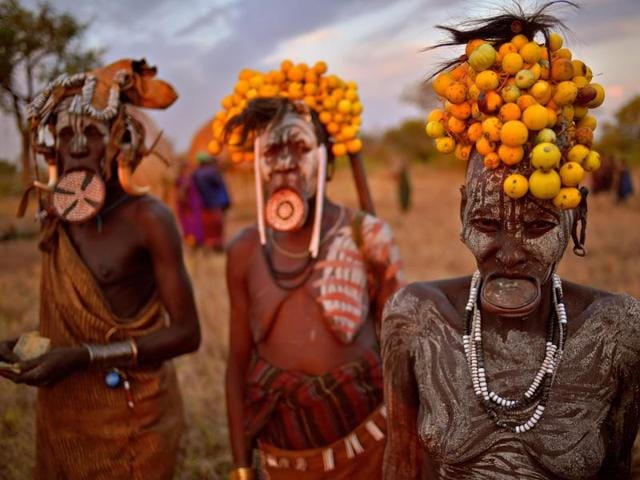
Women from the Mursi tribe (far left and right) pose for a photo in the Mago National park near Jinka in Ethiopia’s southern Omo Valley region on September 21, 2016. The Mursi are a Nilotic pastoralist ethnic group which number around 10,000 people in Ethiopia. Some Mursi women choose to wear a saucer’ lip plate (dhebi a tugoin). A girl’s lower lip is cut when she reaches the age of 15 or 16. The wound is then stretched over time to accomodate a large clay plate. The Mursi tribe is one of the few tribes left who continue this practise. A woman from the Bena tribe (centre) eats honey collected from a tree in Turmi, Ethiopia on September 20, 2016. (AFP)
Updated on: Oct 03, 2016 5:26 PM IST

Share via


Copy link

1/11
 View Photos in a new improved layout
Updated on Oct 03, 2016 5:26 PM
Women from the Mursi tribe (far left and right) pose for a photo in the Mago National park near Jinka in Ethiopia’s southern Omo Valley region on September 21, 2016. The Mursi are a Nilotic pastoralist ethnic group which number around 10,000 people in Ethiopia. Some Mursi women choose to wear a saucer’ lip plate (dhebi a tugoin). A girl’s lower lip is cut when she reaches the age of 15 or 16. The wound is then stretched over time to accomodate a large clay plate. The Mursi tribe is one of the few tribes left who continue this practise. A woman from the Bena tribe (centre) eats honey collected from a tree in Turmi, Ethiopia on September 20, 2016. (AFP)
2/11
 View Photos in a new improved layout
Updated on Oct 03, 2016 5:26 PM
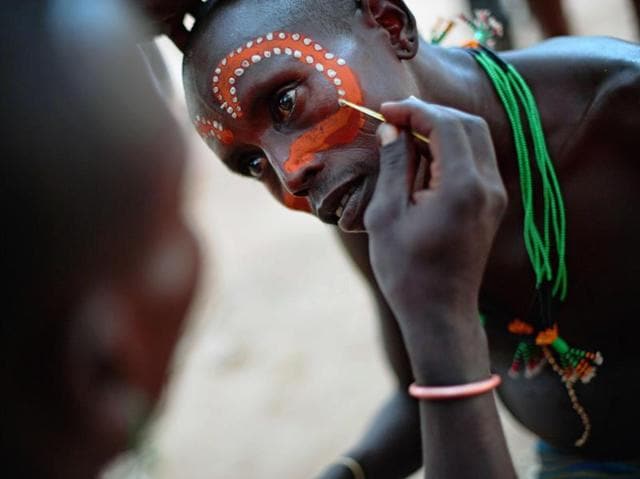
A Hamar man has his face painted before a bull jumping ceremony in Omo Valley region near Turmi on September 19, 2016. The Hamar are a Nilotic ethnic group in Ethiopia. Bull jumping has been practised by the Hamars for thousands of years. The ceremony is a coming of age tradition which allows young men to marry. The man has to run across the backs of bulls which have been lined up, 4 times. If he falls through the row of bulls he is to start again until he finishes without falling. If the man fails to properly “jump the bulls” he risks humiliation and being cast out by his village as well as never being able to marry in the future. Before the ceremony women line up to be whipped by men holding sticks to prove their devotion to the men. (AFP)
3/11
 View Photos in a new improved layout
Updated on Oct 03, 2016 5:26 PM
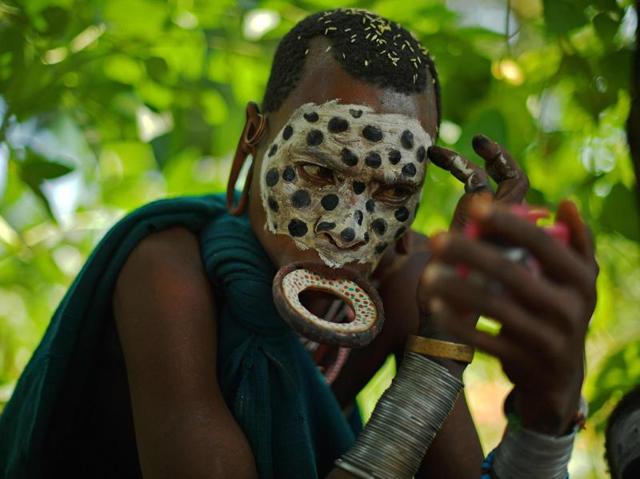
A woman from the Suri tribe wearing a lip plate paints her face near Kibbish on September 25, 2016. The Suri are a pastoralist Nilotic ethnic group in Ethiopia. The construction of the Gibe III dam, the third largest hydroelectric plant in Africa, and large areas of very ‘thirsty’ cotton and sugar plantations and factories along the Omo river are impacting heavily on the lives of tribes living in the Omo Valley who depend on the river for their survival and way of life. Human rights groups fear for the future of the tribes if they are forced to scatter, give up traditional ways through loss of land or ability to keep cattle as globalisation and development increases. (AFP)
4/11
 View Photos in a new improved layout
Updated on Oct 03, 2016 5:26 PM
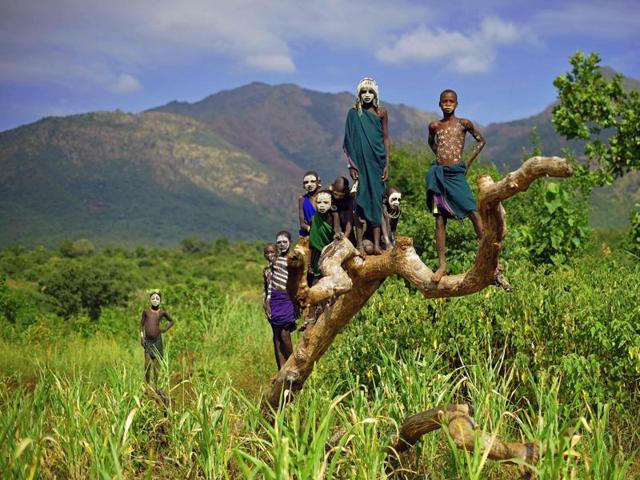
Children from the Suri tribe pose near Kibbish on September 25, 2016. (AFP)
5/11
 View Photos in a new improved layout
Updated on Oct 03, 2016 5:26 PM
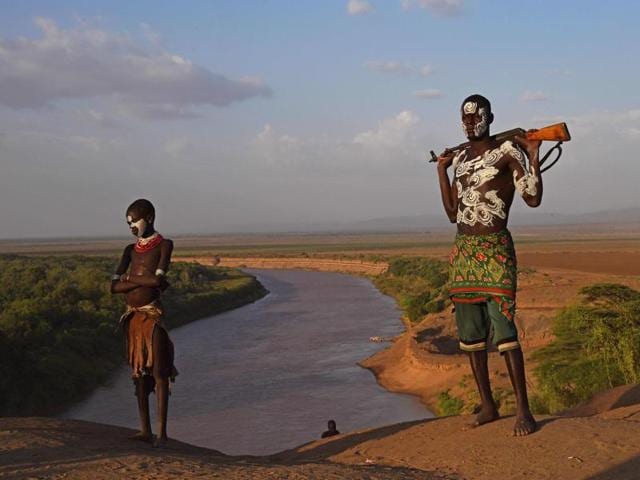
Members from the Karo tribe pose in front of the Omo river on September 23, 2016. The Karo are a Nilotic ethnic group in Ethiopia famous for their body painting. (AFP)
6/11
 View Photos in a new improved layout
Updated on Oct 03, 2016 5:26 PM
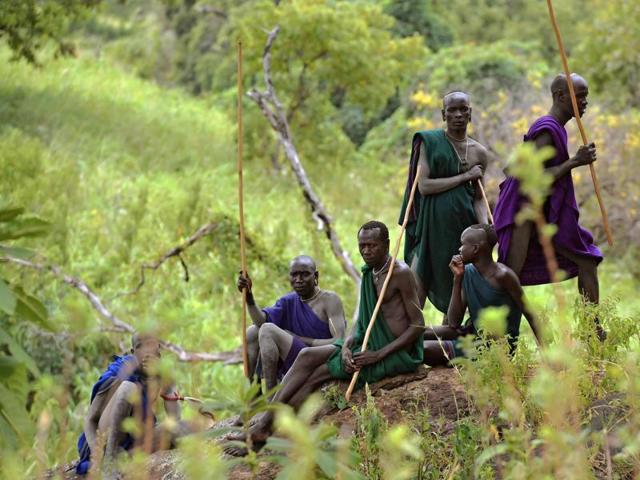
Men from the Suri tribe wait for a Donga or stick fight near Kibbish on September 24, 2016. Traditionally the fight is a way to impress women and find a wife. The fights are brutal and sometimes result in death. The combatants fight with little or no clothing and sometimes no protection at all. (AFP)
7/11
 View Photos in a new improved layout
Updated on Oct 03, 2016 5:26 PM
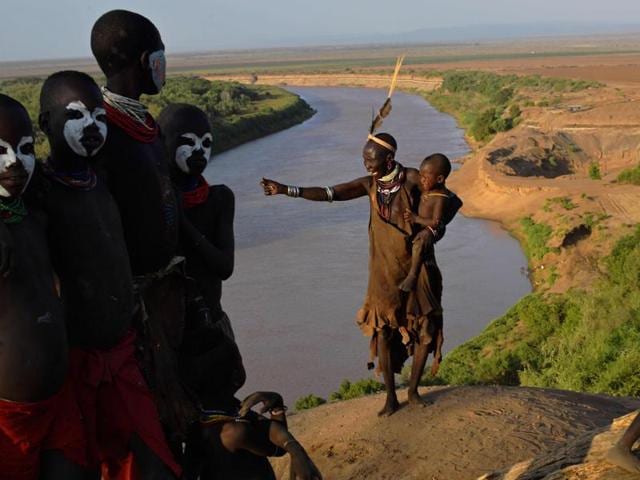
Members of the Karo tribe pose in front of the Omo river on September 23, 2016. (AFP)
8/11
 View Photos in a new improved layout
Updated on Oct 03, 2016 5:26 PM
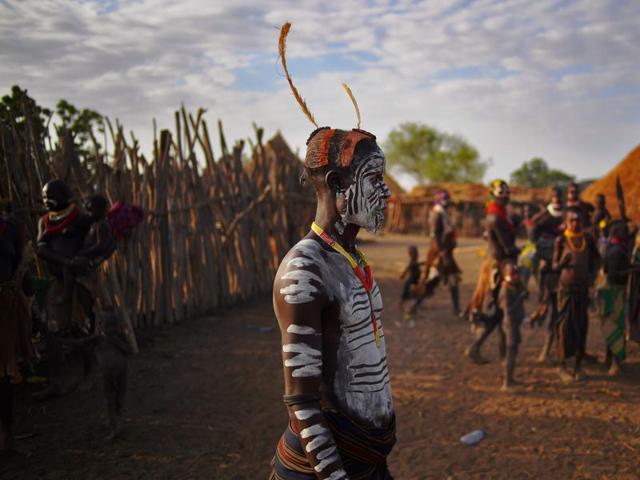
Members of the Karo tribe pose on September 23, 2016. They are also one of the smallest tribes in the region. (AFP)
9/11
 View Photos in a new improved layout
Updated on Oct 03, 2016 5:26 PM
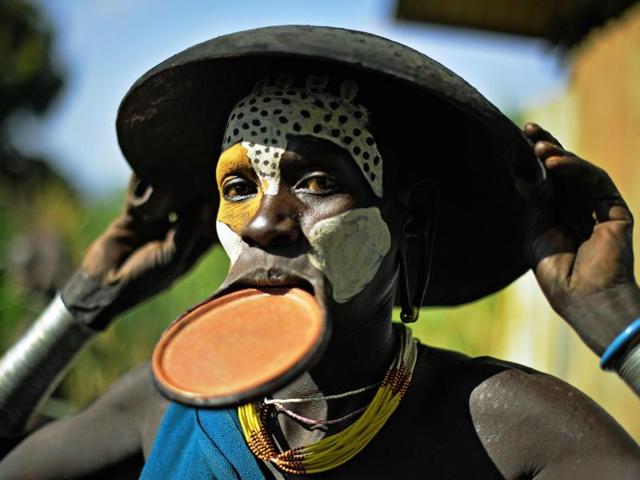
A woman from the Suri tribe with a lip plate poses for the camera on September 25, 2016. (AFP)
10/11
 View Photos in a new improved layout
Updated on Oct 03, 2016 5:26 PM
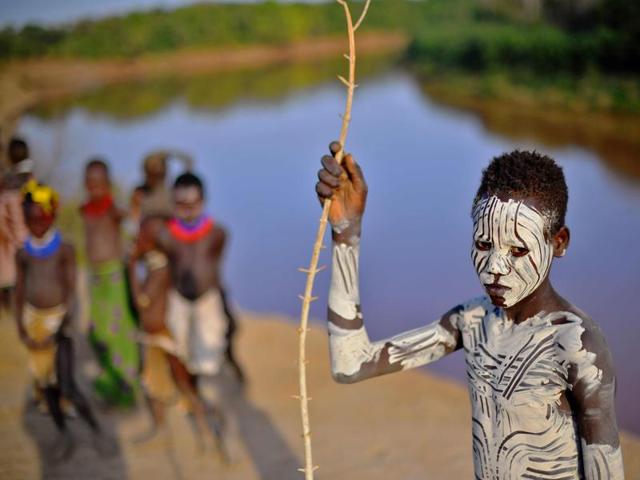
A boy from the Karo tribe poses for a photo in front of the Omo river on September 23, 2016. (AFP)
11/11
 View Photos in a new improved layout
Updated on Oct 03, 2016 5:26 PM


