
 E-Paper



Australia’s Great Barrier Reef is bleaching into extinction
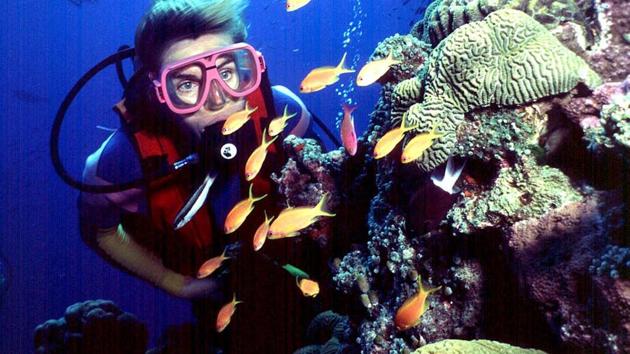
File photo shows a diver swimming on Australia’s Great Barrier Reef. Stretching over 2300 kms, the great barrier reef is one of the largest living structures on the planet and a home to a wide array of living organisms. While its formation dates back to millions of years ago, it was first documented by the English explorer James Cook on June 11, 1770. However unparalleled coral bleaching due to rising sea surface temperatures has damaged two-thirds of the reef. (Brain Cassey / AP File)
Updated on: Jun 13, 2017 12:01 AM IST

Share via


Copy link

1/8
 View Photos in a new improved layout
Updated on Jun 13, 2017 12:01 AM
File photo shows a diver swimming on Australia’s Great Barrier Reef. Stretching over 2300 kms, the great barrier reef is one of the largest living structures on the planet and a home to a wide array of living organisms. While its formation dates back to millions of years ago, it was first documented by the English explorer James Cook on June 11, 1770. However unparalleled coral bleaching due to rising sea surface temperatures has damaged two-thirds of the reef. (Brain Cassey / AP File)
2/8
 View Photos in a new improved layout
Updated on Jun 13, 2017 12:01 AM
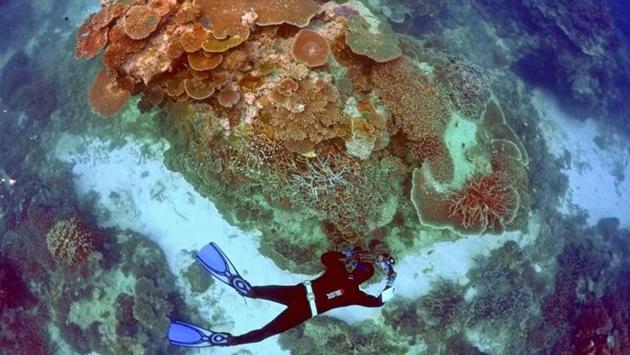
Oliver Lanyon, Senior Ranger in the Great Barrier Reef takes photographs and notes during an inspection. Scientists concede that the amount of coral that died from bleaching in 2016 was much higher than original estimates and greater damage is expected in 2017. (David Gray / Reuters File )
3/8
 View Photos in a new improved layout
Updated on Jun 13, 2017 12:01 AM
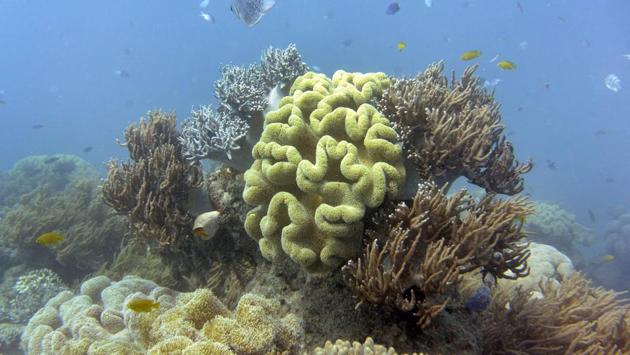
Coral bleaching occurs when polyps can no longer continue their symbiotic relationship with algae like ‘zooxanthellae’ which reside inside their tissues, giving corals their distinct colour and also aiding photosynthesis. In exchange, the corals provide these ‘zooxanthellae’ with carbon dioxide and ammonia. (William WEST / AFP File )
4/8
 View Photos in a new improved layout
Updated on Jun 13, 2017 12:01 AM
Rising sea surface temperatures disrupt this symbiotic relationship with the coral expelling the ‘zooxanthellae’, and inhibits the re-formation of their colonies. (David Gray / REUTERS File)
5/8
 View Photos in a new improved layout
Updated on Jun 13, 2017 12:01 AM
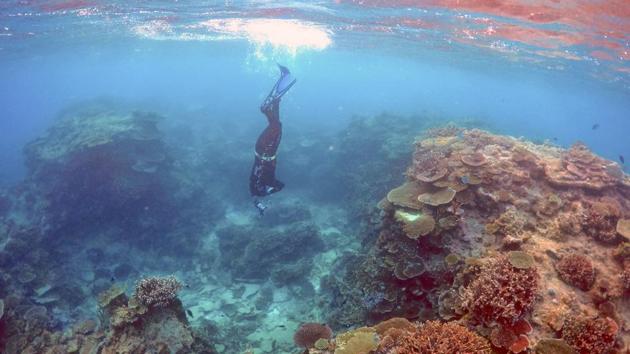
The event is partly caused by the strong El Nino weather system with global warming remaining the underlying cause. (David Gray / REUTERS File)
6/8
 View Photos in a new improved layout
Updated on Jun 13, 2017 12:01 AM
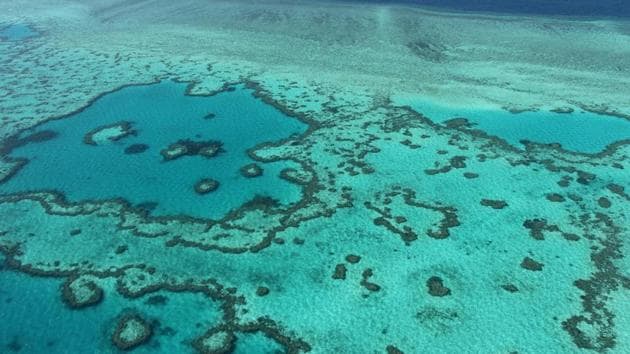
An aerial view of the Great Barrier Reef along the central coast of Queensland. Coral bleaching is expected to accelerate unless global greenhouse gas emissions are cut. (Sarah LAI / AFP File)
7/8
 View Photos in a new improved layout
Updated on Jun 13, 2017 12:01 AM
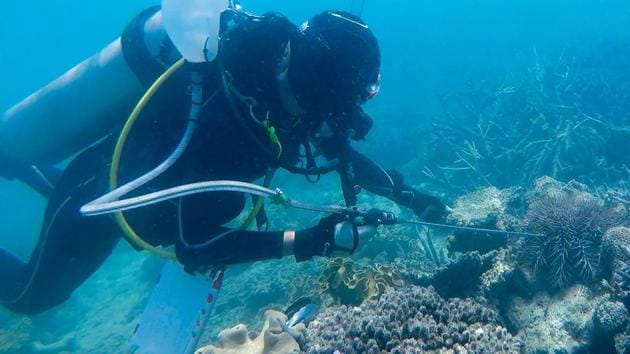
A diver injects a crown-of-thorns starfish with vinegar on the Great Barrier Reef. Common household vinegar has been found to be surprisingly effective against these preying starfish. (AFP)
8/8
 View Photos in a new improved layout
Updated on Jun 13, 2017 12:01 AM


