

 E-Paper


Photos: 2019 Venice Biennale inspires dialogue on global issues
Political issues that light up the airwaves and social media are getting a very open airing at the 58th Venice Biennale contemporary art fair, like so much laundry hung out to dry in the lagoon breeze. American curator Ralph Rugoff, director of London's Hayward Gallery, titled the main exhibition "May You Live in Interesting Times," which opens Saturday and runs through November 24. The title is itself an exemplary piece of fake news, delivered by a British lawmaker as Europe hurled toward World War II as an ancient Chinese curse.
1 / 8
 View Photos in a new improved layout
Updated on May 11, 2019 04:17 pm IST
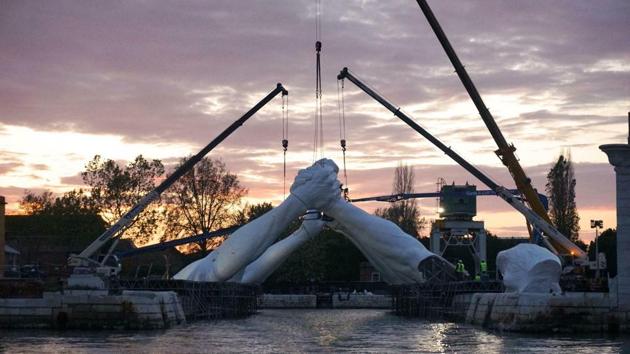
Lorenzo Quinn’s “Building Bridges” installation shows six pairs of hands creating a bridge over a waterway in the Arsenale former shipyard, ahead of the 58th Venice Biennale. Rugoff says contemporary art is particularly effective at unpacking the present-day spectre of crises, revealing complexity, ambiguity and conflicting emotions in a way that more traditional media often do not. (Andrea Merola / ANSA via AP)
2 / 8
 View Photos in a new improved layout
Updated on May 11, 2019 04:17 pm IST
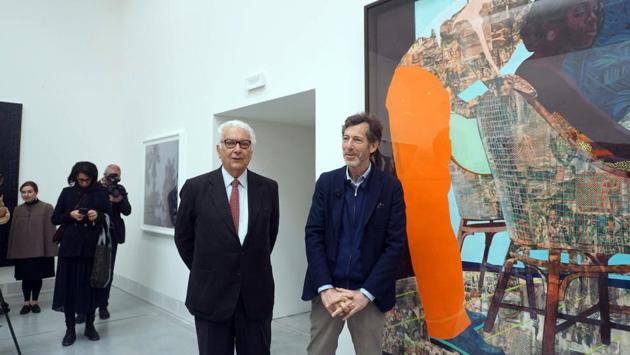
“Where do we have a space in our culture where this part of being human is given a place? It really exists in contemporary art,” Rugoff (R) said on a preview walk through the main exhibit, split between two main venues, in the leafy Giardini and the Arsenale. Many of the 79 artists invited to the main exhibition make very literal references to present-day woes. (Andrea Merola / ANSA via AP)
3 / 8
 View Photos in a new improved layout
Updated on May 11, 2019 04:17 pm IST
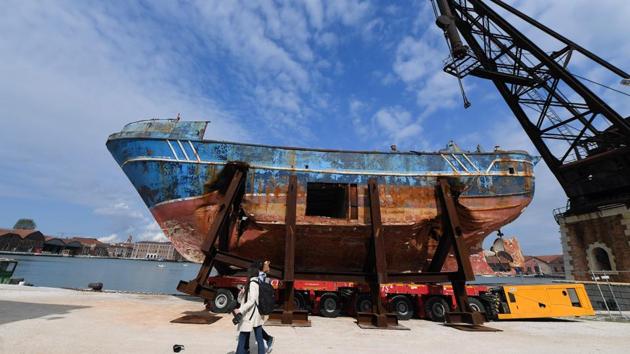
Swiss artist Christoph Buechel transported a hulking smugglers’ ship where 700 migrants perished in April 2015 to the edge of the Arsenale, exposing to viewers the gaping holes in the hull that caused it to sink in the Mediterranean. (Tiziana Fabi / AFP)
4 / 8
 View Photos in a new improved layout
Updated on May 11, 2019 04:17 pm IST
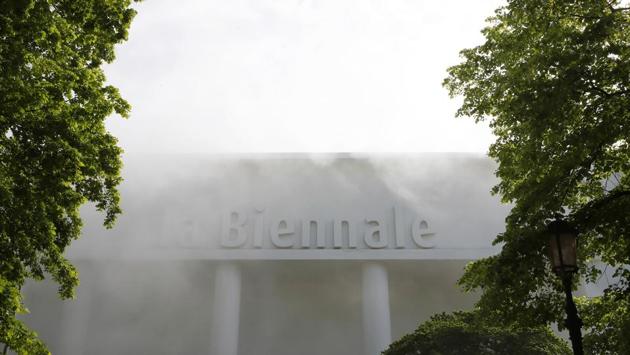
By juxtaposing art to provide comment on world events, Rugoff wants to create conversations and the Giardini Central Pavilion emits a vapour suggestive in a very literal way of thought processes, “questioning the authority of that institution.”. Mist has emerged a major artistic medium across the sprawling exhibition, which extends into 90 national pavilions and manifold collateral events. (Antonio Calanni / AP)
5 / 8
 View Photos in a new improved layout
Updated on May 11, 2019 04:17 pm IST
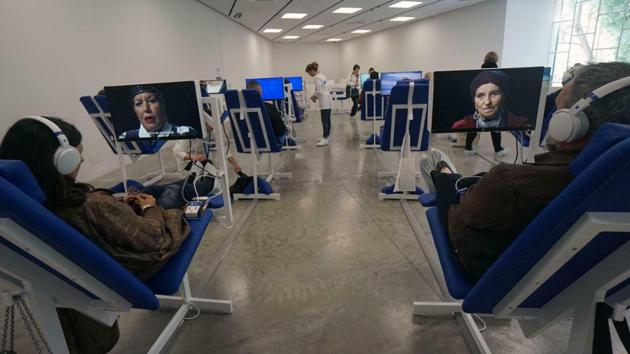
Israeli artist Aya Ben Ron has created a field hospital to treat social ills from domestic abuse to racism to occupation, which forces hurried visitors to slow down, take a number and wait their turn. Angelica Mesiti uses film to examine ways citizens can assemble and communicate against the backdrop of fragile democracy. (Andrea Merola / ANSA via AP)
6 / 8
 View Photos in a new improved layout
Updated on May 11, 2019 04:17 pm IST
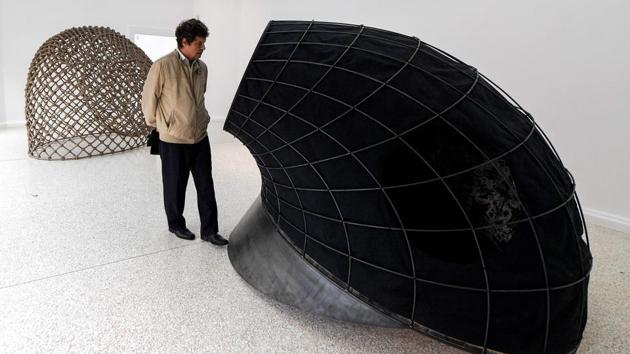
A visitor views an artwork as part of Martin Puryear's "Liberty". American Martin Puryear explores liberty through a series of clear, declarative sculptures and installations that are a rebuke against racism and testosterone-driven power. (Tiziana Fabi / AFP)
7 / 8
 View Photos in a new improved layout
Updated on May 11, 2019 04:17 pm IST
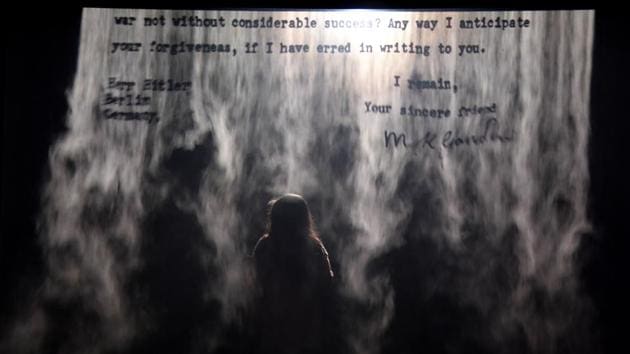
Mist is also put to effective use inside the Indian Pavilion, in a tribute to Mahatma Gandhi, marking the 150th anniversary of his birth. Artist Jitish Kallat projects a 1939 letter written by Gandhi to Adolf Hitler. Kallat said the “Dear friend” salutation projects Gandhi’s message across time “and asks the reader to rethink what they ... can do to save the world from going to a savage state.” (Tiziana Fabi / AFP)
8 / 8
 View Photos in a new improved layout
Updated on May 11, 2019 04:17 pm IST