
 E-Paper



Photos: A hike up Peru’s incredible Rainbow Mountain
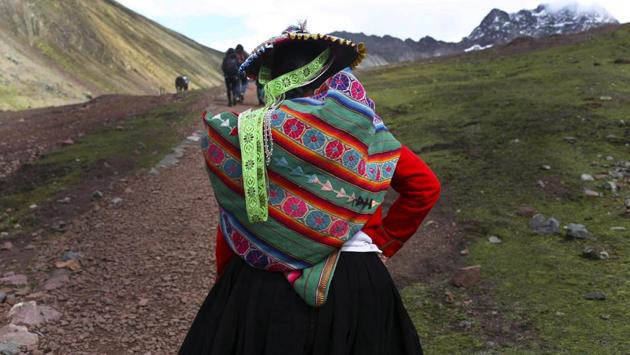
With its countless bands of turquoise, lavender, and gold, the Andean peak known as ‘Rainbow Mountain’ has become the latest must-visit destination for tourists headed to Peru. For much of the decade since its discovery by tourists nearly a decade ago, the mountain was a secret passed among hikers. But social media and the fantastic images from Rainbow Mountain have resulted in a surge of tourists, spelling a much needed economic boost but also flagging environmental concerns for this once pristine spot 16,404 ft above sea.
Updated on: May 04, 2018 1:57 PM IST

Share via


Copy link

1/10
 View Photos in a new improved layout
Updated on May 04, 2018 1:57 PM
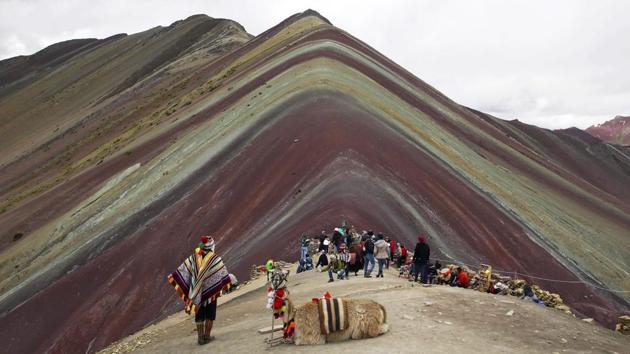
An Andean man and his IIama rest on mountain formed of stripes of turquoise, lavender and gold known as “Rainbow Mountain.” This ridge of multicoloured sediments laid down millions of years ago was pushed up as tectonic plates clashed. Just five years into its discovery by the outside world, Rainbow Mountain has earned a must-see status on Peru’s burgeoning backpacker circuit. (Martin Mejia / AP)
2/10
 View Photos in a new improved layout
Updated on May 04, 2018 1:57 PM
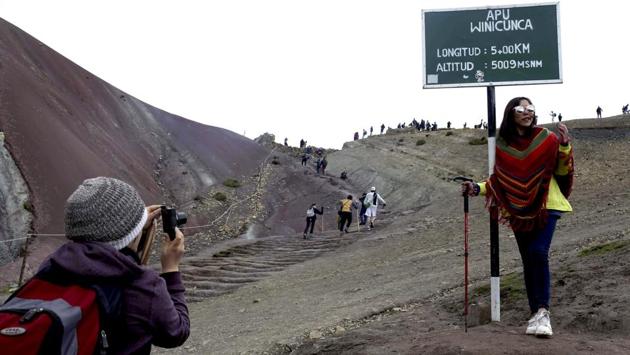
A tourist poses for a photograph at the entrance that leads to Rainbow Mountain. Visitors must climb for two hours to reach the peak in the Peruvian Andes which stands 16,404 feet above sea level. This tiresome trek turns worthy when the magical beauty of Rainbow Mountain unfurls before the eyes. (Martin Mejia / AP)
3/10
 View Photos in a new improved layout
Updated on May 04, 2018 1:57 PM
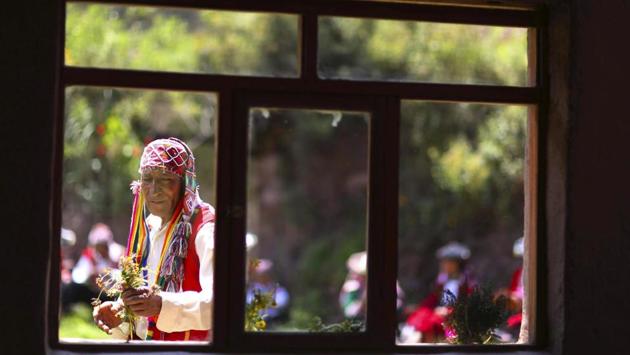
A former farmer who now sells Andean clothes collects flowers while he waits for tourists. The popularity of Rainbow Mountain, which attracts up to 1,000 visitors each day, has provided a much-needed economic jolt to this remote region populated by struggling alpaca herders. (Martin Mejia / AP)
4/10
 View Photos in a new improved layout
Updated on May 04, 2018 1:57 PM
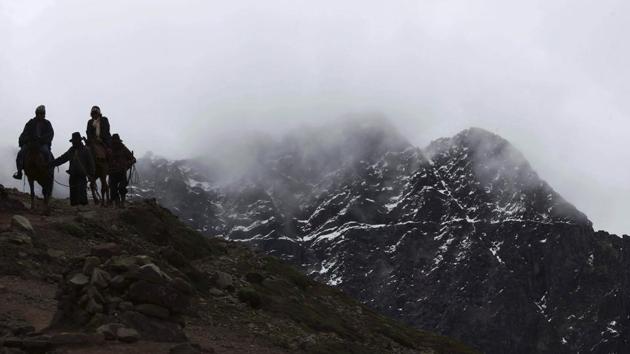
A group of tourists ride horses led by Andean guides to the mountain. For much of the past decade, a group of shepherds had been quietly taking small groups of tourists to the mountain as part of a five-day hike around the fast-melting Ausangate glacier. Over time, and thanks to the stunning photographs posted on the internet, the secret got out. (Martin Mejia / AP)
5/10
 View Photos in a new improved layout
Updated on May 04, 2018 1:57 PM
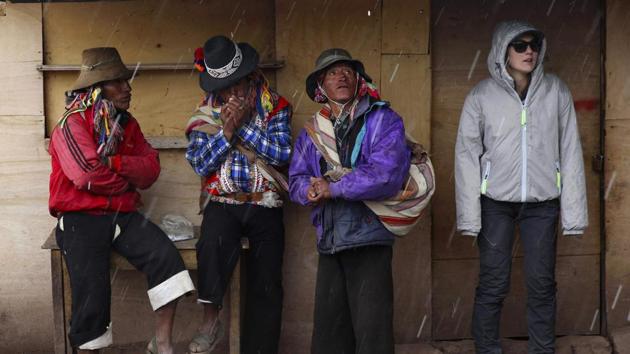
Andean muleteers and a tourist take cover from rain during a tour of the rainbow-colored mountain. “You see it in the pictures and you think it’s Photoshopped --but it’s real,” said Lukas Lynen, an 18-year-old tourist from Mexico. But on the other hand environmentalists fear the tourists could destroy this treasured landscape, which is already coveted by international mining companies. (Martin Mejia / AP)
6/10
 View Photos in a new improved layout
Updated on May 04, 2018 1:57 PM
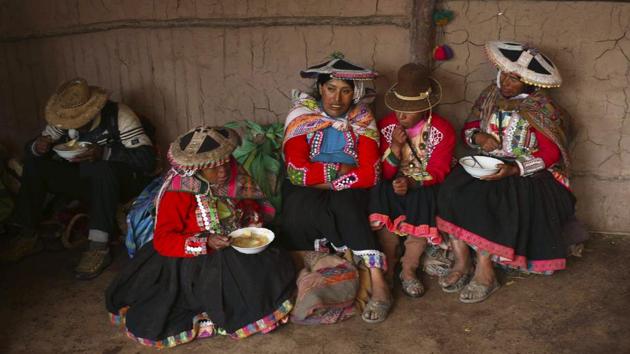
The guides dressed in colourful woollen clothes and wide-brimmed, traditional hats break for lunch. The flood of tourists has meant jobs and hard cash for the local Pampachiri community, which has struggled with high rates of alcoholism, malnutrition and falling prices of wool for their prized alpaca. Many have abandoned nomadic life for dangerous gold mining jobs in the Amazon. (Martin Mejia / AP)
7/10
 View Photos in a new improved layout
Updated on May 04, 2018 1:57 PM
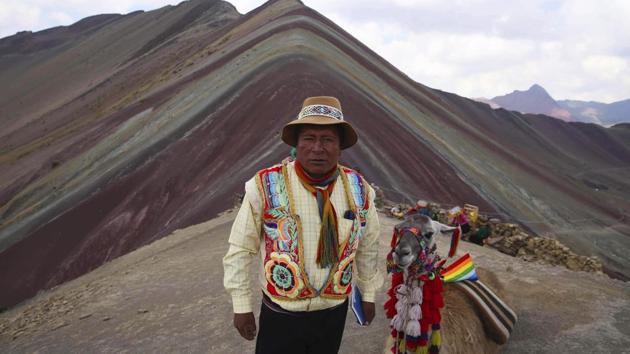
The local guides charge tourists $3 each to enter their ancestral land, netting the community roughly $400,000 a year. But the surge in tourists also comes with a responsibility to be good stewards of the environment and their new guests, and Pampachiri community leader Gabino Huaman admits he is not sure they are ready to fully handle it. (Martin Mejia / AP)
8/10
 View Photos in a new improved layout
Updated on May 04, 2018 1:57 PM
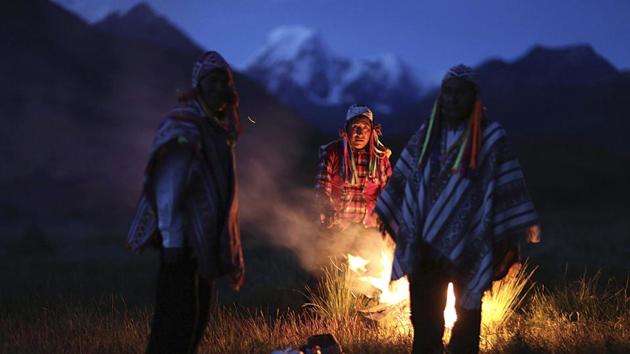
Andean farmers perform a ceremony honouring Mother Earth and Father Snowy Mountain. Dina Farfan, a Peruvian biologist who has studied threatened wildlife said a 4km dirt trail which is climbed by tourists to reach Rainbow Mountain has been badly eroded in the last 18 months, scarring the otherwise pristine landscape. Even a wetland once popular with migrating ducks has been turned into a parking lot. (Martin Mejia / AP)
9/10
 View Photos in a new improved layout
Updated on May 04, 2018 1:57 PM
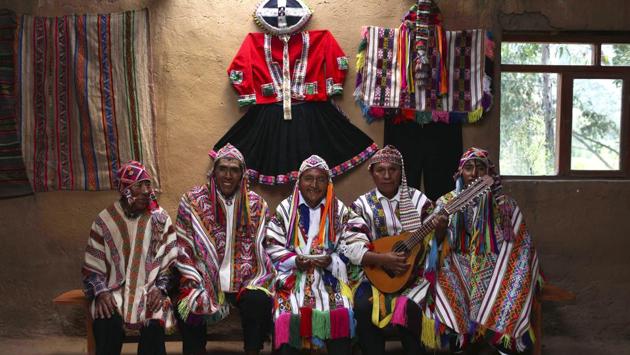
A successful sustainable tourism endeavour in the nearby town of Chillca, led to Rainbow Mountain appearing on the map. Now, the shepherds of Chillca manage four lodges made of eucalyptus wood lit only by candle, with a capacity for 16 tourists each. At dawn, the lodge-keeper gently awakens guests with a song performed in the Quechua language. (Martin Mejia / AP)
10/10
 View Photos in a new improved layout
Updated on May 04, 2018 1:57 PM


