
 E-Paper



Photos: Acquired tastes at Sweden’s ‘Disgusting Food Museum’
Cheese teeming with squirming maggots, sheep's eye juice and mouse wine: the "Disgusting Food Museum" explores why a dish seems delicious to some, but is stomach-churning to others. To highlight the fact that the seemingly odd becomes familiar if we grow up with, the exhibition in Malmo, Sweden puts foods from around the world on an equal footing, so lobster and foie gras are presented in the same way as chewy kiddie sweets and rabbits' heads.
Updated on: Nov 22, 2018 9:33 AM IST


Share via


Copy link

1/11

 View Photos in a new improved layout
Updated on Nov 22, 2018 9:33 AM
Sheep Eyeball Juice from Mongolia at the Disgusting Food Museum in Malmo, Sweden. On show for three months at an old slaughterhouse, the exhibition -- created by Samuel West, who previously served up the Museum of Failure -- promises to shock the senses. “Disgust is always subjective because it comes with what we grew up with. It’s kind of an indoctrination,” said museum director Andreas Ahrens. (Jonathan Nackstrad / AFP)
2/11
 View Photos in a new improved layout
Updated on Nov 22, 2018 9:33 AM
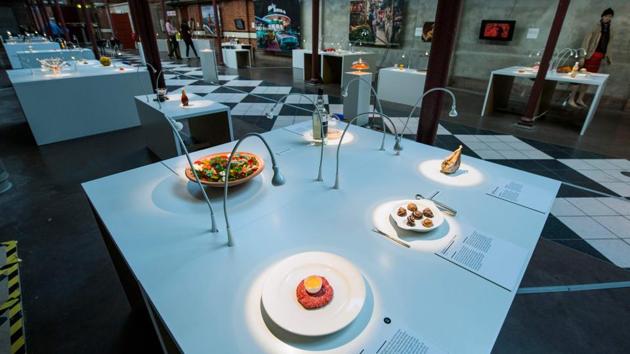
Steak Tartare from France (bottom, L) among other exhibits. “If we grew up with something, we don’t find it disgusting,” Ahrens said. To highlight the point, the exhibition puts foods from around the world on an equal footing, so lobster and foie gras are presented in the same way as chewy kiddie sweets and rabbits’ heads. (Jonathan Nackstrad / AFP)
3/11
 View Photos in a new improved layout
Updated on Nov 22, 2018 9:33 AM
Gastronomic explorers are warned on entry: the exhibit is not for the squeamish. But, conveniently, the entry ticket is -- a sickness bag. Bag in hand then, visitors venture off on a world tour of specialities, some of which may seem to a Western palate like ingredients in a witch’s brew but are considered delicacies. (Jonathan Nackstrad / AFP)
4/11
 View Photos in a new improved layout
Updated on Nov 22, 2018 9:33 AM
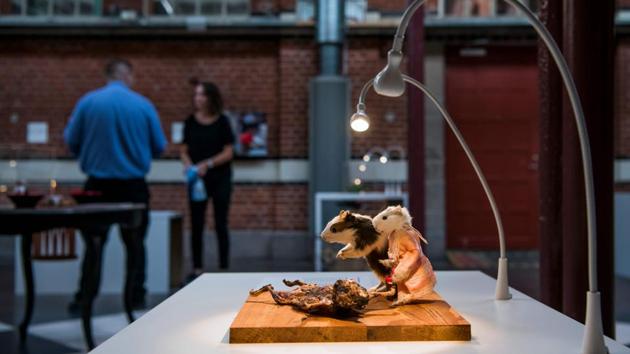
Cuy guinea pigs, a culinary speciality from Peru. “The Disgusting Food Museum exists to let people explore the world of food and to see both their own food and (other food) from the lens of another culture,” Ahrens said. Its founder “began by thinking of other museums that don’t exist that he would like to visit, and that led to the Disgusting Food Museum,” he added. (Jonathan Nackstrad / AFP)
5/11
 View Photos in a new improved layout
Updated on Nov 22, 2018 9:33 AM
Touring the exhibit, Charlie Lam, a 23-year-old Hong Kong student inspected the 80 dishes on display, cautiously sniffing some, and, when curiosity got the better of her, tasting a few. She said she’ll never forget the Su Callu, a Sardinian cheese served in dried tripe with a lingering aftertaste of ammonia, or Hakarl the Icelandic delicacy of fermented shark. (Jonathan Nackstrad / AFP)
6/11
 View Photos in a new improved layout
Updated on Nov 22, 2018 9:33 AM
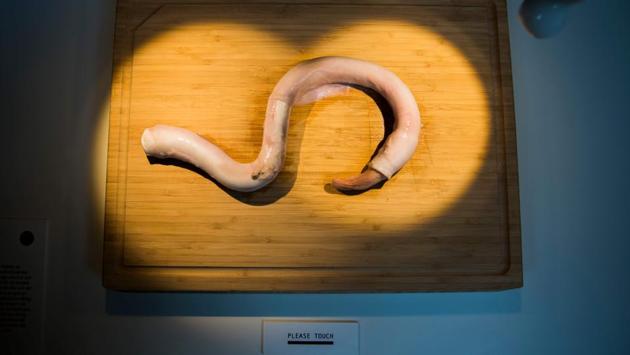
Many of the dishes are freshly prepared and visitors are encouraged to poke and prod some of them, and of course have a taste -- museum staff make sure nobody leaves without trying at least one item. The bull’s penis (pictured) -- an aphrodisiac in China -- is a hard one to resist for many curious onlookers. (Jonathan Nackstrad / AFP)
7/11
 View Photos in a new improved layout
Updated on Nov 22, 2018 9:33 AM
A visitor reacts to Surstromming, fermented Baltic Sea herring from Sweden. “If it would be just fake food, or just plastic or things in a can, it wouldn’t be as interesting. It wouldn’t be as fun,” said Ahrens, who happily guides people through the tables of food. “So it’s an important part of the experience for the guest.” (Jonathan Nackstrad / AFP)
8/11
 View Photos in a new improved layout
Updated on Nov 22, 2018 9:33 AM
A Casu Marzu cheese from Sardinia, Italy teeming with squirming maggots. Some dishes are displayed on a video screen, such as the cobra’s beating heart, which in Vietnam is savoured together with its blood. (Jonathan Nackstrad / AFP)
9/11
 View Photos in a new improved layout
Updated on Nov 22, 2018 9:33 AM
“That’s really what I found most surprising,” admits Adam Eliasson, a 24-year-old factory worker. “Normally I’m a pretty picky eater,” he muses. “I eat very few things... but here I tasted everything. And I didn’t throw up!” (Jonathan Nackstrad / AFP)
10/11
 View Photos in a new improved layout
Updated on Nov 22, 2018 9:33 AM
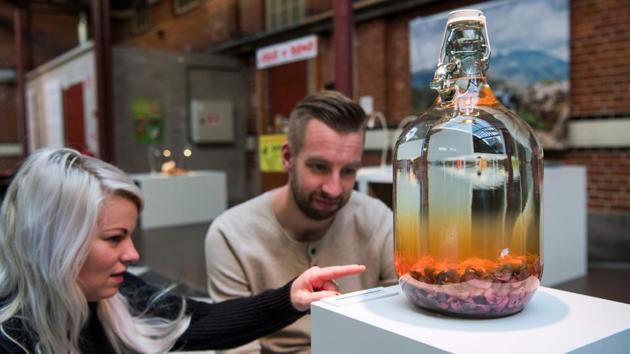
Visitors react to the Baby Mouse Wine from China. Some dishes however, such as the tortoise soup and bat soup, the sheep’s head stew and baby mouse wine remain off limits to even the bravest of visitors. The food that is fresh, such as the cheese, is kept in the fridge for three or four days before being thrown out. (Jonathan Nackstrad / AFP)
11/11
 View Photos in a new improved layout
Updated on Nov 22, 2018 9:33 AM


