
 E-Paper



Photos: Aquaculture offers lifeline to floundering Moroccan fishermen
With fish stocks declining in the Mediterranean, struggling Moroccan fishermen are hoping to turn to aquaculture as a way to secure their future. Catches in the eastern Oriental region dropped from 14.7 tonnes to 7.4 between 2013 and 2017. The Al Amal cooperative for independent fishermen is banking on the development of an offshore mussel farm to maintain future livelihoods. Another cooperative at Mar Chica lagoon, some 40 kilometres (24 miles) west, runs a red algae farm to supply pharmaceutical and cosmetic industries. Aimed at preserving fish stocks and supplementing falling revenues for small-scale fishermen, these two pilot projects are part of an ambitious national plan.
Updated on: Nov 4, 2019 4:18 PM IST


Share via


Copy link

1/8
 View Photos in a new improved layout
Updated on Nov 4, 2019 4:18 PM
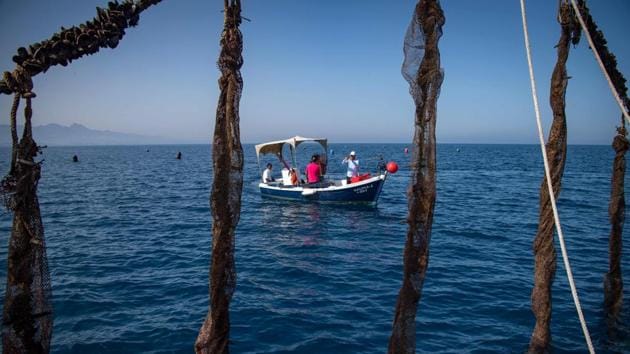
A boat sails past a mussel farm off the coast of Morocco’s port city of Nador. With fish stocks declining in the Mediterranean, struggling Moroccan fishermen are hoping to turn to aquaculture as a way to secure their future. (Fadel Sena / AFP)
2/8
 View Photos in a new improved layout
Updated on Nov 4, 2019 4:18 PM
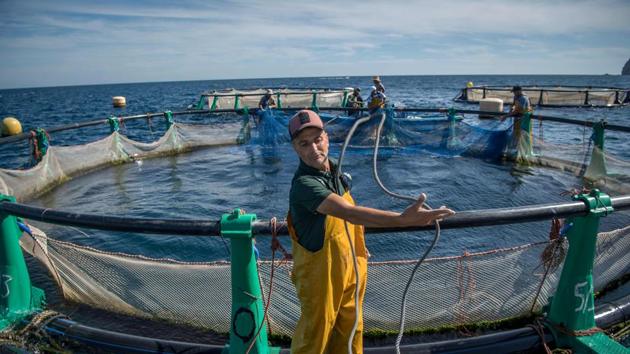
Fishermen work on a fish farm off the coast of the Moroccan city of M’diq. “We don’t get anything from the sea anymore, we’re paying for the mistakes of our fathers,” said Mohamed Bouajra, a fisherman in Ras Kebdana, a port town near Morocco’s eastern border with Algeria. But aquaculture offers a “glimmer of hope for escaping poverty”, he said. (Fadel Sena / AFP)
3/8
 View Photos in a new improved layout
Updated on Nov 4, 2019 4:18 PM
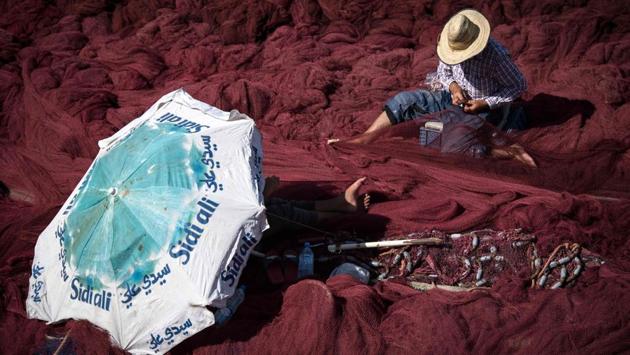
In Ras Kebdana, the Al Amal cooperative for independent fishermen is banking on the development of an offshore mussel farm to maintain future livelihoods. Another cooperative at Mar Chica lagoon, some 40 kilometres west, runs a red algae farm to supply pharmaceutical and cosmetic industries. Aimed at preserving fish stocks and supplementing falling revenues for small-scale fishermen, these two pilot projects are part of an ambitious national plan launched in 2009 called Blue Morocco. (Fadel Sena / AFP)
4/8
 View Photos in a new improved layout
Updated on Nov 4, 2019 4:18 PM
While the number of fishing boats in Ras Kebdana has tripled since the 1990s, “there are no more fish”, said Bouajra. Now in his 60s, Bouajra recalls the good days when fishing from his wooden boat would bring in 400 dirhams a day. Today, he said he is lucky to make 40 dirhams. Figures from department of maritime fishing confirm the decline. Catches in the eastern Oriental region dropped from 14.7 tonnes to 7.4 between 2013 and 2017. (Fadel Sena / AFP)
5/8
 View Photos in a new improved layout
Updated on Nov 4, 2019 4:18 PM
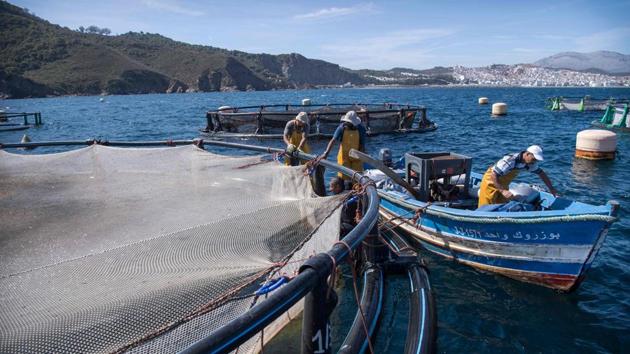
Along the rest of Morocco’s Mediterranean coast, catches declined 30 percent, alarming authorities. Depleted fisheries are a financial concern, as exported seafood brought 22 billion dirhams in 2017 ($2.2 billion), about half of food exports and 10 percent of total exports. (Fadel Sena / AFP)
6/8
 View Photos in a new improved layout
Updated on Nov 4, 2019 4:18 PM
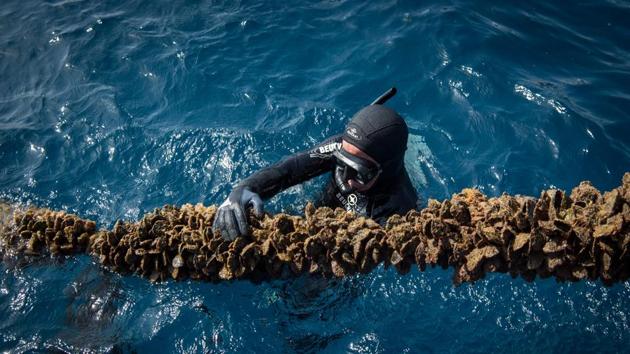
A diver inspects mussels at a farm off the coast of the port city of Nador. Near the Strait of Gibraltar, Abdelaziz Benhamou is in charge of production at an aquafarm in M’diq. The Aqua M’diq company employs 24 staff and raises sea bass in offshore cages. It is considered a model fish farm by the National Aquaculture Development Agency (ANDA), which hopes to replicate the project elsewhere on the Mediterranean or Atlantic coasts. (Fadel Sena / AFP)
7/8
 View Photos in a new improved layout
Updated on Nov 4, 2019 4:18 PM
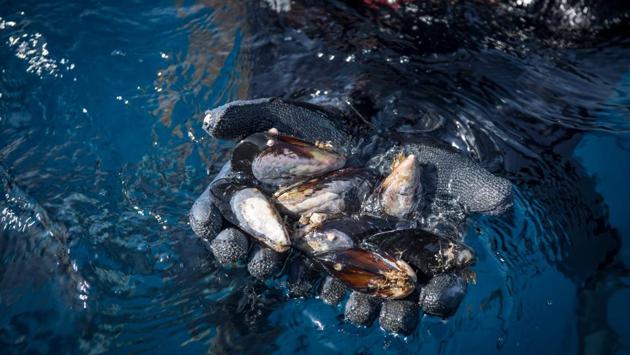
In Ras Kebdana, undersea nets for growing mussels have only been installed across five of the site’s 15 hectares. And the shellfish are still not ready for harvest, five years after the project was launched. The 35 members of the cooperative maintain the mussels, hoping to begin sales next year. In the meantime, boats continue going out for octopus, the main seafood available in the area. (Fadel Sena / AFP)
8/8
 View Photos in a new improved layout
Updated on Nov 4, 2019 4:18 PM


