
 E-Paper



Photos: Charcoal makers in Spain keep embers of an old trade burning
Only a handful of professional “charcoal cookers,” which is how locals call the back-breaking and patience exhausting process of turning firewood into lightweight pieces of carbon, remain active in Spain's northern Basque valleys. But in older times, charcoal pyres were once part of the rural landscape, and mystery shrouded the charcoal makers who, before vehicles could bring the wood all the way down to the valley, spent weeks or even months up in the mountains tending the firewood piles.
Updated on: Sep 15, 2018 2:29 PM IST

Share via


Copy link

1/10
 View Photos in a new improved layout
Updated on Sep 15, 2018 2:29 PM
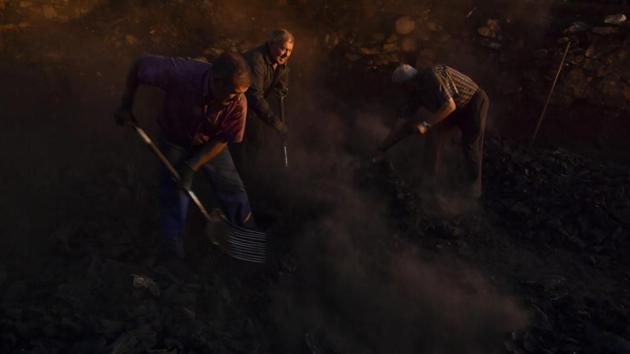
Jesus Luis Remiro (C), picks up charcoal with his brother, Salvador (R), and Jose Mari Nieva (L), as part of a process to produce traditional charcoal in Viloria, northern Spain. Only a handful of professional “charcoal cookers,” which is how locals call the back-breaking and patience exhausting process of turning firewood into lightweight pieces of carbon, remain active in Spain's northern Basque valleys. (Alvaro Barrientos / AP)
2/10
 View Photos in a new improved layout
Updated on Sep 15, 2018 2:29 PM
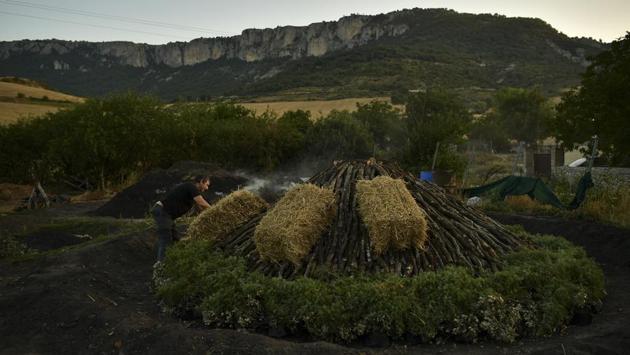
Miguel Lander, 56, places straw bales on wood piled up as part of the process to produce traditional charcoal. Even though he receives the occasional helping hand from his 22-year old son, Lander knows that the days of making charcoal the traditional way are counted in these remote valleys of northern Spain. “One has to earn a living,” he said. (Alvaro Barrientos / AP)
3/10
 View Photos in a new improved layout
Updated on Sep 15, 2018 2:29 PM
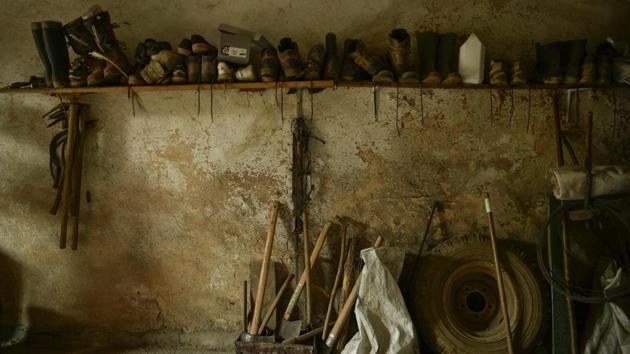
Work utensils are stored inside a room, to be used by workers. Amid changing lifestyles and competition from industrially produced charcoal, these days it’s only restaurants and private households that buy the few tons of fuel Lander produces every year according to centuries-old tradition. The future, as he sees it, is far away from the slow-burning, smoking firewood pyres. (Alvaro Barrientos / AP)
4/10
 View Photos in a new improved layout
Updated on Sep 15, 2018 2:29 PM
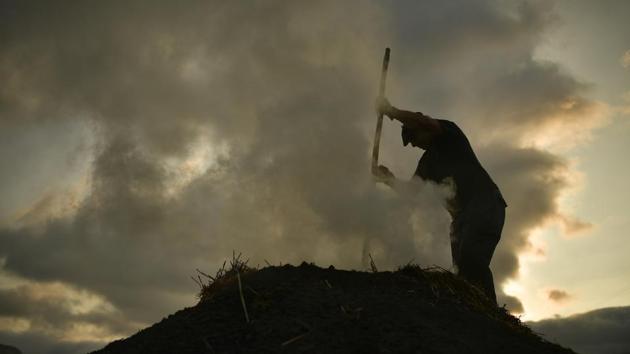
The carbonization comes from slowly choking logs at a constant temperature, keeping most of the oxygen out. In Viloria, that’s achieved by covering pyramids of wood with hay, dry leaves and a layer of soil. The fire is lit through a chimney in the center. Lander then climbs up on a wooden step to dig air vents in the volcano-like structure to keep a steady combustion, which can go on for weeks. (Alvaro Barrientos / AP)
5/10
 View Photos in a new improved layout
Updated on Sep 15, 2018 2:29 PM
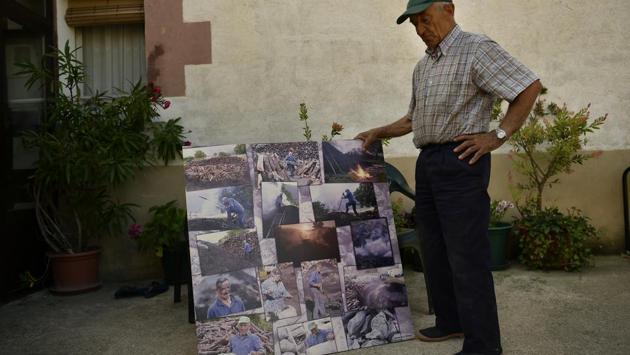
Nowadays, Lander “cooks” in each of these steaming hills around 1.5 tons of holm oak wood, watching them day and night: if they burn too fast, all will be reduced to ashes. But the size of these pyres used to be much bigger, according to Emilio Galdeano, 78, (pictured) who began making charcoal when he was still a teenager. (Alvaro Barrientos / AP)
6/10
 View Photos in a new improved layout
Updated on Sep 15, 2018 2:29 PM
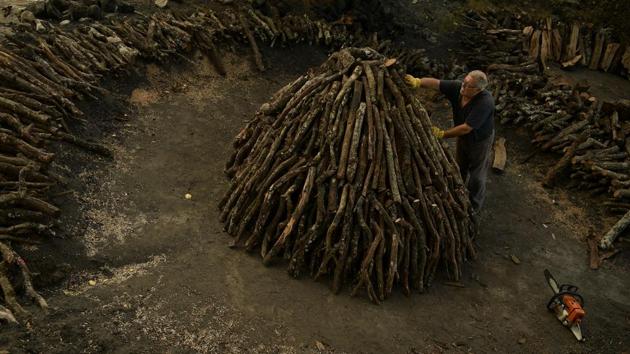
Jose Mari Nieva, 60, makes a mountain with tree trunks as part of the process to produce traditional charcoal. Charcoal pyres were once part of the landscape, and mystery shrouded the charcoal makers who, before vehicles could bring the wood all the way down to the valley, spent weeks or even months up in the mountains tending the firewood piles. (Alvaro Barrientos / AP)
7/10
 View Photos in a new improved layout
Updated on Sep 15, 2018 2:29 PM
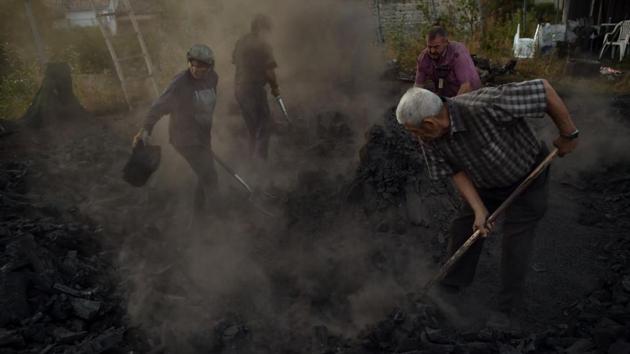
Workers extinguish the fire of burning tree trunks. Galdeano abandoned the trade for two decades when he joined scores of other peasants who sought jobs in bigger cities. But when Basque steel mills downsized in the late 1970s, Galdeano returned to Viloria and its surrounding mountains to keep making charcoal. (Alvaro Barrientos / AP)
8/10
 View Photos in a new improved layout
Updated on Sep 15, 2018 2:29 PM
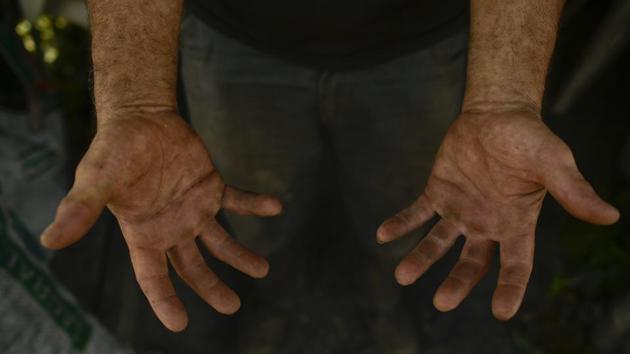
Miguel Lander shows his hands as he works making traditional charcoal. “Everybody in the village knew that charcoal-making was all they could expect in life,” Galdeano said, now retired. The trade, he adds, was “tough, very tough.” (Alvaro Barrientos / AP)
9/10
 View Photos in a new improved layout
Updated on Sep 15, 2018 2:29 PM
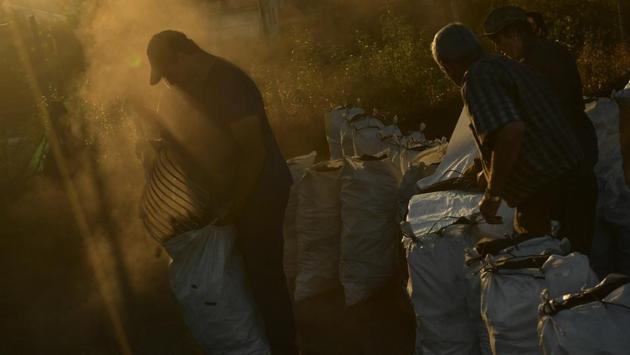
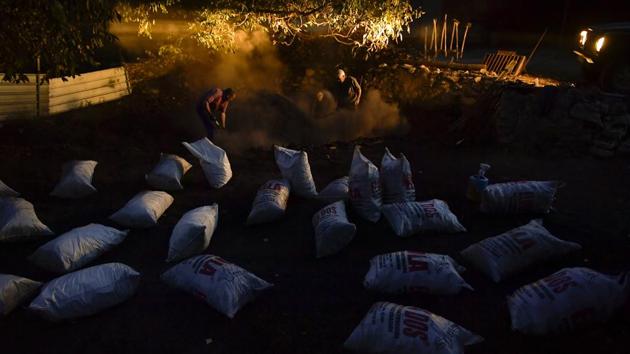
Arkaitz Lander, 22, picks up charcoal to put into sacks. Shrouded in mystery, these charcoal makers were often perceived as sullen and solitary, but also central members of the community, providing a basic necessity. (Alvaro Barrientos / AP)
10/10
 View Photos in a new improved layout
Updated on Sep 15, 2018 2:29 PM


