
 E-Paper



Photos: Chess offers Nigerian slum children new move
Chess, a board game famous for its reliance on strategy has a tiny but avid following at a slum of Lagos, Nigeria. Chess is more than a game for the children living in the slum, providing them an opportunity to get money for their education and also mentorships to boost their confidence. Although the West African nation ranks 88th out of 186 countries, according to the FIDE World Chess Federation's rating of top players across the globe, but it still does not have any Grandmasters.
Updated on: Sep 06, 2019 9:52 AM IST

Share via


Copy link

1/8
 View Photos in a new improved layout
Updated on Sep 06, 2019 9:52 AM
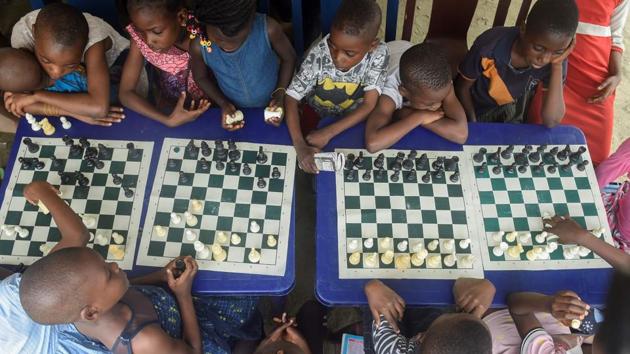
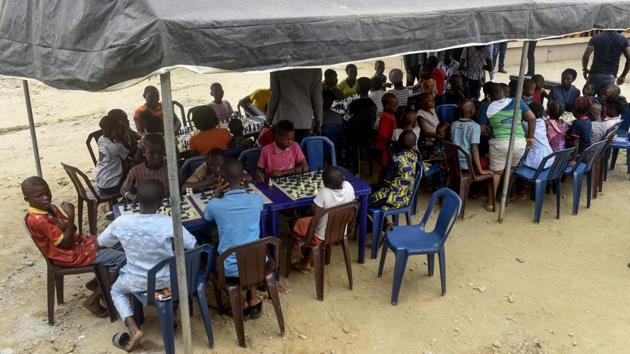
Children sit under a canopy as they play during a chess class at Ogolonto in Ikorodu district of Lagos. Chess -- a board game famous for its reliance on strategy -- has a tiny but avid following in Nigeria. The West African nation ranks 88th out of 186 countries, according to the FIDE World Chess Federation’s rating of top players across the globe, but still does not have any Grandmasters. (Pius Utomi Ekpei/ AFP)
2/8
 View Photos in a new improved layout
Updated on Sep 06, 2019 9:52 AM
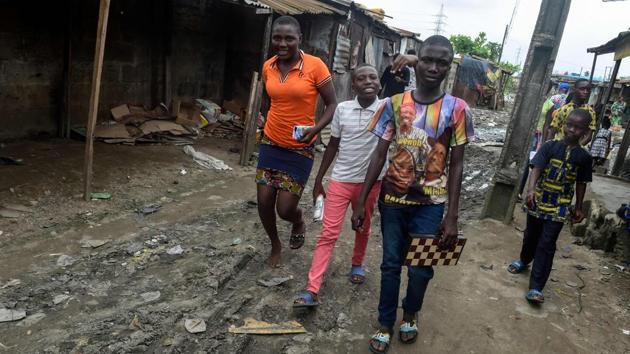
Fourteen-year-old mechanic Jamiu Ninilowo (L), holds a chessboard as he walks with classmates to attend a chess class. Dozens of matches are played simultaneously as participants as young as three master a game often considered out of reach for the masses in Africa’s most populous country. The goal of the club is to provide a space to play and learn the game for the young inhabitants of the slum, many of whom are not in school and work to support their families. (Pius Utomi Ekpei/ AFP)
3/8
 View Photos in a new improved layout
Updated on Sep 06, 2019 9:52 AM
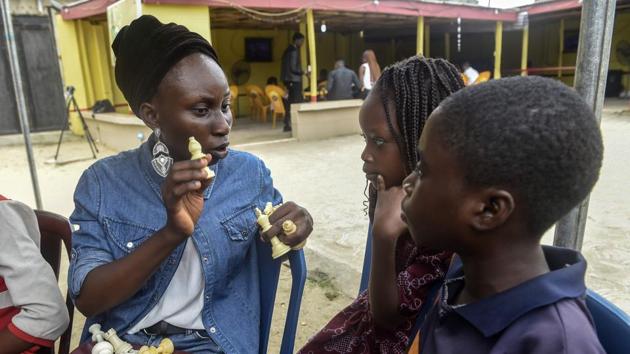
Chess teacher Omiwale Mistura (L) conducts a tutorial during a chess class. Held beneath a makeshift tent in the courtyard of a local bar, in less than a year the programme has already drawn an enthusiastic following. The youngest children sing rhymes about chess to help them master the rules, as the older ones settle down into intense games. They use mobile phone apps to time their moves and record the matches in notepads to review their mistakes and successes later. (Pius Utomi Ekpei/ AFP)
4/8
 View Photos in a new improved layout
Updated on Sep 06, 2019 9:52 AM
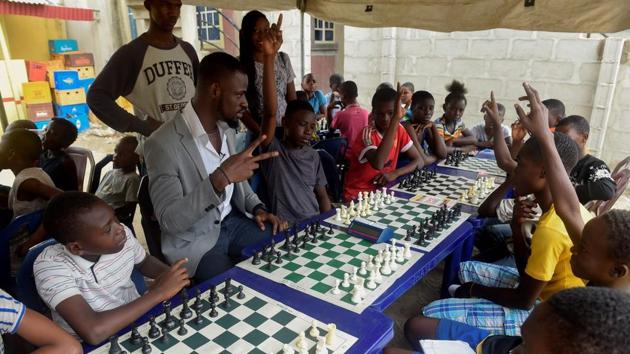
Chess consultant and player Tunde Onakoya seen with children during a chess class. Onakoya says that chess has lagged behind in part due to an image problem. “But it’s how you respond that makes you a champion. Don’t get down when you lose, don’t feel like you can’t do it, just concentrate and do your best.” Seasoned player Onakoya started the Chess in Slums project last September in the sprawling neighbourhood of Ikorodu, a place where residents often feel cut off from the bustle and business of the vibrant megacity around it. (Pius Utomi Ekpei/ AFP)
5/8
 View Photos in a new improved layout
Updated on Sep 06, 2019 9:52 AM
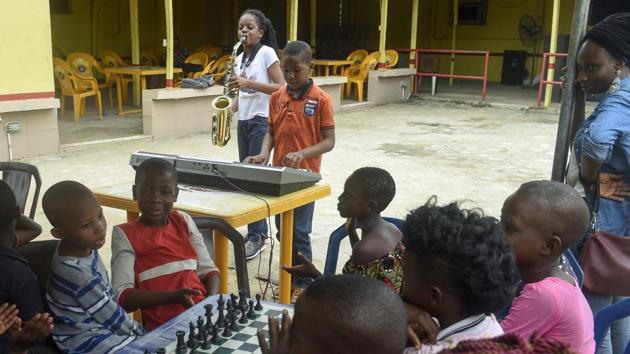
Young saxophonist Temilayo Abodurin (L) and pianist Joshua Akinotan play to motivate fellow children during a chess class. Ten-year-old Odunayo Olukoya joined Chess in Slums in January. Four months later, she came first in the national chess championship for her age group. (Pius Utomi Ekpei/ AFP)
6/8
 View Photos in a new improved layout
Updated on Sep 06, 2019 9:52 AM
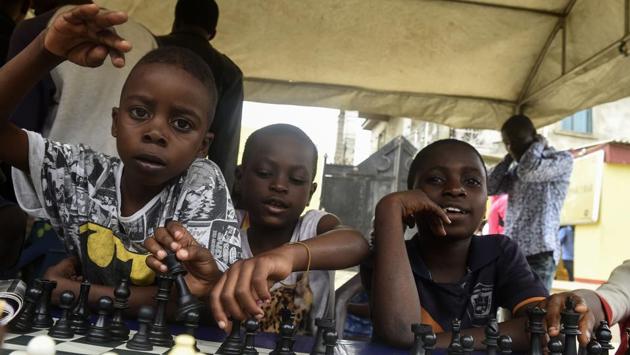
Children sit under a canopy as they play during a chess class. The attention that the project has generated has helped shine a spotlight on more of these marginalised children. Videos of the budding chess masters shared on Instagram also showcase some of their other talents that have often been overlooked in the struggle to survive. (Pius Utomi Ekpei/ AFP)
7/8
 View Photos in a new improved layout
Updated on Sep 06, 2019 9:52 AM
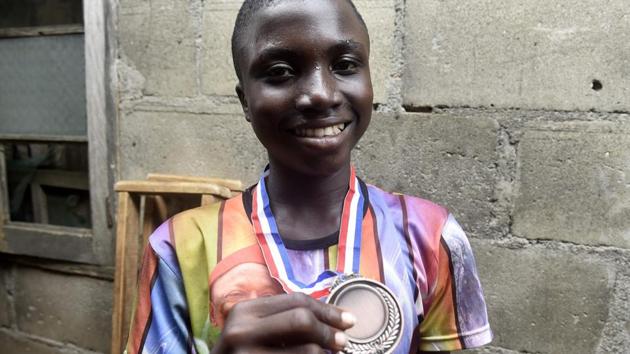
Fourteen-year-old mechanic Jamiu Ninilowo holds a medal he won following a chess tournament. He had to earn money for his family after his mother’s leg was mangled in an accident as she picked scrap at a local refuse site to sell on for a meagre profit. In February, Ninilowo joined the club and is now its best player. After he won a tournament in April, an impressed donor partnered with Chess in Slums to pay for his secondary education. (Pius Utomi Ekpei/ AFP)
8/8
 View Photos in a new improved layout
Updated on Sep 06, 2019 9:52 AM


