
 E-Paper



Photos: Freediving for shellfish with Japan’s ‘ama’ grannies
Only 2,000 ama are left across Japan, down from more than 12,000 in the 1930s, according to records kept by a marine museum in Toba. Each ama or "woman of the sea" -- has only rudimentary equipment: a buoyant ring to signal her presence at the surface while she dives, and a net to hold her haul. Out at sea, they set up their rings and then dip beneath the surface, sometimes holding their breath for more than a minute, resurfacing and diving dozens of times a session.
Updated on: Nov 28, 2018 12:04 PM IST


Share via


Copy link

1/13
 View Photos in a new improved layout
Updated on Nov 28, 2018 12:04 PM
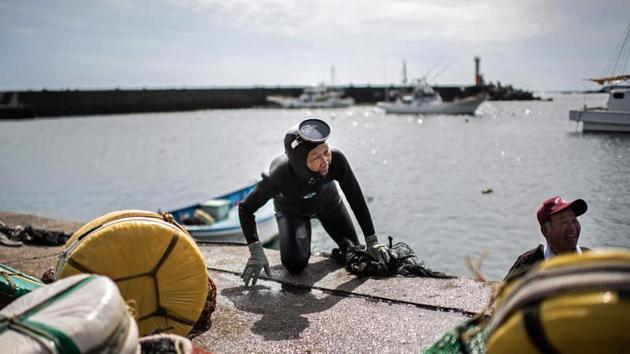
A freediving fisherwoman, known as an ‘ama’, climbs ashore after a dive in Toba. A group of Japanese grannies follows from a boat returning to shore. Clad in black wetsuits and bubbling with energy, they are part of a dwindling community of ama -- freediving fisherwomen. (Martin Bureau / AFP)
2/13
 View Photos in a new improved layout
Updated on Nov 28, 2018 12:04 PM
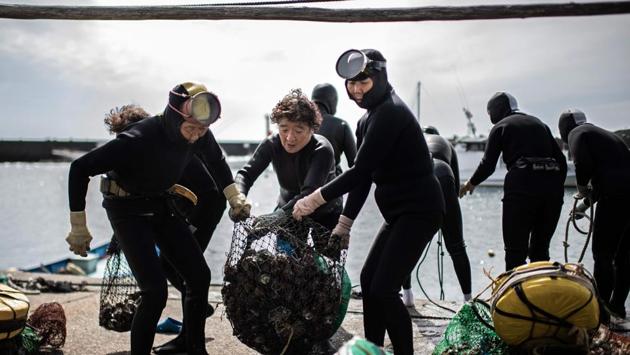
As they compare the hauls of shellfish they have gathered, the women -- who range from 60 to 80 years old -- could be mistaken for teenagers underneath the water, gliding gracefully in the dark depths of the Pacific. (Martin Bureau / AFP)
3/13
 View Photos in a new improved layout
Updated on Nov 28, 2018 12:04 PM
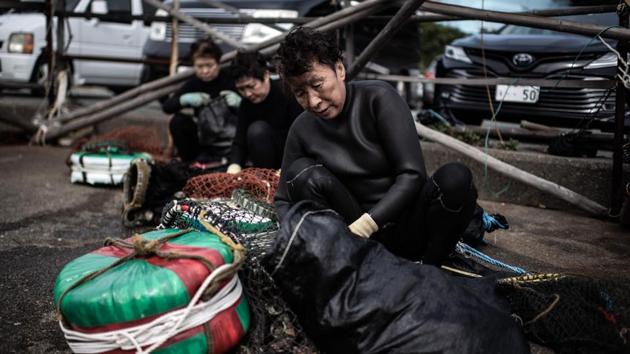
“I really feel like I am a mermaid among the fish, it’s a fantastic sensation,” says a beaming Hideko Koguchi. Back on shore, she kneels and counts the turban shells gathered by the group. Kitted out -- a mask covering her eyes and nose, flippers and a black wetsuit that replaced the white worn until the 1960s -- Koguchi sheds the weight of her years. (Martin Bureau / AFP)
4/13
 View Photos in a new improved layout
Updated on Nov 28, 2018 12:04 PM
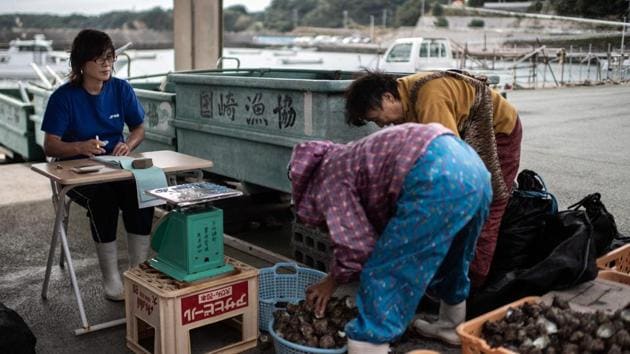
Freediving ama fisherwomen sell their catch after a dive. During the diving season, which lasts for 10 months a year, the local fishing association scrutinises weather forecasts and information on marine stocks each day, before issuing a call for the women from loudspeakers. (Martin Bureau / AFP)
5/13
 View Photos in a new improved layout
Updated on Nov 28, 2018 12:04 PM
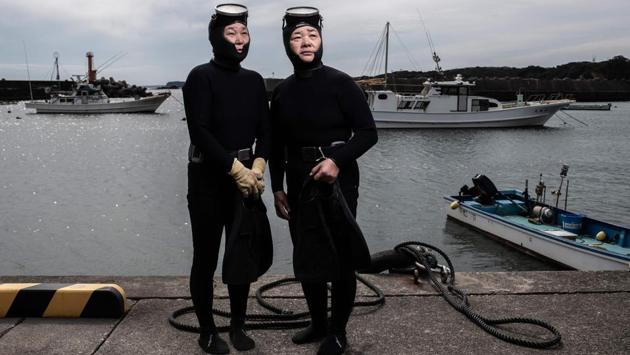
Hashimoto Michiko (L), 66, and Koguchi Hideko, 62, pose for a photograph. Only 2,000 ama are left across Japan, down from more than 12,000 in the 1930s, according to records kept by a marine museum in Toba. The profession still exists in South Korea, where the divers are known as haenyo, but their numbers are also shrinking. (Martin Bureau / AFP)
6/13
 View Photos in a new improved layout
Updated on Nov 28, 2018 12:04 PM
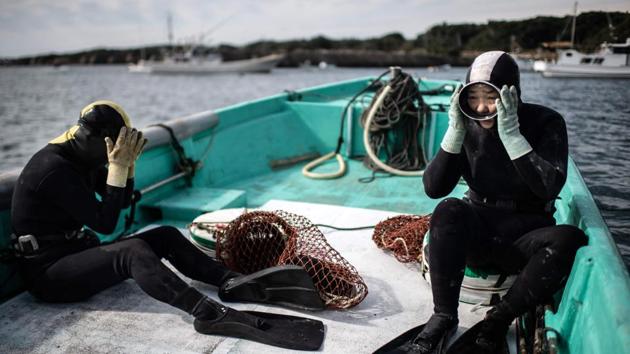
An ama duo puts on masks before diving. Historical artefacts suggest the tradition in Japan dates back “at least 3,000 years,” said Shuzo Kogure, an ama specialist and researcher at the Tokyo University of Marine Science and Technology. And while the profession has never been restricted to women, it is the female ama who have attracted the most attention. (Martin Bureau / AFP)
7/13
 View Photos in a new improved layout
Updated on Nov 28, 2018 12:04 PM
Old photos and postcards depict the divers fishing topless, a practice that ended in the 20th century but remains associated with the ama and the idea of them as “exotic objects of fantasy”, said Kogure. Cliches aside, the women have long worked hard to feed families in isolated rural regions where other types of jobs were limited. (Martin Bureau / AFP)
8/13
 View Photos in a new improved layout
Updated on Nov 28, 2018 12:04 PM
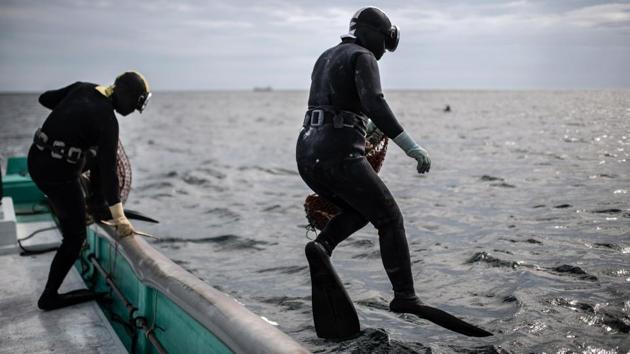
“In the old days, young women would become ama when they left middle school,” like a rite of passage, explained Sakichi Okuda, director of the local fishing cooperative. Like Koguchi and her older sister, who dive together, they usually learned the basics from a relative at a young age. (Martin Bureau / AFP)
9/13
 View Photos in a new improved layout
Updated on Nov 28, 2018 12:04 PM
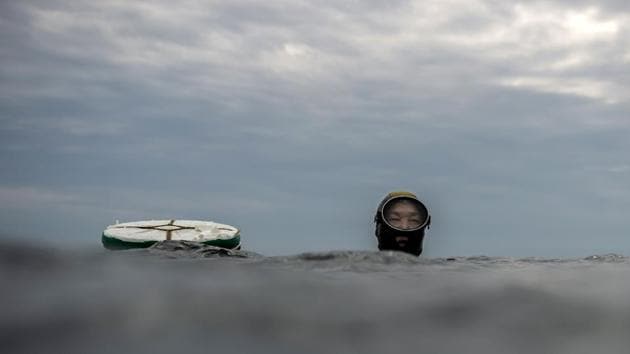
Each ama or “woman of the sea”, has only rudimentary equipment: a buoyant ring to signal her presence at the surface while she dives, and a net for her haul. The women set up their rings and then dip beneath the surface, sometimes holding their breath for more than a minute. They tirelessly resurface and dive dozens of times a session. (Martin Bureau / AFP)
10/13
 View Photos in a new improved layout
Updated on Nov 28, 2018 12:04 PM
Some ama are part of lineages stretching back generations, but their skills will not be passed on to the next one -- the children have left for the city, in search of more stable jobs. Okuda admits that “it is no longer viable to take on this job... we have to answer the question of how we can increase the revenue of these divers.” (Martin Bureau / AFP)
11/13
 View Photos in a new improved layout
Updated on Nov 28, 2018 12:04 PM
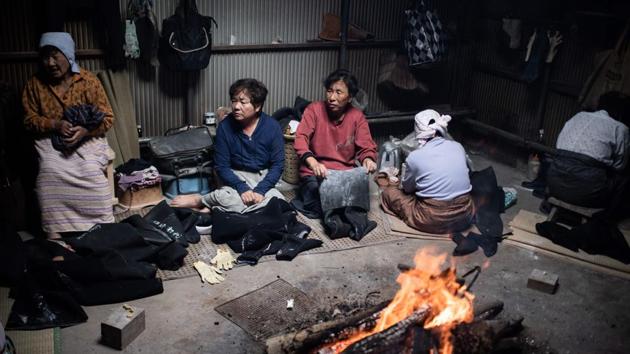
The women, some bent over with age, acknowledge the work is poorly paid and dangerous. “Of course I would love the kids to take over, but I know that being an ama diver is a difficult job and I don’t recommend it, even to my own children,” says Koguchi’s sister Michiko Hashimoto warming herself up around a fire in a the hut where the women gather to recharge. (Martin Bureau / AFP)
12/13
 View Photos in a new improved layout
Updated on Nov 28, 2018 12:04 PM
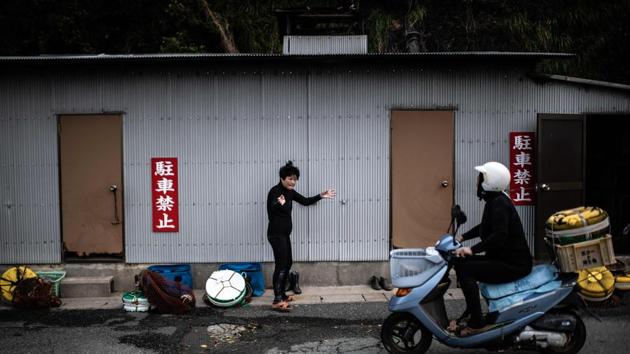
“If we want to protect and transmit the values of the ama, their way of life, we have to open the door to strangers, beyond the tradition of passing things through the family,” said Kogure. “If we can accept that change, then the future need not be so dark,” the expert said, adding that the government and local authorities should offer financial support to the divers. (Martin Bureau / AFP)
13/13
 View Photos in a new improved layout
Updated on Nov 28, 2018 12:04 PM


