
 E-Paper



Photos| Handmade since the Qing dynasty: The Chinese thousand-layer shoe
The cloth shoe has a history of more than 3,000 years in China. Before the popularity of leather and industrial scales of production cloth shoes had been the country’s footwear of choice, extending well into the mid-20th century. In the ornately decorated building of the Neiliansheng shoemaker in central Beijing, cobbler Cai Wenke painstakingly makes shoes with traditional 'thousand-layer' soles and hand-stitched fabric uppers by hand in a process that has hardly changed since the business first started in 1853 during the Qing dynasty.
Updated on: Aug 09, 2018 1:19 PM IST

Share via


Copy link

1/10

 View Photos in a new improved layout
Updated on Aug 09, 2018 1:19 PM
In an ornately decorated building in central Beijing, cobbler Cai Wenke painstakingly makes shoes by hand in a process that has hardly changed since the business first started in 1853. Neiliansheng has made shoes with traditional ‘thousand-layer’ soles and hand-stitched fabric uppers since the Qing dynasty, which ruled China until 1912. (Thomas Peter / REUTERS)
2/10
 View Photos in a new improved layout
Updated on Aug 09, 2018 1:19 PM
Cloth shoes, first designed for court nobility commonly carried around in sedan chairs, and with a history dating back almost 3,000 years are made with more than 40 types of tools, in a specific sequence of more than 90 steps. Each handmade pair usually takes about four to five days to finish. (Thomas Peter / REUTERS)
3/10
 View Photos in a new improved layout
Updated on Aug 09, 2018 1:19 PM
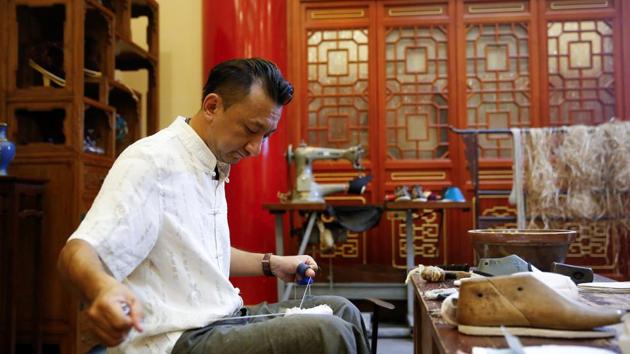
Among its satisfied customers, Neiliansheng counts politicians and celebrities, from Mao Zedong and Deng Xiaoping to Jackie Chan. In pre-industrial times, mothers at home would collect odd bits of cloth around the year, eventually splicing and trimming them into shape as soles for the family’s new shoes as the Chinese New Year drew closer. (Thomas Peter / REUTERS)
4/10
 View Photos in a new improved layout
Updated on Aug 09, 2018 1:19 PM
The shoe begins with sticking together layers of cloth with flour paste and leaving them out to air dry. Once a desired thickness is achieved, the contour of the foot is traced and cut out from the cloth. A good pair of qiancengdi or ‘thousand-layer’ soles depends on wide, evenly spaced stitches. Traditionally, over 2,000 stitches could go into making a pair. (Thomas Peter / REUTERS)
5/10
 View Photos in a new improved layout
Updated on Aug 09, 2018 1:19 PM
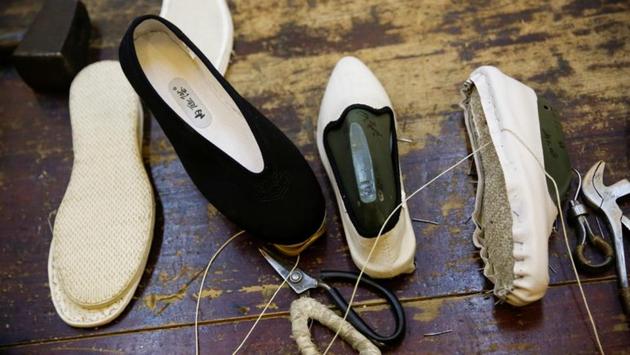
In rural China, being able to fashion a comfortable cloth shoe was considered a measure of dexterity and an essential skill for girls. Custom also dictated that unmarried women could only make these shoes for their fathers or brothers. Sending a thousand layer soled shoe to a man was considered a bold profession of love and interest. (Thomas Peter / REUTERS)
6/10
 View Photos in a new improved layout
Updated on Aug 09, 2018 1:19 PM
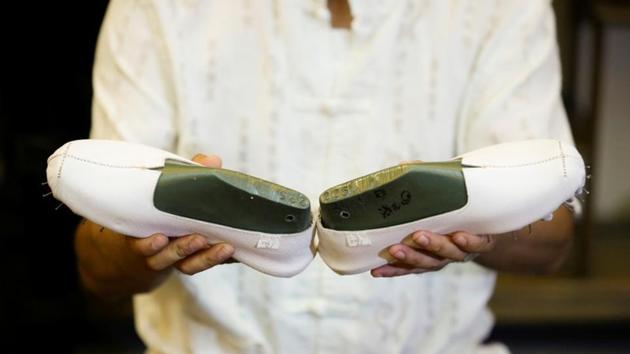
Cai Wenke inspects a pair of cloth shoes at the demonstration workshop. Despite their name however, the shoes don’t necessarily have as many as a thousand layers. The term rather stresses the strength and durability of the product itself. Nowadays, a more modest 35 layers of cotton are interwoven with hemp thread in a criss-cross fashion. (Thomas Peter / REUTERS)
7/10
 View Photos in a new improved layout
Updated on Aug 09, 2018 1:19 PM
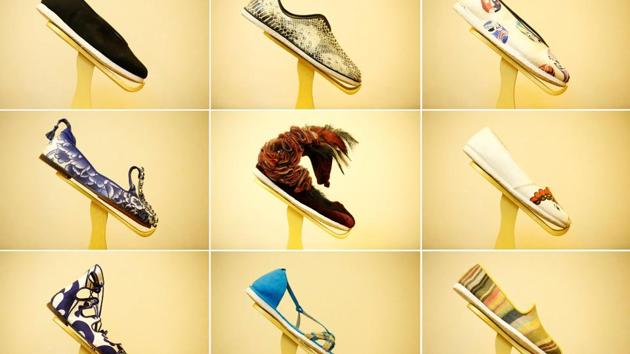
Neiliansheng, which has changed hands many times over the years, now makes more than 300 varieties of the shoes. New, more fashionable styles such as open-toed sandals and prints featuring characters such as Hello Kitty and Angry Birds cater to younger customers, while shoes embellished with feathers and pearls are used by Chinese opera performers. (Thomas Peter / REUTERS)
8/10
 View Photos in a new improved layout
Updated on Aug 09, 2018 1:19 PM
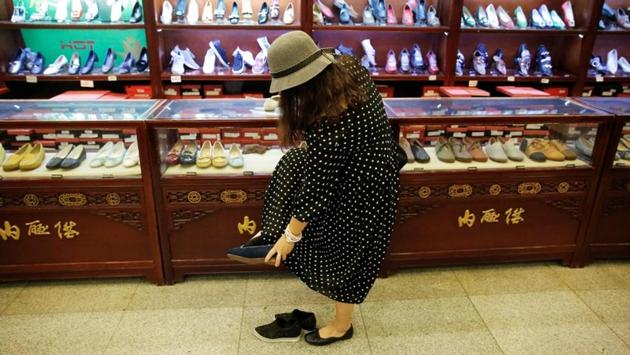
A customer tries on a handmade 'thousand-layer' cloth shoe at the Neiliansheng showroom. Thousand layer shoes as part of women’s wardrobes is a far more recent concept, emerging with the establishment of the modern People’s Republic of China. (Thomas Peter / REUTERS)
9/10
 View Photos in a new improved layout
Updated on Aug 09, 2018 1:19 PM
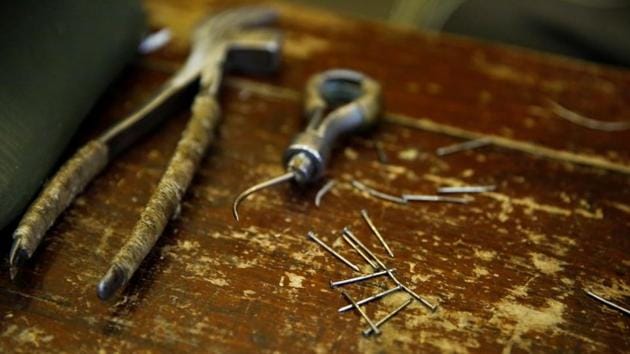
Nails and tools used in the production of 'thousand-layer' cloth shoes lie on a bench at the demonstration workshop. In 2008, Neiliansheng’s qiancengdi cloth shoe craftsmanship was put on the national intangible cultural heritage list. (Thomas Peter / REUTERS)
10/10
 View Photos in a new improved layout
Updated on Aug 09, 2018 1:19 PM


