
 E-Paper



Photos: In Italy, triage and comforting lies for COVID-19 patients
The fight against death pauses every day at 1 pm in the intensive care unit of Italy’s Policlinico San Donato. That’s when doctors phone relatives of the unit's 25 critically-ill coronavirus patients, all of whom are sedated and have tubes down their throats to breathe, to update the families. Even if there is no chance, Marco Resta, deputy head of Policlinico San Donato's Intensive Care Unit says, you have to "look a patient in the face and say, 'All is well.' And this lie destroys you." When the doctors make the calls, they try not to give false hope: They know that one out of two patients in intensive care with the disease caused by the virus is likely to die.
Updated on: Mar 17, 2020 4:04 PM IST


Share via


Copy link

1/10
 View Photos in a new improved layout
Updated on Mar 17, 2020 4:04 PM
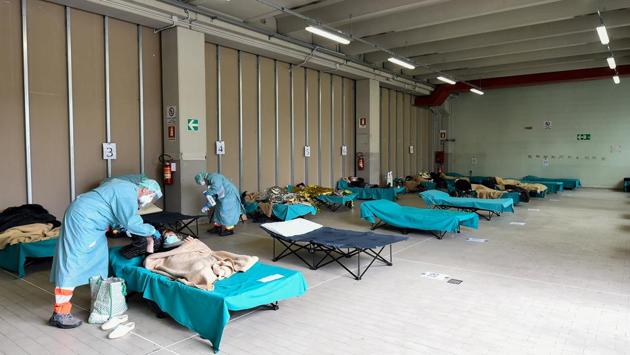
Hospital employees tend to patients at a temporary structure set up outside the accident and emergency department, where any new arrivals presenting coronavirus symptoms are being tested, at the Brescia hospital, Lombardy. As of Monday, 2,158 people had died and 27,980 been infected by coronavirus in Italy – the second highest number of reported cases and deaths in the world behind China. (Flavio Lo Scalzo / REUTERS)
2/10
 View Photos in a new improved layout
Updated on Mar 17, 2020 4:04 PM
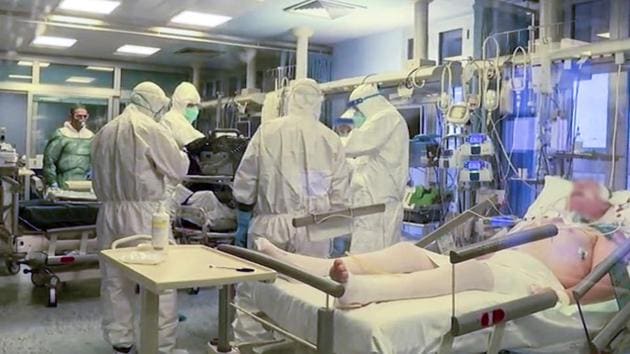
Medical staff treat coronavirus patients in an ICU at the Cremona hospital in northern Italy. The most devastating medical crisis in Italy since World War Two is forcing doctors, patients and their families to make decisions that Marco Resta, deputy head of Policlinico San Donato’s Intensive Care Unit, a former military doctor, told Reuters he has not experienced even in war. (LA7 PIAZZAPULITA via REUTERS TV)
3/10
 View Photos in a new improved layout
Updated on Mar 17, 2020 4:04 PM
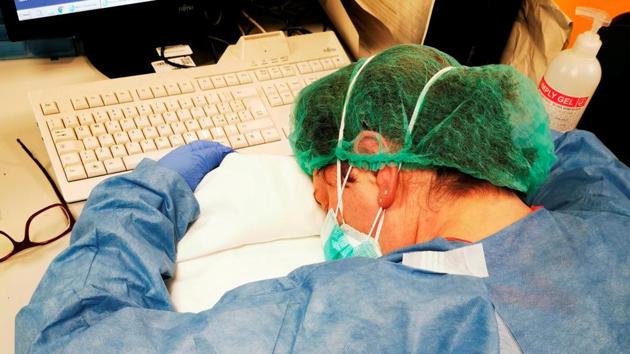
A nurse rests during a night shift at a hospital in Cremona, Italy. Doctors have warned that northern Italy – where the universal healthcare system is ranked among the world’s most efficient – is a forerunner of crises that the disease is bringing around the world. The outbreak, which hit the northern regions of Lombardy and Veneto first, has crippled the local network of hospitals, putting ICUs under colossal strain. (Francesca Mangiatordi / @france_exa via REUTERS)
4/10
 View Photos in a new improved layout
Updated on Mar 17, 2020 4:04 PM
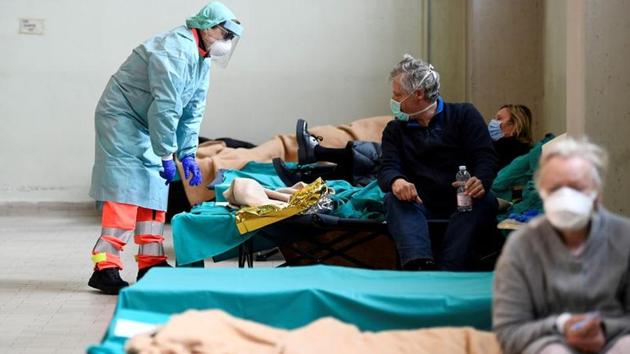
Medical personnelasks help patients inside the Spedali Civili hospital in Brescia. Over three weeks, 1,135 people have needed intensive care in Lombardy, but the region has only 800 intensive care beds, according to Giacomo Grasselli, head of the ICU at Milan’s Policlinico hospital, separate from San Donato. Grasselli coordinates all the state-run intensive care units across Lombardy. (Flavio Lo Scalzo / REUTERS)
5/10
 View Photos in a new improved layout
Updated on Mar 17, 2020 4:04 PM
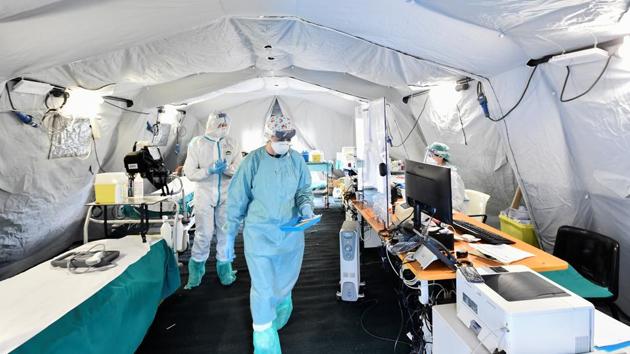
Dilemmas stemming from shortages are not new in the medical profession. When treating patients with breathing difficulties, intensive care doctors always evaluate their chance of recovery before intubation - an invasive procedure that involves inserting a tube into the mouth and down the throat and airway. (Flavio Lo Scalzo / REUTERS)
6/10
 View Photos in a new improved layout
Updated on Mar 17, 2020 4:04 PM
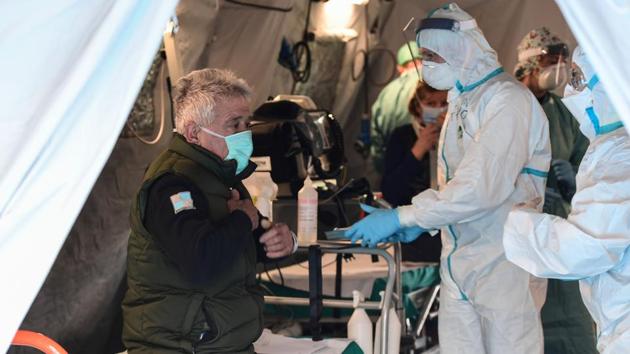
But these high numbers mean doctors must choose more often, and more quickly, who deserves a greater chance of survival - a triage that is particularly wrenching in a Catholic country that does not allow assisted dying, and where the population is, according to statistics agency Eurostat, the oldest in Europe with nearly one person in four aged 65 or older. (Miguel Medina / AFP)
7/10
 View Photos in a new improved layout
Updated on Mar 17, 2020 4:04 PM
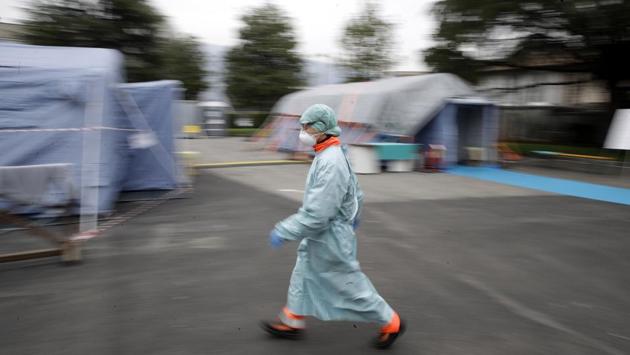
Italian doctors say that so many elderly COVID-19 patients are showing up , they can’t take a chance on those with a slim hope of recovery. Grasselli told Reuters he believed that, so far, all patients with a reasonable chance of recovering had been treated. But added that this approach is under strain. “Previously, for some people we would have said, ‘let’s give them a chance for a few days.’ Now we have to be more stringent.” (Luca Bruno / AP)
8/10
 View Photos in a new improved layout
Updated on Mar 17, 2020 4:04 PM
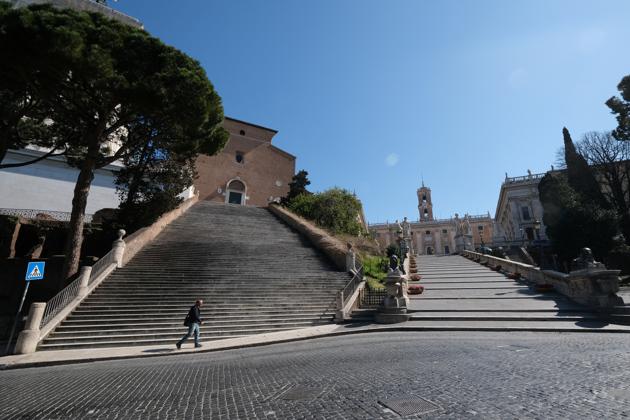
A man walks through a deserted street in Rome. Since last week, Italy has entered complete self-isolation. It has closed schools, offices and services and ordered everyone without a compelling and authorized reason to stay home. The measures are aimed at stopping the spread of the virus. Italy’s authorities are particularly anxious to slow its onset in southern Italy, which has a far less well-funded system than the north. (Crispian Balmer / REUTERS)
9/10
 View Photos in a new improved layout
Updated on Mar 17, 2020 4:04 PM
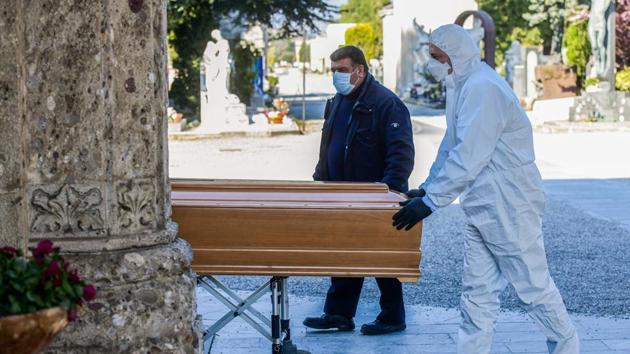
An undertaker unloads a coffin out of a hearse at Bergamo. Italy’s mass quarantining adds emotional stresses to the suffering. Family members can’t travel in ambulances with relatives, and coronavirus units are closed off to anyone not a doctor or a patient. A doctor, not a relative, is often inevitably the last person a dying COVID-19 patient will see. Loved ones can’t even approach coffins for fear of catching the virus. (Piero Cruciatti / AFP)
10/10
 View Photos in a new improved layout
Updated on Mar 17, 2020 4:04 PM


