
 E-Paper



Photos: Kenya’s herders adapt to climate change with tech aids
Kenya endures a severe drought every three to five years, the World Bank says, but they are increasing in frequency and intensity, and temperatures are rising too. Nomadic livestock herders in East Africa's drylands have endured climate variability for millennia, driving their relentless search for water and pasture in some of the world's most inhospitable terrain. But their resilience is being severely tested, forcing a rethink to traditional wisdom passed down for generations in a sparse and drought-prone expanse where millions of pastoral families depend entirely on livestock to survive.
Updated on: May 27, 2019 12:57 PM IST

Share via


Copy link

1/10
 View Photos in a new improved layout
Updated on May 27, 2019 12:57 PM
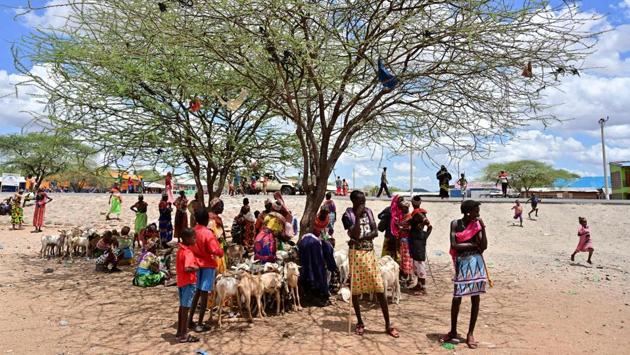
Samburu tribespeople shelter in the shade of an acacia at a livestock market. For generations, clans would study the sky over Kenya’s arid north for any sign of rain to guide their livestock to water. But divination has been rendered hopeless by intensifying droughts. Days on foot can reveal nothing more than bone-dry riverbeds and grazing land baked to dust, sounding the death knell for herds. (Tony Karumba / AFP)
2/10
 View Photos in a new improved layout
Updated on May 27, 2019 12:57 PM
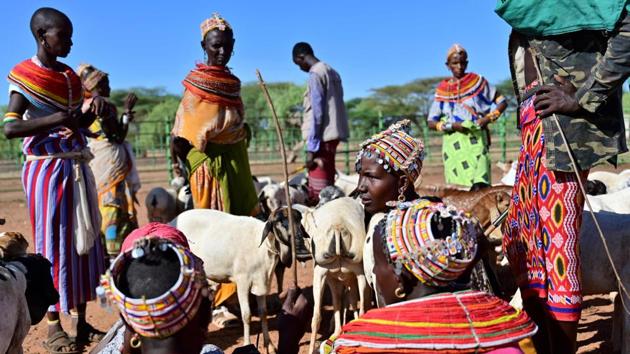
Samburu tribeswomen gather their goats to sell in Marsabit county. “You might go a long distance, and they die on the way... It is a very hard life,” Kaltuma Hassan, 42, told AFP. Today, she relies on detailed rainfall forecasts received via text message from a Kenyan tech firm to plan migrations, a simple but life-changing resource for an ancient community learning to adapt to increasing weather extremes. (Tony Karumba / AFP)
3/10
 View Photos in a new improved layout
Updated on May 27, 2019 12:57 PM
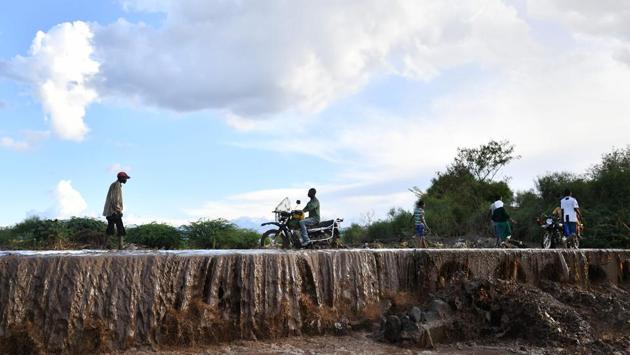
People wade across a submerged road following flash flooding in Isiolo. With conditions ever-more unreliable, technology has replaced warriors once dispatched to scout for grazing land. “They wake up very early in the morning and they look at the clouds, they look at the moon, to predict. I use this now,” Hassan said, scrolling through customised weather updates on her phone, sent via SMS. (Tony Karumba / AFP)
4/10
 View Photos in a new improved layout
Updated on May 27, 2019 12:57 PM
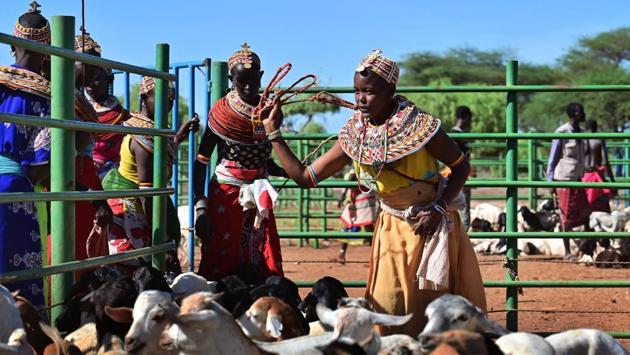
The service uses advanced weather data from US agricultural intelligence firm aWhere to provide subscribers with rain and forage conditions for the week ahead in their locality. The forecasts are sent as text messages, so they are compatible with basic phones often used by pastoralists in remote areas. (Tony Karumba / AFP)
5/10
 View Photos in a new improved layout
Updated on May 27, 2019 12:57 PM
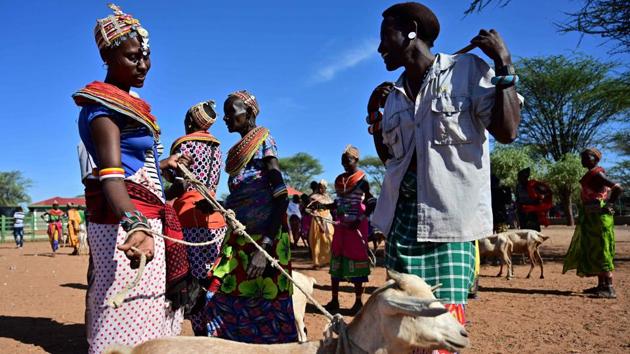
A man haggles for a goat at Merille livestock market. Rainfall -- the difference between feast and famine in East Africa and the Horn -- is more erratic than ever. A long dry spell can set pastoral families back years and erode their capacity to handle future shocks, the UN’s Food and Agriculture Organization said in a 2018 report. This year’s rains failed to arrive, putting millions at risk of starvation. (Tony Karumba / AFP)
6/10
 View Photos in a new improved layout
Updated on May 27, 2019 12:57 PM
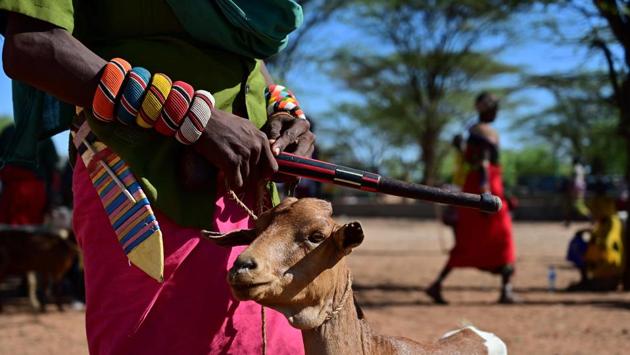
“It doesn’t rain like it once did,” said Nandura Pokodo, at the dusty livestock market in Merille in Kenya’s pastoralist heartland. Nobody wants his drought-weary animals, so he will return home empty-handed. As the rains failed, Pokodo, 55, wandered for days between March and April in search of grazing land but found nothing. He lost 20 goats and sheep. (Tony Karumba / AFP)
7/10
 View Photos in a new improved layout
Updated on May 27, 2019 12:57 PM
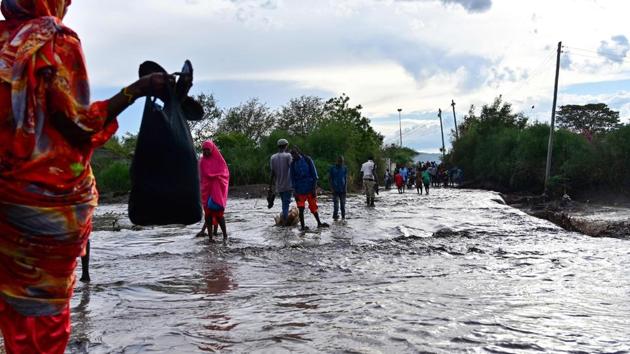
People wade across a submerged road following flash flooding in Isiolo. The text messages have also helped Samuel Lkiangis Lekorima protect not just his livestock, but the safety of his community. Harsher droughts have stoked intense competition between pastoralists for water and pasture. A feud between two groups over a watering hole near Ethiopia left 11 dead in May, local media reported. (Tony Karumba / AFP)
8/10
 View Photos in a new improved layout
Updated on May 27, 2019 12:57 PM
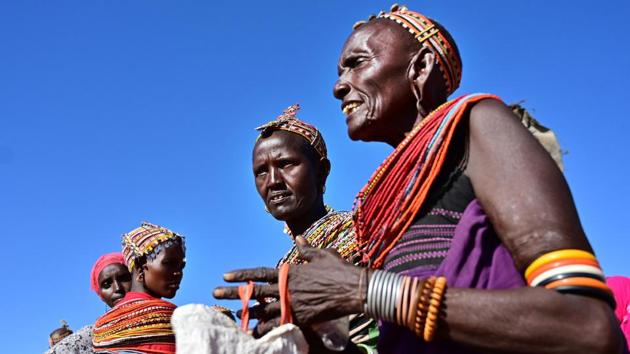
Samburu tribeswomen arrive to Merille livestock market. Lekorima, a 22-year-old herder, said advance knowledge of rainfall helped keep his people wandering far, and avoid potential tensions with distant clans. Other modern interventions are also playing a part, helping protect not just pastoralists but a sector that contributes more than 12% to Kenya’s GDP, according to the World Bank. (Tony Karumba / AFP)
9/10
 View Photos in a new improved layout
Updated on May 27, 2019 12:57 PM
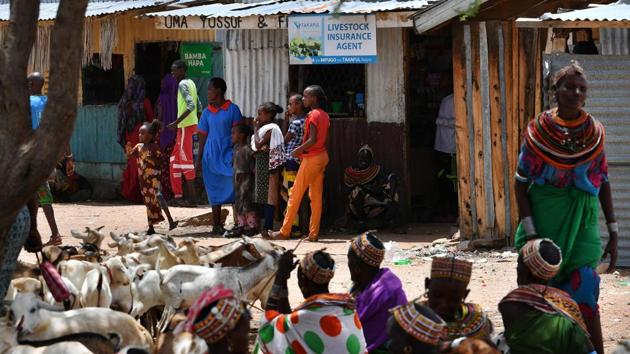
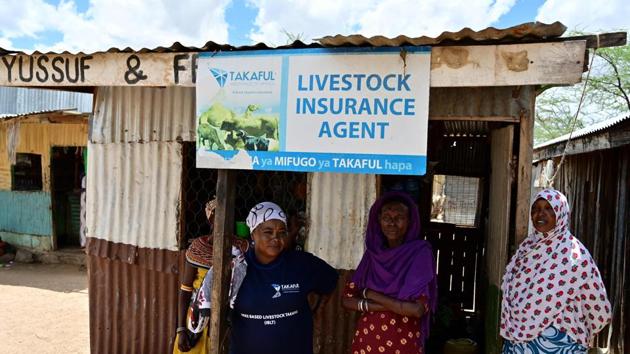
Samburu tribespeople shelter in the shade, adjacent to a livestock insurance agent’s kiosk. The Nairobi-based International Livestock Research Institute uses satellite imagery to determine when pasture levels are critically low. Some insurance products are linked to this index and issue payments before drought hits, so pastoralists can buy fodder for lean times. (Tony Karumba / AFP)
10/10
 View Photos in a new improved layout
Updated on May 27, 2019 12:57 PM


