
 E-Paper



Photos: Life and death in eastern Congo’s Ebola outbreak
In eastern Congo, the Ebola virus has killed more than 1,700 people and has now also arrived in the region’s largest city, Goma. The World Health Organisation recommended last week that the outbreak be declared a global health emergency. Many people in the outbreak area do not believe Ebola exits. Deep distrust - along with political instability and deadly violence - has severely undermined efforts by public health authorities in Congo to curb the outbreak by tracing and vaccinating those who may have come into contact with infected people.
Updated on: Jul 29, 2019 10:37 AM IST

Share via


Copy link

1/10
 View Photos in a new improved layout
Updated on Jul 29, 2019 10:37 AM
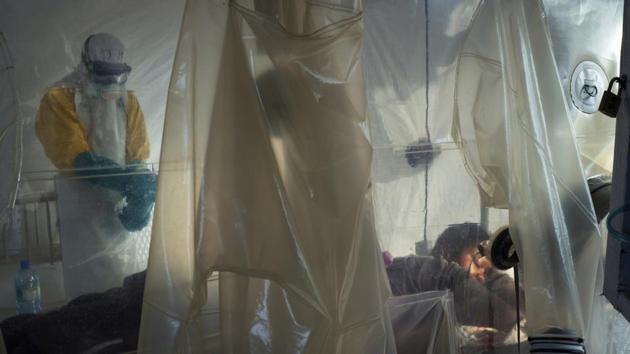
Health workers wearing protective gear check on a patient isolated in a plastic cube at an Ebola treatment centre in eastern Congo, the epicentre of the current Ebola epidemic. Many people in the outbreak area do not believe Ebola exists. Unfamiliar with the disease, they blame witchcraft, politicians and foreigners for the deaths. That makes things difficult and dangerous for those working to contain the outbreak. And once someone is infected, it is often too late. (Jerome Delay / AP)
2/10
 View Photos in a new improved layout
Updated on Jul 29, 2019 10:37 AM
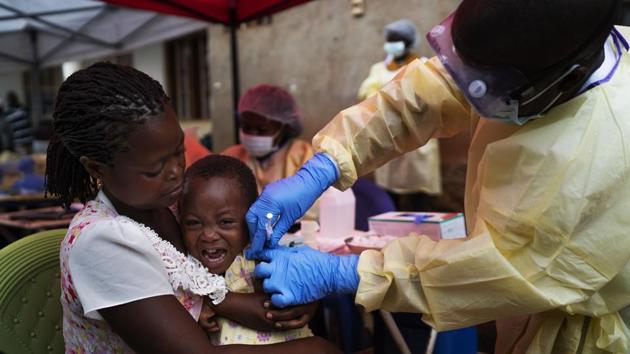
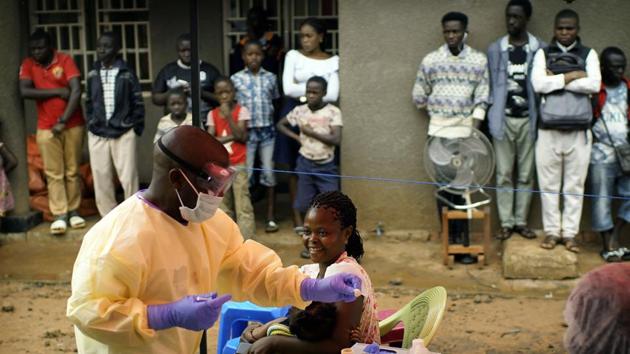
A child is vaccinated against Ebola in Beni, Congo. Health experts agree the experimental Ebola vaccine has saved multitudes in Congo. But after nearly a year and some 1,71,000 doses given, the epidemic shows few signs of waning. The virus has killed more than 1,700 people and has now arrived in the region’s largest city, Goma. The World Health Organisation recommended last week that the outbreak be declared a global health emergency. (Jerome Delay / AP)
3/10
 View Photos in a new improved layout
Updated on Jul 29, 2019 10:37 AM
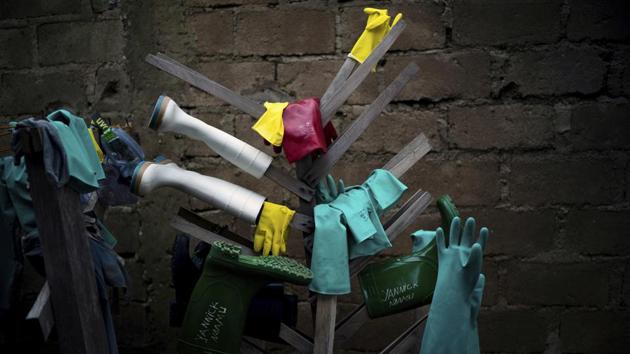
Rubber gloves and boots used by health workers treating Ebola patients are hung to dry after being disinfected at an Ebola treatment centre. “We have it now and it’s not the miracle we wanted it to be,” said Dr. Joanne Liu, president of Doctors Without Borders. “The fact that we’ve used so much vaccine, and the epidemic hasn’t stopped, that shows us that contact tracing is not great.” (Jerome Delay / AP)
4/10
 View Photos in a new improved layout
Updated on Jul 29, 2019 10:37 AM
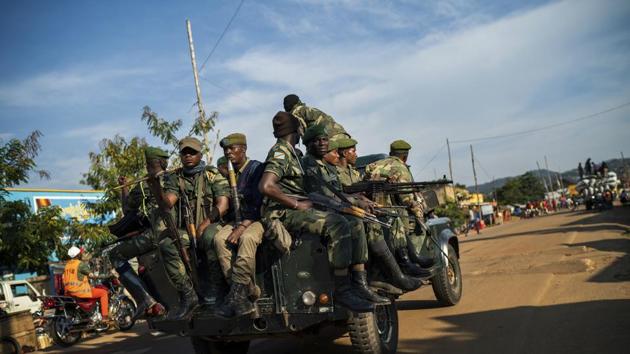
Congolese soldiers patrol the streets of Beni. In some cases, health teams have been unable to reach certain areas because of violence or rebel activity. Earlier this month, the head of the Congolese health ministry’s response efforts in Beni was at one point unable to return from a field visit while the military battled ADF rebels, who are linked to the Islamic State. (Jerome Delay / AP)
5/10
 View Photos in a new improved layout
Updated on Jul 29, 2019 10:37 AM
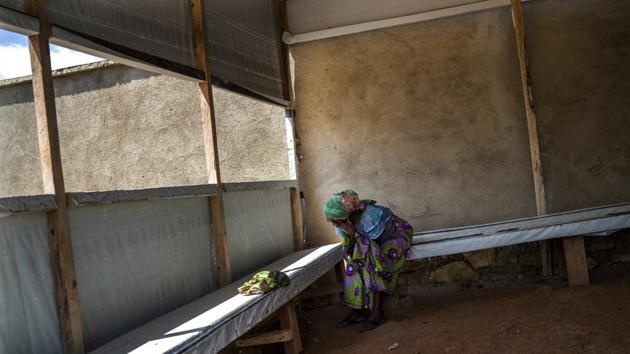
A woman waits at the morgue for the body of her relative to be cleared for burial. During the 2014-16 Ebola epidemic in West Africa, which left more than 11,300 people dead, health workers could only dream of a vaccine with a 97.5 percent effectiveness rate that could improve the odds of survival even in those already infected. (Jerome Delay / AP)
6/10
 View Photos in a new improved layout
Updated on Jul 29, 2019 10:37 AM
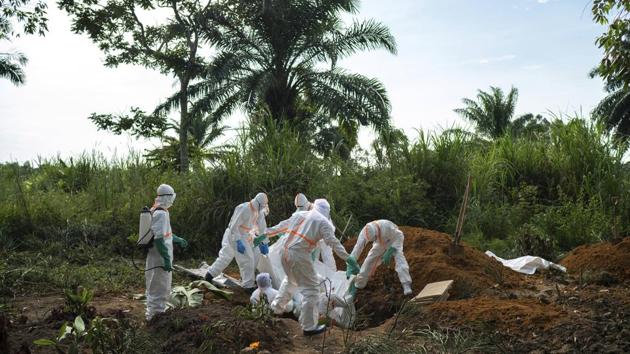
Workers bury the remains of Mussa Kathembo, an Islamic scholar who had prayed over those who were sick in Beni. When Kathembo fell ill he was taken from his house to the Ebola treatment centre. As he and his wife, who also fell ill, received emergency treatment from health workers dressed head-to-toe in hazmat suits, their house was quickly turned into a vaccination centre by local health authorities and the World Health Organisation. (Jerome Delay / AP)
7/10
 View Photos in a new improved layout
Updated on Jul 29, 2019 10:37 AM
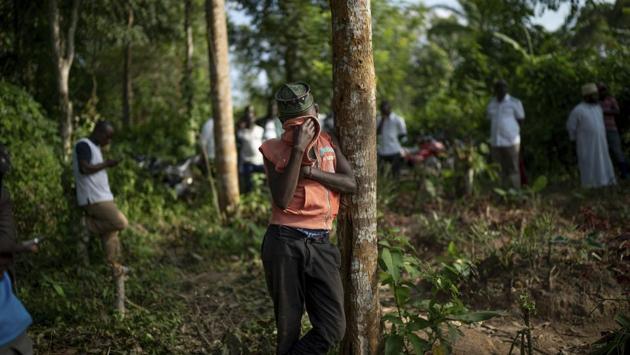
Ismael Kasereka, 14, weeps at the funeral of his uncle and aunt in Beni. The vaccine’s manufacturer, Merck, said it has 2,45,000 1-millileter doses on hand and that could rise to 9,00,000 over the next 18 months. The dose in Congo also has been reduced to 0.5 mL, effectively doubling the supply. (Jerome Delay / AP)
8/10
 View Photos in a new improved layout
Updated on Jul 29, 2019 10:37 AM
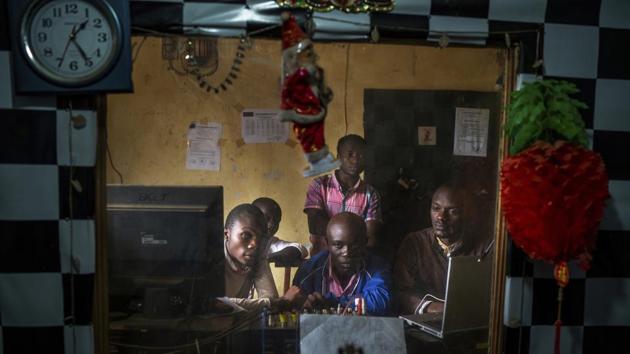
Congolese journalists broadcast an Ebola awareness program from a local radio station in Beni. Nearly a year of public health messages have failed to reach some Congolese who fear the Ebola vaccine is just another ploy to kill people in a region wracked by violence for a quarter century. (Jerome Delay / AP)
9/10
 View Photos in a new improved layout
Updated on Jul 29, 2019 10:37 AM
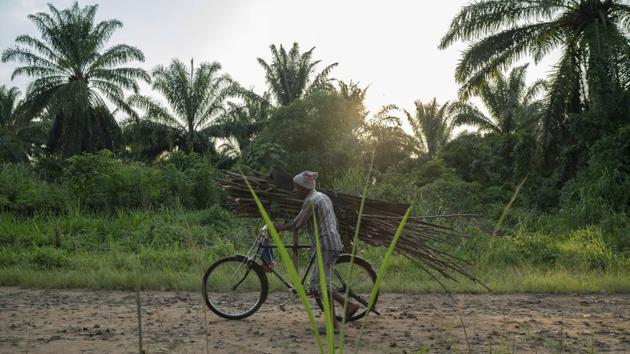
“The rumors were if you got vaccinated you would die,” said Liboke Kakule Muhingi, a 43-year-old farmer in Mangina, where the epidemic began last August. His mother was among the first to die. Then, one by one, six of his sisters who had cared for their ailing mother were killed by Ebola. Kakule accepted the vaccine and made sure his wife and eight children got it, too. “If I hadn’t, we’d all be dead,” he said. (Jerome Delay / AP)
10/10
 View Photos in a new improved layout
Updated on Jul 29, 2019 10:37 AM


