
 E-Paper



The real call of duty for India’s foresters
Why maintain forests? Forests provide ecosystem services that man-made systems cannot. They underpin food systems, support livelihoods and economic growth.

 Prefer HTon Google


Elected representatives, project proponents, and even seasoned bureaucrats see foresters as impediments to development. Foresters often ask themselves why not walk the easier path. Here is why they don’t.
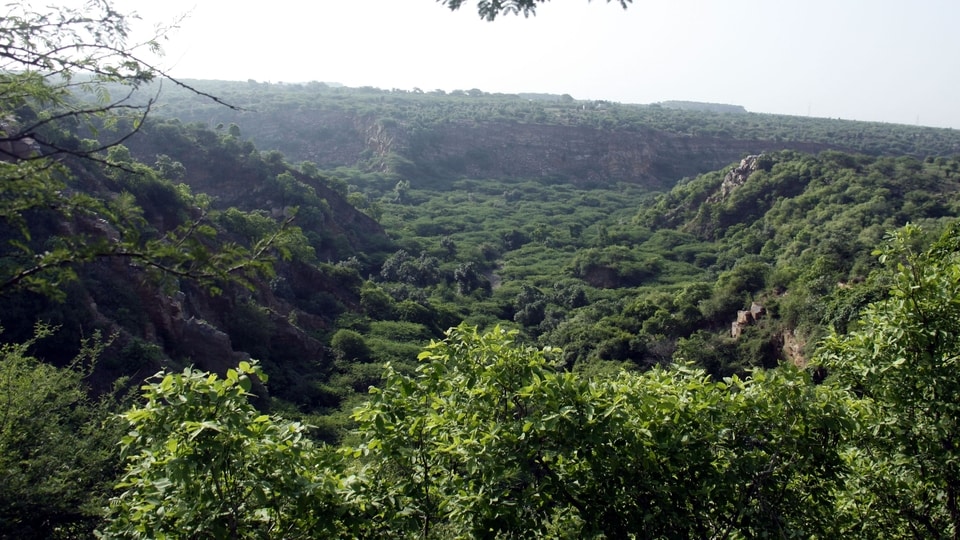
But first, why maintain forests? Forests provide ecosystem services that man-made systems cannot: climate regulation, watershed preservation, and air quality maintenance. They underpin food systems, support livelihoods and economic growth. Diverting forests for development precludes these benefits. The Constitution mandates maintenance of forests. The National Forest Policy 1988 recognises forest lands as national assets to be safeguarded for the benefit of the entire community. Even the Supreme Court holds forest conservation as fundamental to human well-being.
Also Read: Inclusions and exclusions in India’s forest governance
Now, the forester. A forester regards forests as irreplaceable ecological capital accumulated over centuries and knows that suggesting actions to mitigate the effects of diverting forests is politically correct but socio-ecologically inadequate. Foresters recognise the fallacy of ecological substitution — a man-made forest cannot replicate the ecological value of an old-growth forest. They recognise that while the benefits of diverting forests for other purposes are quantifiable and immediate, the ecological losses are diffuse and deferred. Accordingly, their position rests on the principle of intergenerational equity, articulated in the definition of sustainable development as “meeting the needs of the present without compromising the ability of future generations to meet their own needs”. Foresters understand that ecological systems exhibit non-linear dynamics, and incremental degradation can cascade into ecosystem collapse. Ascertaining ecosystem tipping thresholds is near-impossible, so foresters adopt a precautionary approach of conservation rather than diversion.
Foresters undergo a rigorous two-year training programme that emphasises ecological science, forest governance, conservation ethics and high levels of physical fitness. This establishes a “framework for their collective conduct”; sociologist Émile Durkheim calls it “professional conscience”. Foresters recognise their profound fiduciary duty to forests — a moral and legal obligation to safeguard them in trust for future generations.
Historically, forest working plans have aimed at sustainable yield and conservation rather than wanton exploitation. When one understands how forests influence rainfall, how corridor forests sustain tiger metapopulations, or how a mangrove system buffers coastal communities against cyclones, indifference to their diversion becomes morally untenable.
Foresters are obligated to avoid what ecologist Garrett Hardin termed the “tragedy of the commons”. They are public trustees of forests mandated to conserve them. Their adherence to forest protection is an act of silent public service, involving personal stress and risk, yet carried out with grit.
Also Read: Plantation drives matter only if the trees survive
In an era of accelerating environmental crises, when forests are our most critical buffers, Foresters resist short-termism. Their steadfastness is a noble counterweight to relentless pressures that prioritise transient economic gains at the expense of sustainability.
A forester’s approach is forged through decades of intimate acquaintance with forests, shaped by law, science, and ethics, and by an almost visceral understanding of what forests truly represent. It is not anti-development; rather, it enables sustainable development. Foresters stand in the way of unsustainability for the well-being of people and the planet.
Jagmohan Sharma is former Director, Indira Gandhi National Forest Academy. The views expressed are personal


