
 E-Paper



Photos: New wave of Covid-19 cases raises alarm in several US states
The Unites States capped a week of surges across its southern half as it entered July. Southern and western parts of the country are now charting what looks like the second wave of infections in the country, undoing gains made by north-eastern states such as New York and New Jersey that have finally managed to control their outbreaks to a large extent. The US has logged almost 2.8 million cases as of today and 5,19,000 fatalities.
Updated on: Jul 2, 2020 3:39 PM IST


Share via


Copy link

1/9

 View Photos in a new improved layout
Published on Jul 2, 2020 3:39 PM
Demonstrators march through downtown Sanford to protest a government order mandating masks while inside a business or when attending public gatherings indoors, in Florida on July 1. The US saw Covid-19 cases rise by over 50,000 yesterday, according to the worldometers tracker, marking the biggest one-day spike in the country since the start of the pandemic. (Joe Burbank / Orlando Sentinel via AP)
2/9
 View Photos in a new improved layout
Published on Jul 2, 2020 3:39 PM
An electronic sign on a bus reads “Ride Safe, Cover Your Face” at a station in Tucson, Arizona on June 30. California, Texas and Arizona have emerged as the new US hot spot after a week of surges in cases in the southern and western parts of the country causing what is seen as the second wave of infections. (Cheney Orr / Bloomberg)
3/9
 View Photos in a new improved layout
Published on Jul 2, 2020 3:39 PM
Dr. Anthony Fauci, director of the National Institute for Allergy and Infectious Diseases during a Senate Committee hearing in Washington on June 30. The sobering record set yesterday follows a warning by Dr. Fauci that the number could soon double to 100,000 cases a day if Americans do not take steps necessary to halt the virus’ resurgent spread, such as wearing masks when unable to practice social distancing. (Kevin Dietsch / Pool via REUTERS)
4/9
 View Photos in a new improved layout
Published on Jul 2, 2020 3:39 PM
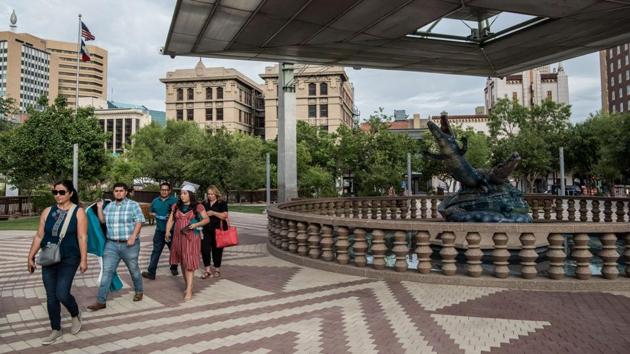
A family celebrating a graduation is seen without face masks as they walk through San Jacinto Plaza in El Paso, Texas on July 1. In the first week of June, the US was adding about 22,000 new cases every day. But as the month progressed, hotspots began to emerge across its southern states. In the last seven days of June, daily new infections almost doubled to 42,000 nationally. (Cengiz Yar / Getty Images / AFP)
5/9
 View Photos in a new improved layout
Published on Jul 2, 2020 3:39 PM
Catherimarty Burgos, a member of Miami-Dade County “surge teams” distributes bags with masks, sanitizers, and gloves to educate people on how to stay safe from COVID-19, in a neighbourhood of Miami, Florida on June 30. More than half of new US cases each day come from Arizona, California, Florida and Texas, home to 30% of the country’s population. (Chandan Khanna / AFP)
6/9
 View Photos in a new improved layout
Published on Jul 2, 2020 3:39 PM
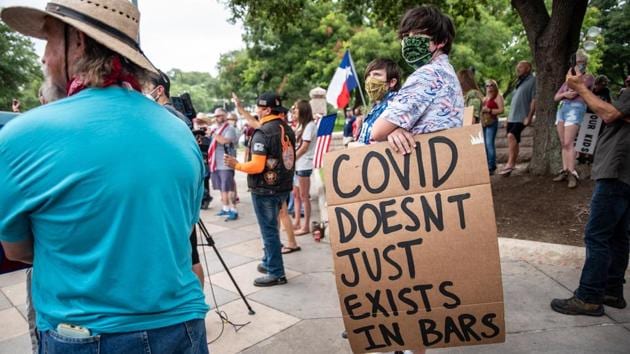
Demonstrators gather in front of the Texas State Capital during a “Bar Lives Matter” protest against an order for their closure amid surging Covid-19 cases in Austin, Texas on June 30. While cases are rising in the southern states, the reasons behind the surges have health experts and state governments divided. (Sergio Flores / Bloomberg)
7/9
 View Photos in a new improved layout
Published on Jul 2, 2020 3:39 PM
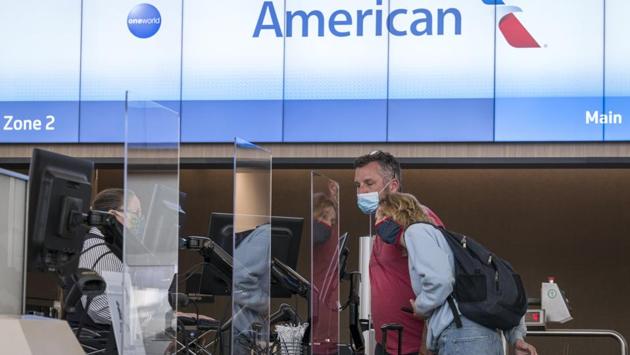
Travelers wearing protective masks check-in at the American Airlines Group Inc. counter at San Francisco International Airport (SFO) in San Francisco, California on July 1. California, which had been easing restrictions on indoor businesses like restaurants over the last month pins its surge in part to a rise in social and family gatherings. (David Paul Morris / Bloomberg)
8/9
 View Photos in a new improved layout
Published on Jul 2, 2020 3:39 PM
A worker wears a face covering takes orders from motorists in the drive-through lane at an In-N-Out Burger restaurant amid the COVID-19 pandemic on July 1 in Los Angeles. State Governor Gavin Newsom has ordered indoor dining restaurants to close again as Los Angeles and other counties in the sunshine state roll back their reopening orders. (Mario Tama / AFP)
9/9
 View Photos in a new improved layout
Published on Jul 2, 2020 3:39 PM


