
 E-Paper



Photos: Roving cinema brings movie magic to Syria’s Kurdish children
Across the Kurdish-held region, old cinemas once showed American B movies, Bollywood fare and porn, but they have lost their audiences and closed. In local minds, cinema is also tied to tragedy, after a fire ripped through a theatre in the nearby town of Amuda in 1960, killing more than 280 children. A mobile cinema roving through the countryside now aims to introduce young children to the magic and beauty of the silver screen from the early days of moving pictures and substitute memories of violence and tragedy with art.
Updated on: Aug 30, 2019 12:13 PM IST

Share via


Copy link

1/7
 View Photos in a new improved layout
Updated on Aug 30, 2019 12:13 PM
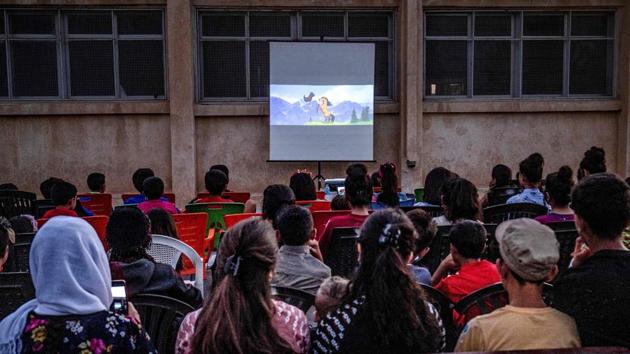
Children attend a film screening as part of the “Komina Film” initiative, in the village of Shaghir Bazar, in the Kurdish-populated areas of Hasakeh province, Syria. In a schoolyard of rural northeastern Syria, boys and girls broke out into giggles watching Charlie Chaplin’s pranks and animated films, a rare treat thanks to a mobile cinema roving through the country’s northeast countryside. (Delil Souleiman / AFP)
2/7
 View Photos in a new improved layout
Updated on Aug 30, 2019 12:13 PM
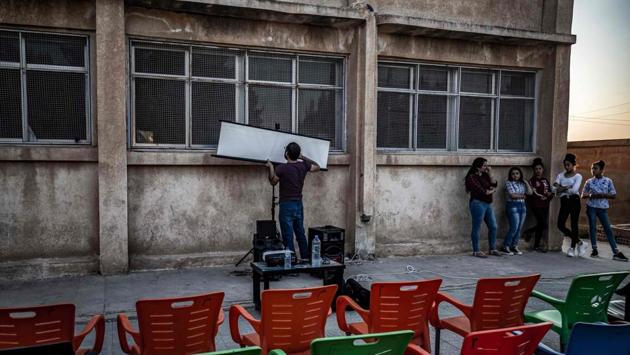
A member of the Komina Film initiative prepares a projector screen for a film screening. Filmmaker Shero Hinde is the mind behind the initiative, screening films in remote villages using just a laptop, projector and a canvas screen. “We’ve already shown films in towns but we wanted children in the villages to enjoy them too,” said the bespectacled 39-year-old with thick greying curly hair. (Delil Souleiman / AFP)
3/7
 View Photos in a new improved layout
Updated on Aug 30, 2019 12:13 PM
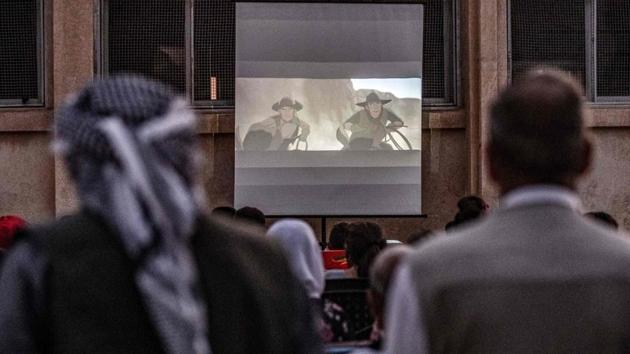
Men watch as children attend a film screening. With some films dubbed into Kurdish and others subtitled, he and a team of volunteers want to spread their love of cinema across Rojava, the Kurdish name of the semi-autonomous northeast of war-torn Syria. “Our goal is that in a year’s time, there won’t be a kid in Rojava who hasn’t been to the cinema,” the Kurdish filmmaker said. (Delil Souleiman / AFP)
4/7
 View Photos in a new improved layout
Updated on Aug 30, 2019 12:13 PM
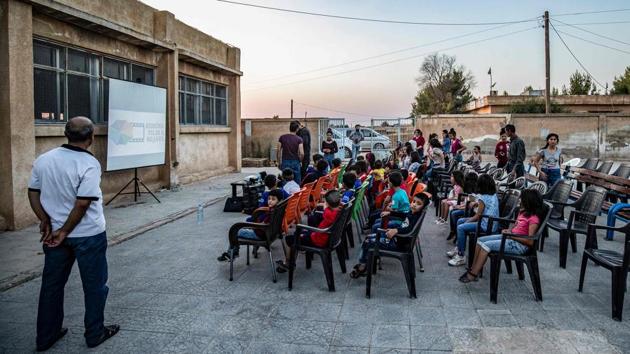
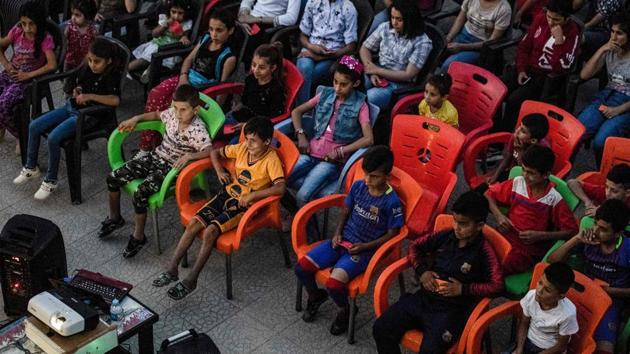
Sitting on coloured plastic chairs just before dusk, the boys and girls watch wide-eyed as the first images of “The Kid” appear on screen. Lively piano music rings out across the school court, as Chaplin plays a tramp who rescues an orphaned baby in the 1921 silent movie. Laughter rises above the darkened playground as he tries to clean the baby’s nose or to feed him from a kettle strung from the ceiling. (Delil Souleiman / AFP)
5/7
 View Photos in a new improved layout
Updated on Aug 30, 2019 12:13 PM
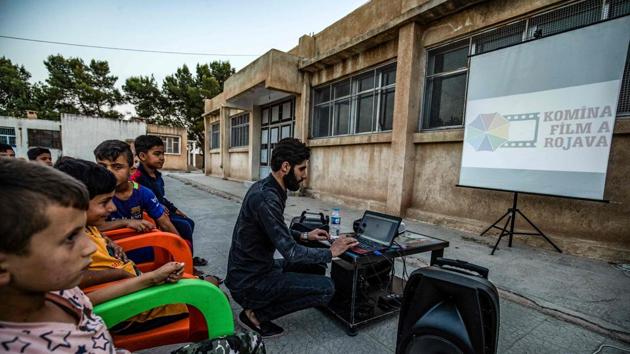
A Komina Film volunteer prepares a screening. The mobile cinema, says Hinde, aims to introduce young children to something he missed out on as a schoolboy. “When we were kids, the cinema was that dark place,” he said. In primary school, he and others were taken to see films inappropriate for their age and in substandard conditions, he recalled. It was only later that he discovered “the truth and beauty of cinema”. (Delil Souleiman / AFP)
6/7
 View Photos in a new improved layout
Updated on Aug 30, 2019 12:13 PM
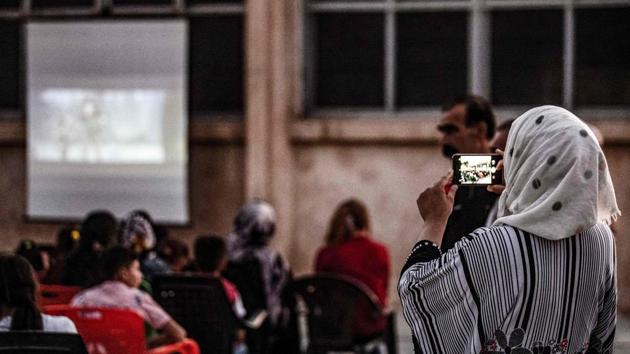
To give today’s children a different experience, “we’re now trying to substitute that darkness for something beautiful and colourful”, Hinde said. The mobile cinema’s objective is also to screen “films linked to protecting the environment and personal freedoms”, Hinde said. Among the audience at one screening, Amal Ibrahim said her son Kaddar, 7, and daughter Ayleen, 6, were brimming with excitement. (Delil Souleiman / AFP)
7/7
 View Photos in a new improved layout
Updated on Aug 30, 2019 12:13 PM


