
 E-Paper



Photos: Scars dotting Middle East landscape speak of past peace failures
Talk of Middle East peace is in the air again, as politicians gather in Bahrain to launch the latest in a long line of initiatives to resolve the Israeli-Palestinian conflict. Thousands of words and millions of dollars will likely be expended at the US-led conference on June 25-26 aimed at boosting the Palestinian economy, as the first phase of President Donald Trump's long-delayed peace plan gets under way. Bearing witness to the difficulty of the task are the scars left by wars past across the landscape of Israel, the Palestinian Territories and the Golan Heights.
Updated on: Jun 26, 2019 4:57 PM IST

Share via


Copy link

1/11
 View Photos in a new improved layout
Updated on Jun 26, 2019 4:57 PM
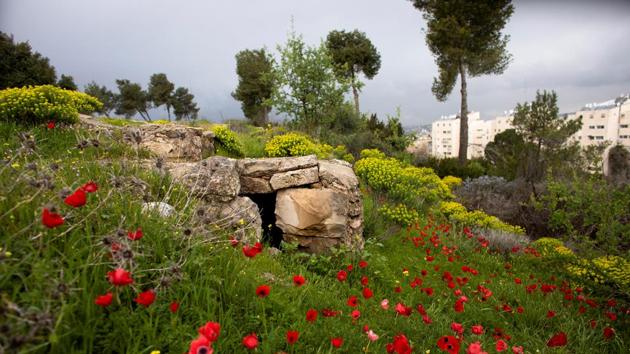
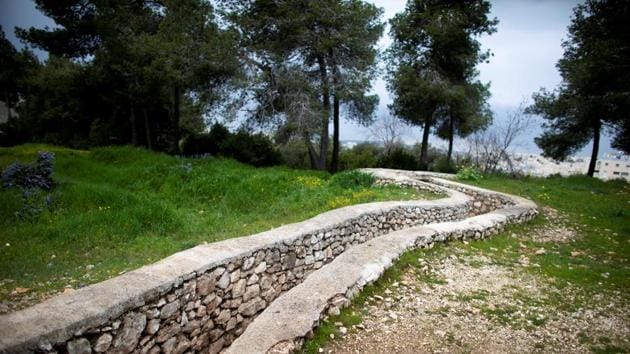
A part of the trench is seen in a former Jordanian military post known as Ammunition Hill in Jerusalem. Originally built by the British, the site was captured by Jordan in the 1948-1949 war and held by them until Israeli troops captured it in the 1967 Six Day War. Ancient ruins and medieval castles bear witness to the fact that conflict between the peoples of the Levant is nothing new. (Ronen Zvulun / REUTERS)
2/11
 View Photos in a new improved layout
Updated on Jun 26, 2019 4:57 PM
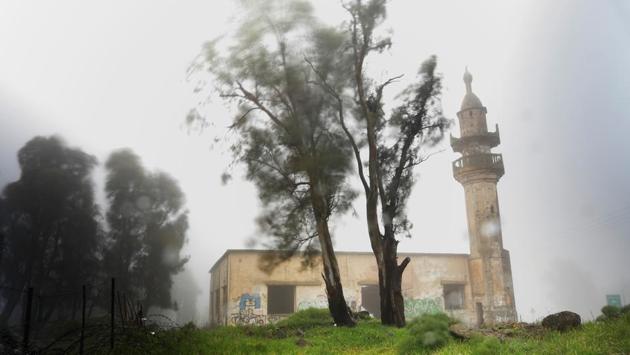
An abandoned mosque is seen on a rainy morning in the Golan Heights, in territory that Israel captured from Syria and occupied in the 1967 Middle East war. Until 1967 a Syrian village inhabited by Circassians stood near the site, which now lies just 5km on the Israeli side of the United Nations-monitored ‘Area of Separation’ that divides Israeli and Syrian military forces under a 1974 ceasefire arrangement. (Ronen Zvulun / REUTERS)
3/11
 View Photos in a new improved layout
Updated on Jun 26, 2019 4:57 PM
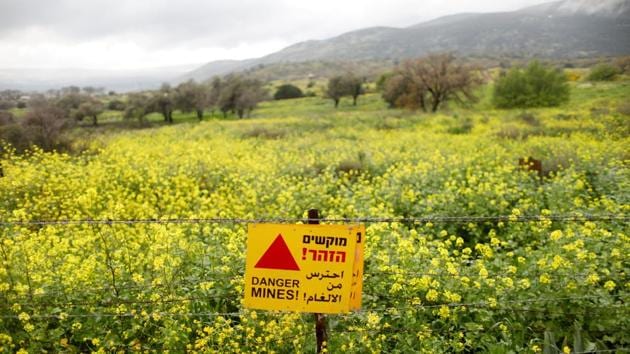
A sign warning of landmines is seen on a fence in the Golan Heights. Many tourists drive past the site on their way to popular holiday spots. Since the end of British Mandate rule and the creation of the modern state of Israel in 1948, invasions, wars, armistices, treaties, uprisings, barriers, checkpoints and civil wars have shifted the boundaries of who can travel - and live - where. (Ronen Zvulun / REUTERS)
4/11
 View Photos in a new improved layout
Updated on Jun 26, 2019 4:57 PM
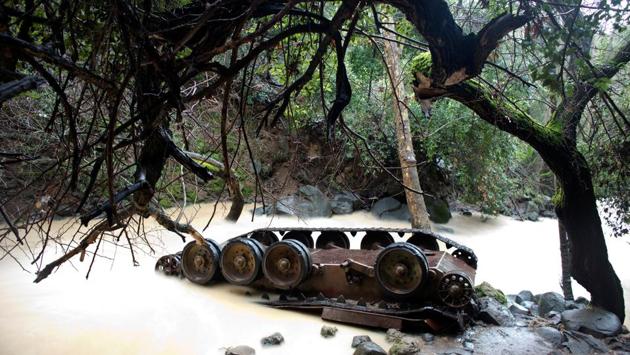
A Syrian tank lies turned over in the Hermon Stream in the Banias Nature Reserve on the western edge of the Golan Heights. Israel captured the area, a former demilitarized zone, in the Six Day War. Today, Israeli tourists carve graffiti into the metal of the tank while dangling their feet in the foaming water below. “It’s surrealistic,” said Daniel Alonim, 54, as his friends played Scrabble atop the hulk. “Like it fell from space.” (Ronen Zvulun / REUTERS)
5/11
 View Photos in a new improved layout
Updated on Jun 26, 2019 4:57 PM
A part of the trench is seen in a former Jordanian military post known as Ammunition Hill in Jerusalem. Amiram Efrati, from nearby Kibbutz Dan, fought in a June 1967 battle against half a dozen Syrian tanks that had advanced on Israeli positions from the then Syrian-held Golan. Fifty-two years later he has little confidence that peace efforts will succeed. “I don’t believe it, not in the Middle East.” (Ronen Zvulun / REUTERS)
6/11
 View Photos in a new improved layout
Updated on Jun 26, 2019 4:57 PM
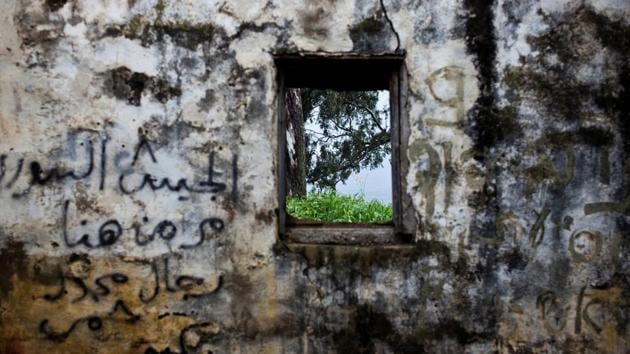
Across the Golan are other reminders of the 1967 and 1973 wars between Israel and Syria: minefields, foxholes and abandoned armour. One former Syrian building, crumbling and covered in graffiti, has this Arabic message reading: "The Syrian army passed by here." It is not the only army to have passed through. The British army arrived in 1917 and left in 1948. (Ronen Zvulun / REUTERS)
7/11
 View Photos in a new improved layout
Updated on Jun 26, 2019 4:57 PM
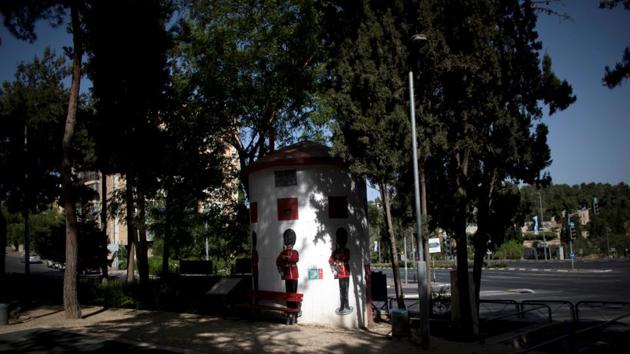
British soldiers are depicted in a mural on an old pillbox in Jerusalem. As the British departed, neighbouring countries invaded, and Jordan captured the West Bank and East Jerusalem. An armistice a year later created the “Green Line”, separating Israeli controlled West Jerusalem from the Jordanian held east until 1967. There is now almost no visible sign of the “Green Line”. (Ronen Zvulun / REUTERS)
8/11
 View Photos in a new improved layout
Updated on Jun 26, 2019 4:57 PM
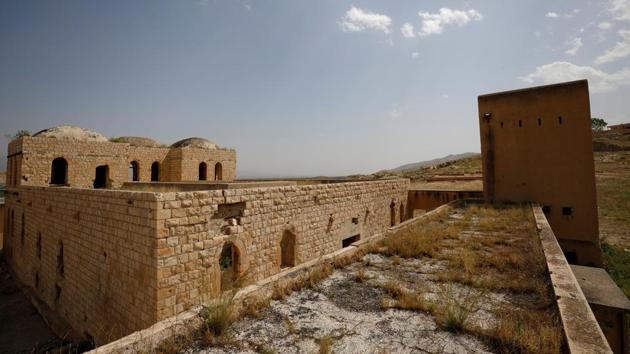
Other relics of the British era survive. Buildings constructed during the British Mandate era to serve as jails and fortified positions stand in Al-Jiftlik village near Jericho, in the West Bank. Long abandoned, sheep now wander through, searching for vegetation in the scorching heat of the Jordan Valley. The Israeli military sometimes uses them for training, Palestinian residents say. (Mohamad Torokman / REUTERS)
9/11
 View Photos in a new improved layout
Updated on Jun 26, 2019 4:57 PM
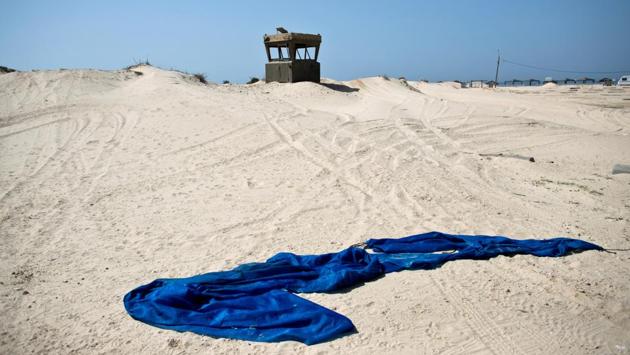
An unused Israeli military outpost is seen on Zikim beach, close to the border with the Gaza Strip. In the post-war era Gaza remained a frequent flashpoint - until the Oslo peace process of the 1990s brought hopes of peace between Israel and the Palestinians. But the optimism of the Oslo era receded, giving way to mutual recriminations and renewed violence. (Ronen Zvulun / REUTERS)
10/11
 View Photos in a new improved layout
Updated on Jun 26, 2019 4:57 PM
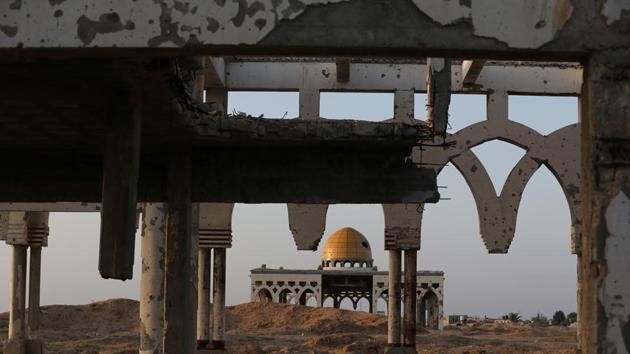
A view shows the derelict remains of Gaza International Airport. Huge amounts were spent creating the institutions of the Palestinian Authority under Yasser Arafat.But the airport was an early casualty: Israel destroyed its runway a few months after the 9/11 attacks on the United States, deeming it a security threat during the second Palestinian uprising, or Intifada. (Ibraheem Abu Mustafa / REUTERS)
11/11
 View Photos in a new improved layout
Updated on Jun 26, 2019 4:57 PM


