
 E-Paper



Photos: The mounting toll of the coronavirus pandemic
The worldwide number of fatalities from the novel coronavirus pandemic has risen to beyond 95,000. Nearly half of all pandemic fatalities have occurred over the past week. Countries around the world, already strained with containing the spread of the virus are additionally burdened with the task of funerary rites for lives lost and families rent asunder. Hospitals and funeral homes are struggling to cope with the coronavirus dead. Funerals are now rushed, clinical affairs, ending without embraces.
Updated on: Apr 10, 2020 2:53 PM IST


Share via


Copy link

1/10
 View Photos in a new improved layout
Updated on Apr 10, 2020 2:53 PM
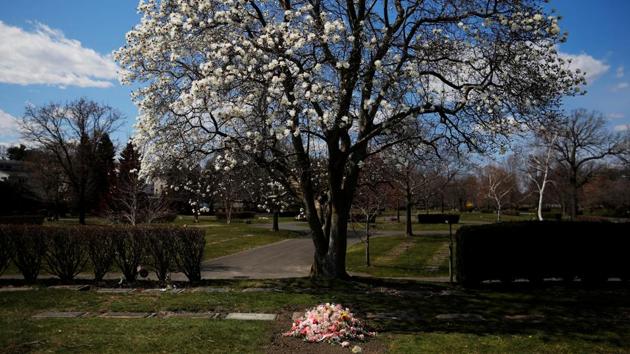
Flowers rest over the site of a recent burial in a cemetery amid the coronavirus disease (COVID-19) outbreak in Everett, Massachusetts. The world has lost over 95,000 lives to the pandemic as of April 10, 2020, 08:33 GMT. (Brian Snyder / REUTERS)
2/10
 View Photos in a new improved layout
Updated on Apr 10, 2020 2:53 PM
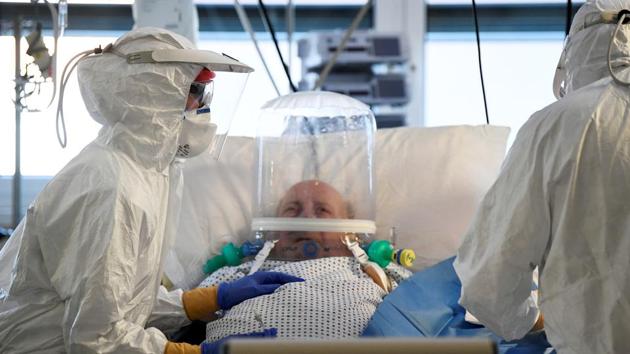
Medical staff tend to a coronavirus patient in the ICU at the Circolo hospital in Varese, Italy. Nearly half of all pandemic fatalities have occurred over the past week. But authorities in worst-hit Europe and the United States say a slight decline in daily deaths and infections have given reason to hope the worst could be over. (Flavio Lo Scalzo / REUTERS)
3/10
 View Photos in a new improved layout
Updated on Apr 10, 2020 2:53 PM
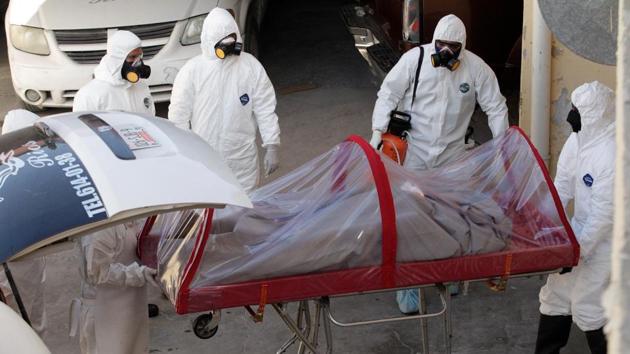
Funeral workers in personal protective equipment (PPE) suits remove the body of a COVID-19 victim from a hearse at a funeral parlour, in Ciudad Juarez, Mexico. Across the globe, wrenching scenes are playing out in hospitals and funeral homes struggling to cope with the coronavirus dead. (Jose Luis Gonzalez / REUTERS)
4/10
 View Photos in a new improved layout
Updated on Apr 10, 2020 2:53 PM
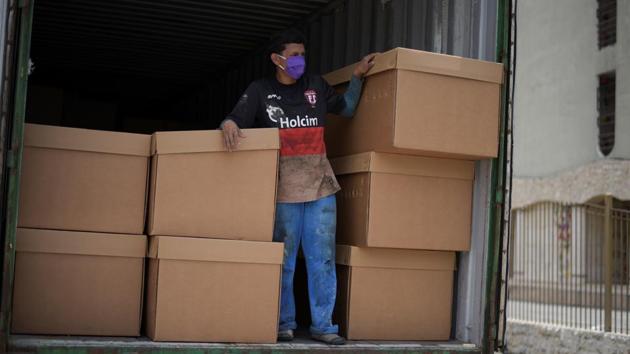
A man stands on a truck next to empty cardboard boxes being used as coffins due to an acute shortage outside a cemetery in Guayaquil, Ecuador. The frequency of deaths has authorities struggling to keep up. Those perishing to the disease are being kept in chilled shipping containers that serve as makeshift morgues. (Vicente Gaibor del Pino / REUTERS)
5/10
 View Photos in a new improved layout
Updated on Apr 10, 2020 2:53 PM
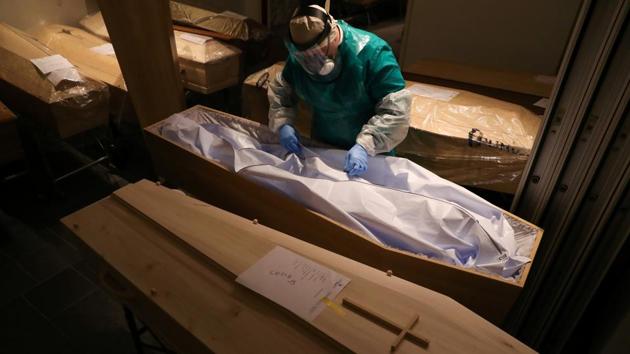
A mortuary worker in a protective suit looks inside a coffin with the body of a person who died of the coronavirus, in Brussels, Belgium. The infectious nature of the virus has made funerary rites a matter of extreme precaution. (Yves Herman / REUTERS)
6/10
 View Photos in a new improved layout
Updated on Apr 10, 2020 2:53 PM
An aerial view shows graves, which according to local authorities were prepared in advance for potential victims of COVID-19 at a cemetery in Dnipro, Ukraine. While some nations like the US and Spain --slammed by the highest cases-- have seen a slight decline, much of the developing world is still bracing for the worst. (Mykhailo Moskalenko / REUTERS)
7/10
 View Photos in a new improved layout
Updated on Apr 10, 2020 2:53 PM
People in PPE kits offer funeral prayers for a man who died due to COVID-19, before his burial at a graveyard in Dhaka, Bangladesh. Strict social distancing and risks of infection are changing how the traditionally large gatherings of funerals handle the deaths of dear ones around the world . (Mohammad Ponir Hossain / REUTERS)
8/10
 View Photos in a new improved layout
Updated on Apr 10, 2020 2:53 PM
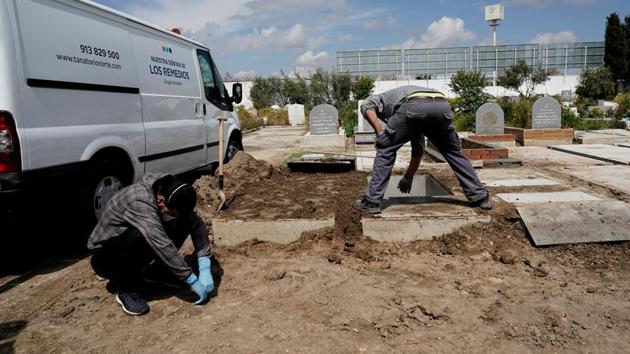
A relative of a person who died of COVID-19 reacts as a funerary worker closes the grave at the Spanish Muslim military cemetery during a burial, in Grinon, Spain. The agony of a death is compounded by the inability of families and relatives to either properly attend or participate in the last rites. (Juan Medina / REUTERS)
9/10
 View Photos in a new improved layout
Updated on Apr 10, 2020 2:53 PM
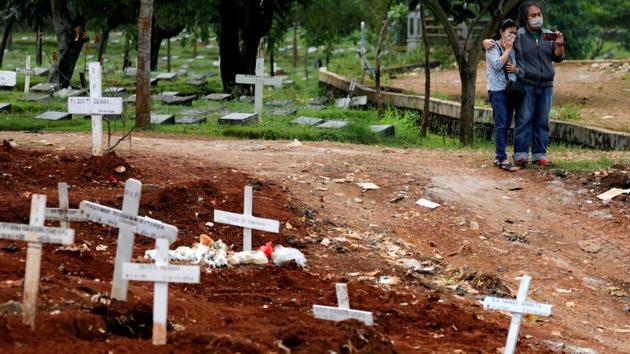
Relatives wearing face masks stand next to graves of coronavirus victims at a cemetery area provided by the government in Jakarta, Indonesia. Funerals are being witnessed by just a few people and last a brief while, ending without embraces. (Willy Kurniawan / REUTERS)
10/10
 View Photos in a new improved layout
Updated on Apr 10, 2020 2:53 PM


