
 E-Paper



Photos: Twelve-year-old Rohingya refugee is family’s sole breadwinner
Displaced from their home in Myanmar’s Rakhine state, twelve-year-old Nur Hafes’ family of seven younger siblings and their mother relies on the young boy’s daily efforts at collecting aid, donations or menial attempts at earning a living to keep afloat as Rohingya refugees.
Updated on: Nov 15, 2017 9:29 AM IST

Share via


Copy link

1/11
 View Photos in a new improved layout
Updated on Nov 15, 2017 9:29 AM
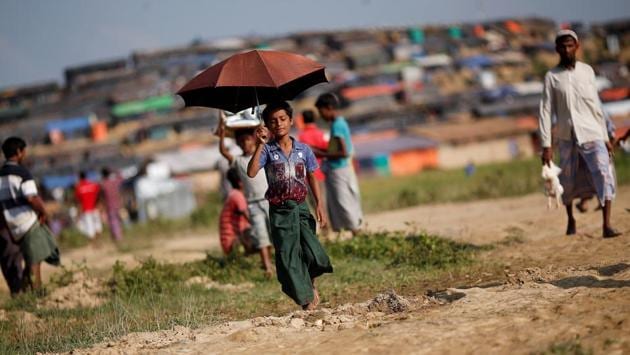
Nur Hafes, 12, a Rohingya refugee, carries an umbrella as shade from the sun at Palong Khali refugee camp, near Cox’s Bazar, Bangladesh. Twelve-year-old Nur would rather be in school or playing football with friends back home in Myanmar. His family displaced; Nur is now the sole breadwinner for seven younger siblings and his mother taking refuge in Bangladesh. (Adnan Abidi / REUTERS)
2/11
 View Photos in a new improved layout
Updated on Nov 15, 2017 9:29 AM
Nur Hafes (L), poses for a photograph with his family outside their shelter at Palong Khali refugee camp. Nur and his family are among the more than 600,000 Rohingya who have fled to Bangladesh since August to escape a counter-insurgency operation by the Myanmar military after attacks on security posts by Rohingya militants. (Adnan Abidi / REUTERS)
3/11
 View Photos in a new improved layout
Updated on Nov 15, 2017 9:29 AM
Rabia Khatun, 33, combs hair of her eldest son Nur Hafes, in their shelter at Palong Khali refugee camp. The family left their home in Tharay Kone Yoe Dan village in Rakhine state when the violence started. “The Myanmar army burnt the houses with the people inside,” said Rabia. “I saw many people with gunshot wounds and heard the crackle of houses burning.” (Adnan Abidi / REUTERS)
4/11
 View Photos in a new improved layout
Updated on Nov 15, 2017 9:29 AM
A family photograph hangs in Nur Hafes’ shelter at the refugee camp. Gathering a few belongings - a blanket to protect against rain, identity papers and a couple of old photos– Rabia and family fled to Zaw Mat Tat, south of Maungdaw and eventually crossed over to the Bangladesh side of the Naf River. Her husband left them midway and has not been seen since. (Adnan Abidi / REUTERS)
5/11
 View Photos in a new improved layout
Updated on Nov 15, 2017 9:29 AM
Nur Hafes (L), waits outside a shop for local Bangladeshi Muslim clerics, who distribute money collected at mosques for the refugees, outside Palong Khali refugee camp. Since their arrival two months ago, the family has relied on Nur for survival. (Adnan Abidi / REUTERS)
6/11
 View Photos in a new improved layout
Updated on Nov 15, 2017 9:29 AM
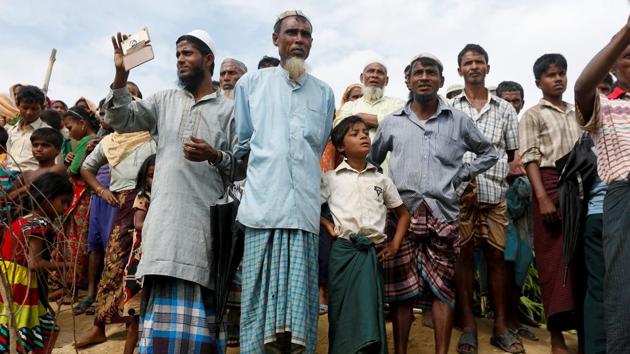
Nur stands amidst a crowd of refugees looking towards a local politician distributing humanitarian aid. Opening a brown umbrella, Nur often offers to shade visitors from the blazing sun, which can bring in a little extra cash for food and supplies. (Adnan Abidi / REUTERS)
7/11
 View Photos in a new improved layout
Updated on Nov 15, 2017 9:29 AM
Nur shows a 50 Bangladeshi Taka banknote (Rs 40), which he received as aid from a local Bangladeshi Muslim cleric. “Sometimes I get 50 or 100 taka and some days I come back empty-handed,” he said, (Adnan Abidi / REUTERS)
8/11
 View Photos in a new improved layout
Updated on Nov 15, 2017 9:29 AM
Nur Hafes looks at a vendor as he buys fish at Palong Khali refugee camp. Even while evading the army in Myanmar, Nur was a huge help to his family --reselling produce in their village market that his father had bought wholesale. (Adnan Abidi / REUTERS)
9/11
 View Photos in a new improved layout
Updated on Nov 15, 2017 9:29 AM
Rabia Khatun, Nur’s mother, holds her eight-month-old son Mohammed Zubair as she cooks food in their shelter. “I know he is young, but he understands his responsibilities. He doesn’t behave like a child anymore,” Nur’s mother said. (Adnan Abidi / REUTERS)
10/11
 View Photos in a new improved layout
Updated on Nov 15, 2017 9:29 AM
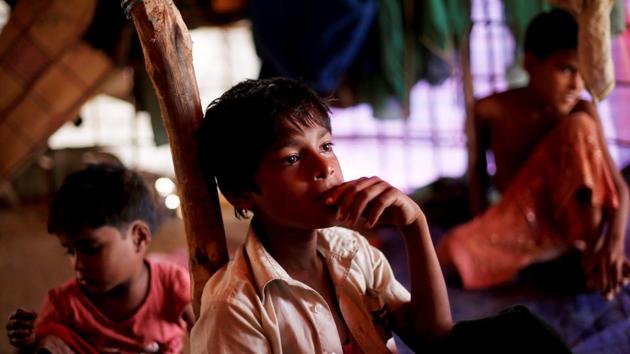
A pensive Nur listens to his mother in their shelter. With his family huddled under a tarpaulin tent and his mother needing help to feed his siblings, the youngest two of whom suffer malnourishment, a normal child’s life is not in his immediate future. (Adnan Abidi / REUTERS)
11/11
 View Photos in a new improved layout
Updated on Nov 15, 2017 9:29 AM


