
 E-Paper



Photos: Venezuelan migrants pose humanitarian risks for neighbour Brazil
As crippling recession and political turmoil drive Venezuelans to neighbouring countries fuelling one of Latin America’s largest migrations, immediate neighbour Brazil faces challenges of its own with incoming Venezuelans competing for resources in an economy recovering itself.
Updated on: Dec 13, 2017 3:10 PM IST

Share via


Copy link

1/13
 View Photos in a new improved layout
Updated on Dec 13, 2017 3:10 PM
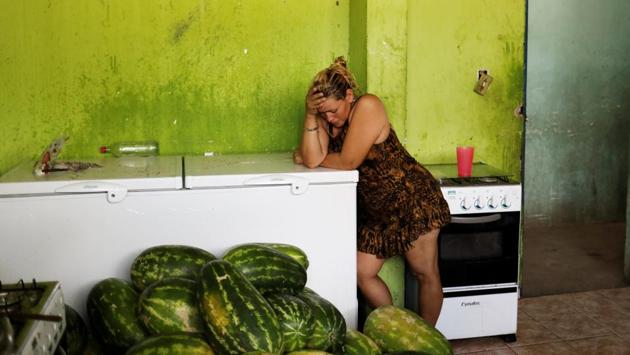
A Venezuelan woman at shelter’s kitchen in Boa Vista, Brazil. Home to the world’s largest proven oil reserves, Venezuela struggles with recession, unemployment, chronic shortages and inflation that its government said could soon top 2,000%. Meanwhile, bordering Brazil tackles an influx of migrants from Venezuela and with limited infrastructure, social services and jobs to offer them, Brazilian authorities fear a full-blown humanitarian crisis. (Nacho Doce / REUTERS)
2/13
 View Photos in a new improved layout
Updated on Dec 13, 2017 3:10 PM
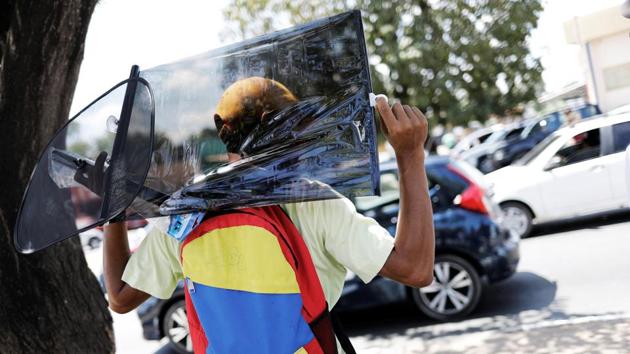
Although work is scarce in the city of 300,000 people, slim prospects in Boa Vista appeal more to Victor Rivera, a 36-year-old unemployed baker, than life back home, where his six children often go hungry and shelves in grocery stores and hospitals are increasingly bare. “I see no future in Venezuela,” said Rivera, who seeks odd jobs at traffic lights. (Nacho Doce / REUTERS)
3/13
 View Photos in a new improved layout
Updated on Dec 13, 2017 3:10 PM
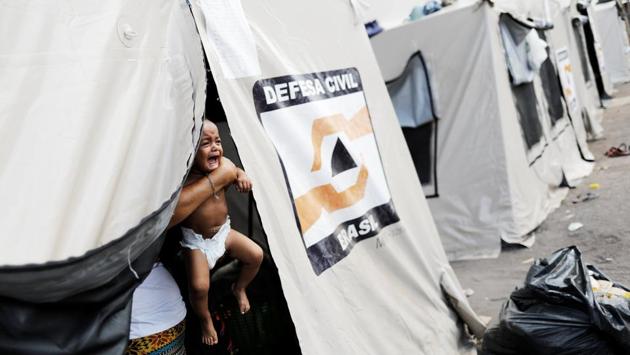
A Venezuelan woman holds her baby inside a tent outside a shelter in Boa Vista. In Roraima, the rural state of which Boa Vista is the capital, the governor has decreed a “social emergency,” putting local services on alert for mounting health and security demands. “Shelters are already crowded to their limit,” said George Okoth-Obbo, operations chief for the United Nations High Commission on Refugees. “It is a very tough situation.” (Nacho Doce / REUTERS)
4/13
 View Photos in a new improved layout
Updated on Dec 13, 2017 3:10 PM
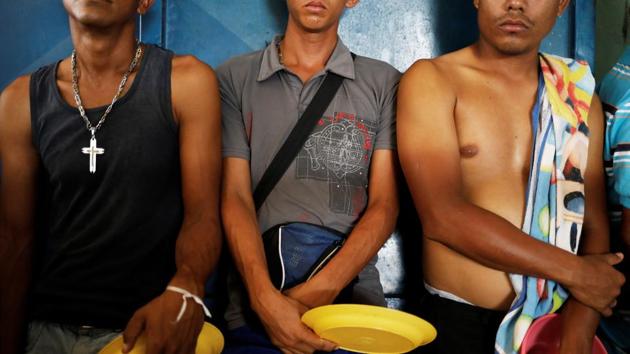
Venezuelans line up to receive food at a shelter run by Civil Defense with meals provided by Evangelical churches in Boa Vista. Okoth-Obbo noted the crush of migrants also hitting Trinidad and Tobago, the Caribbean country to Venezuela’s north, and Colombia, the Andean neighbor to the west, where hundreds of thousands have fled. (Nacho Doce / REUTERS)
5/13
 View Photos in a new improved layout
Updated on Dec 13, 2017 3:10 PM
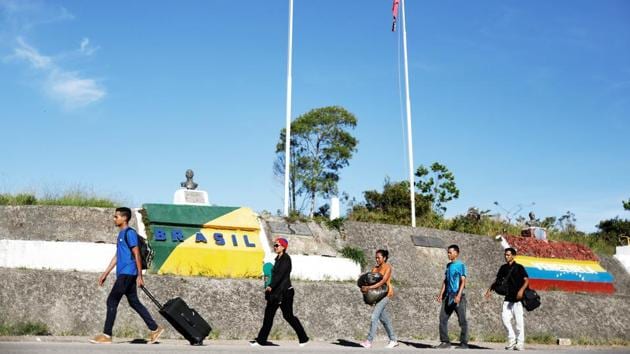
Venezuelans walk across the border from Venezuela into the Brazilian city of Pacaraima. Not even Venezuela’s government knows for certain how many of its 30 million people have fled in recent years. Some sociologists have estimated the number as high as 2 million, although President Nicolas Maduro’s government disputes this figure. (Nacho Doce / REUTERS)
6/13
 View Photos in a new improved layout
Updated on Dec 13, 2017 3:10 PM
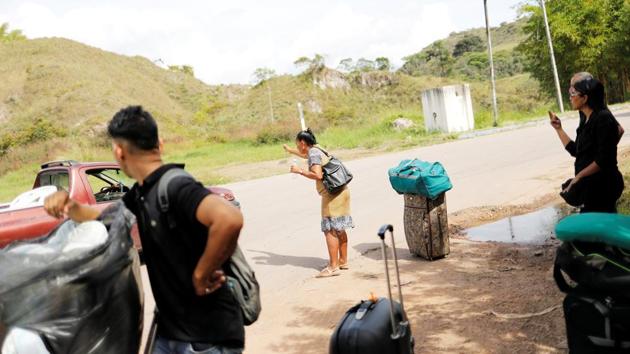
Venezuelan migrants attempt to hitchhike after crossing the Brazilian border into Pacaraima. Unlike earlier migrations, when Venezuelan professionals left for markets where their services found demand, many leaving now have few skills or resources. International authorities liken this exodus to other mass departures in Latin America, like that of Haitians after the 2010 earthquake or the 1980 flight of 125,000 Cubans by boat to the US. (Nacho Doce / REUTERS)
7/13
 View Photos in a new improved layout
Updated on Dec 13, 2017 3:10 PM
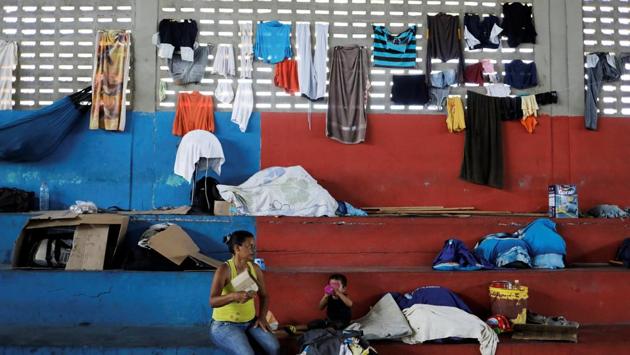
The bleachers at a gym are crowded with belongings of Venezuelan migrants. In Brazil, over half of the almost 40,000 Venezuelans have applied for asylum since arrival, a bureaucratic process that can take two years. The request grants them the right to stay in Brazil and also gives them access to health, education and other social services. (Nacho Doce / REUTERS)
8/13
 View Photos in a new improved layout
Updated on Dec 13, 2017 3:10 PM
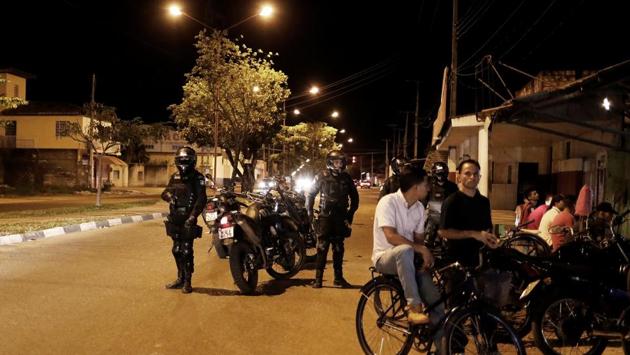
Police officers patrol a street in the working-class neighbourhood of Caimbe. Some migrants are finding ways to get by, finding accommodation or lodging in government shelters but others wander homeless, some turning to crime, adding law enforcement to existing challenges. “We have a very serious problem that will only get worse.” said Boa Vista Mayor Teresa Surita, adding that the city’s once quiet streets are increasingly filled with poor Venezuelans. (Nacho Doce / REUTERS)
9/13
 View Photos in a new improved layout
Updated on Dec 13, 2017 3:10 PM
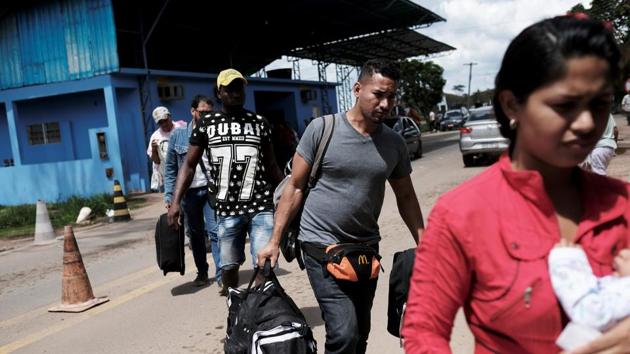
Venezuelans walk towards verification at the Pacaraima border control. Staffed only during the day this sole road crossing along more than 2,100 kms of border with Brazil is in essence open, allowing in nearly 400 people daily. “Brazil’s government is not ready for what is coming,” said Jesús López de Bobadilla, a priest who runs a refugee center on the border. (Nacho Doce / REUTERS)
10/13
 View Photos in a new improved layout
Updated on Dec 13, 2017 3:10 PM
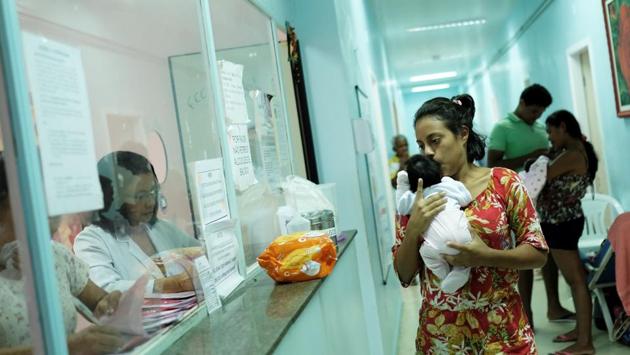
Andrea, 19, a Venezuelan woman, holds her newborn baby at a maternity hospital in Boa Vista. Despite a long history of immigration Brazil struggles to accommodate existing asylum seekers from countries like Haiti and Syria. Boa Vista schools have admitted about 1,000 Venezuelan children and the local hospital has no beds because of increased demand for care. (Nacho Doce / REUTERS)
11/13
 View Photos in a new improved layout
Updated on Dec 13, 2017 3:10 PM
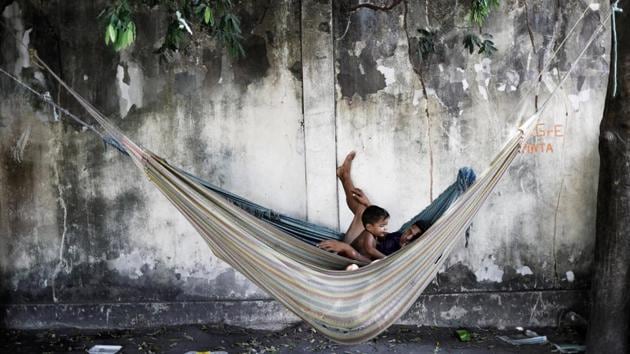
Most migrants in Boa Vista say they do not intend to return to Venezuela unless conditions improve. Carolina Coronada an accountant, arrived in Brazil a year ago with her daughter. Awaiting residency she works at a fast-food restaurant making lower wages than Brazilian counterparts, but is happy. “There was no milk or vaccines,” she said. “Now I can sleep at night, not worried about getting mugged.” (Nacho Doce / REUTERS)
12/13
 View Photos in a new improved layout
Updated on Dec 13, 2017 3:10 PM
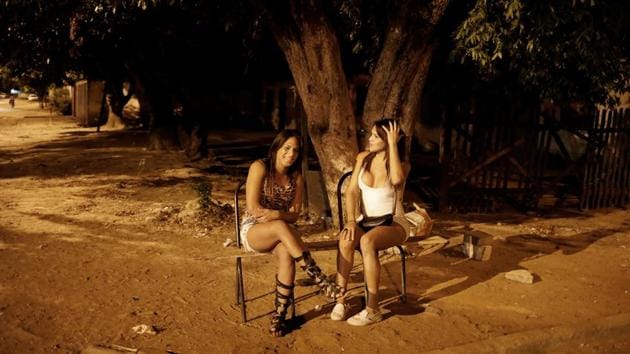
Others fare worse, struggling to find work as Brazil itself recovers from a two-year recession, its worst in over a century. Camila, a 23-year-old transsexual (R), left Venezuela nine months ago. Sex-work brings her about $100 a night --enough to send food, medicine and even car parts to her family. “Things are so bad in Venezuela I could barely feed myself.” (Nacho Doce / REUTERS)
13/13
 View Photos in a new improved layout
Updated on Dec 13, 2017 3:10 PM


