
 E-Paper



1st batch of SPPU students return after aiding flood-hit villages
In the first phase, 450 National Service Scheme (NSS) students visited Kolhapur and Sangli from August 22 to 28


From raising funds and helping in relief work on the ground to conducting surveys, students from different colleges affiliated to the Savitribai Phule Pune University (SPPU) sprung into action to help flood-hit people in Kolhapur and Sangli districts.
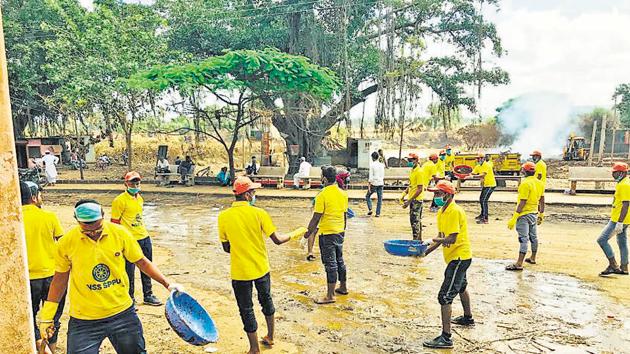
In the first phase, 450 National Service Scheme (NSS) students visited Kolhapur and Sangli from August 22 to 28. They visited Terwad, Rajapur, Rajapurwadi, Takali and Aakiwat villages in Shirol taluka of Kolhapur district. While in Sangli district, students went to Walva, Borgaon, Shirgaon, Bhilawadi and Audumbar villages.
In the second phase, 500 students will visit the two districts in September.
Nitin Karmalkar, SPPU vice-chancellor, said, “As part of our social responsibility project, 450 students visited Kolhapur and Sangli to help the flood-hit victims. The students interacted with the families and made a survey report which was submitted to the local government bodies.”
“The NSS students in their week-long tour surveyed 1,274 houses. Out of these, 886 houses were completely damaged. These houses did not have government records. However, after the survey was done by the NSS students, 18 per cent of these houses have now been added to the government records,” said Prabhakar Desai, SPPU-NSS programme coordinator.
Desai added, “The students also conducted cleanliness drives and helped re-build 52 houses. Students provided medical aid to 152 houses and provided household materials to 72 homes. Students helped clean three schools and various temples in the villages.”


