
 E-Paper



Cerebral health gaps: psychiatric experts oppose mental healthcare act 2017
State mental health authority formed after the Indian psychiatric society (IPS) strongly opposed the mental healthcare act, with a writ petition being filed in court as early as February 2018


India’s mental healthcare act 2017, which came into effect in July 2018, has been met with an experts’ view that has challenged several key issues within the ambit of the act.The state health department, on October 20, issued a government resolution (GR) for the formation of a state mental health authority, with nine members. Rony George, a social worker, is the Pune representative for this authority.
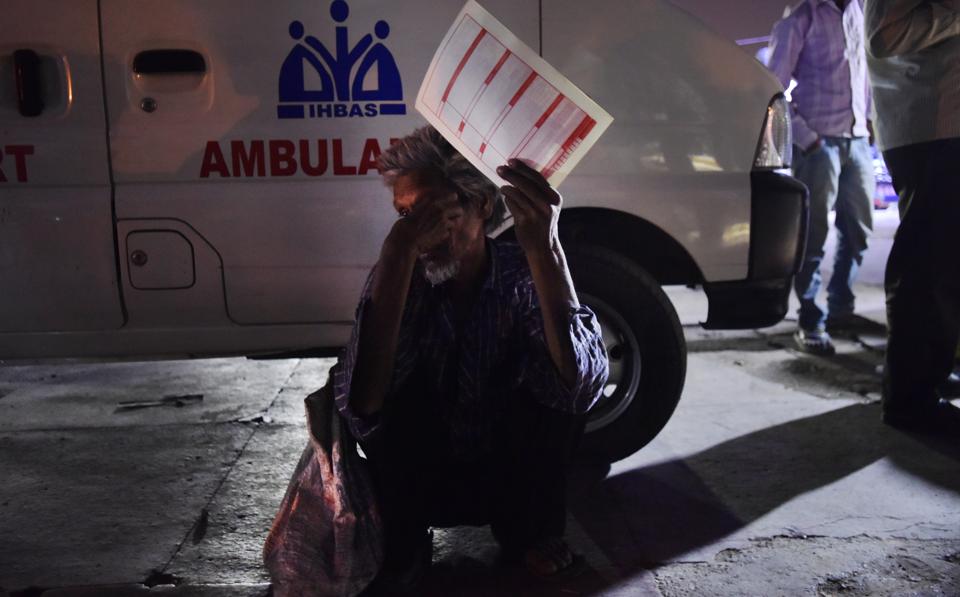
As per the GR, this state medical health authority (SMHA) will act independently, take decisions, regulate policies, register complaints and act against deficiencies in mental health establishments in the state. It will also aid admission of patients, which was earlier done by order of the court.
The formation of the state mental health authority comes in the wake of the Indian psychiatric society (IPS) strongly opposing the mental healthcare act, with a writ petition being filed in court as early as February 2018 to oppose the legislation in its current form. The IPS is made up of 5,500 doctors, psychiatrists and mental health experts in the country.
Dr MK Raju, an immediate past president of the IPS, says, “The act has many loopholes. The definition of mental illness in itself is compared with that of physical illness, which is just only one aspect of the entire definition.” As per the act, Section 21 (1): “Every person with mental illness shall be treated as equal to persons with physical illness in the provision of all healthcare.”

Dr Raju further adds “One cannot compare mental illness with a physical ailment. A person, whose judgement and behaviour is impaired, can never be compared to a person who is physically ill. Secondly, they have also mentioned ‘voluntary’ admissions, which is again ridiculous. No patient will come forward and seek an admission in a mental hospital due to social stigma. Looking at the loopholes we had challenged this act in court, but so far, neither the Central ministry nor the state officials have responded to our petition in court.”
The IPS believes that drafting this act “may have good intentions”, but one cannot impose the same features and classifications which are used in other countries, like the UK, “because the mental health scenario in every country is different”.
Dr Raju points out: “It also says that a midwife and a nurse can discharge any patient if s/he finds the person fit for discharge. A nurse cannot take decisions that are to be taken by the psychiatrist. There are many issues which we have opposed and we are waiting for the response from the government now.”
Officials working with the mental health department too have strongly raised issues with the act. Dr Abhijit Phadnis, medical superintendent, regional mental hospital (Yerwada), says, “Voluntary admission is the major concern because no person comes forward and demands an admission to hospital as this has a strong stigma attached to it. This can be also misused as the patient and relatives will not have to go to court anymore to get an order for admission, but rather the person can come directly to a committee (as determined by the act) which will further verify the condition and grant admission to the patient. We do not think this is in favour of the mentally ill.”
Dr Ajit Bhide, president, IPS, says, “The government must protect the human rights of the mentally ill, but this is totally wrong. It will affect the incidence rate and total data of mentally ill patients across the country.”
State mental health authority
Rony George, member of the state authority from Pune, says, “The committee will take decisions like an independent body. It will help, review and grant admissions to the patients needing mental treatment.”
George further adds, “The SMHA will also maintain and register mental health establishments, it will work towards developing quality care in mental institutes. It will supervise hospitals in the state and receive complaints, which will be addressed. It will also register clinical psychologists, nurses and psychiatric workers in the state and monitor their work closely.”
Pune will have a mental health cell for doctors
Lack of sleep, marital discord, increased competition etc; all are leading to many issues among doctors and especially--stress and depression. In order to tackle the issue the Indian medical association have started mental health cells for doctors.
“The mental health of the doctors is deteriorating. We are seeing many doctors suffering from depression and even some think of committing suicide. Looking at the current need of doctors related to mental health care, we at IMA have planned to start a mental health cell across the country. As of now one cell is active in Bangalore which was launched only a month ago and now looking at the response we are receiving where doctors are coming forward and seeking treatment for their mental illness, we feel spreading this concept across all states will only help the ones who are suffering from severe stress and depression.”said Dr Jayesh Lele, national secretary, hospital board of India (HBI), IMA,
He said, “As per the Indian Journal of Psychiatry around 30 per cent of the doctors are currently suffering from depression and some are even falling prey to substance abuse. To help such doctors over come their trauma and counsel them, we started this cell. Next on the list is Maharashtra where we will soon start a similar cell.” He added “At this cell, counselling, treatment, education and awareness about mental health is offered to all those who come seeking help.”
Adding to the same, Dr Padma Iyer, president, IMA, Pune said, “We too may start such a cell soon. We are also observing many cases of depression due to marital discord, increasing competition, corporate hospitals taking over small time hospitals and less revenue generation for those who are attached to bigger hospitals are some issues that are leading to severe mental illness among the doctors. To help such doctors, a mental health cell is now a necessity.”
Since we never conducted a study to find out an exact number of doctors suffering from mental illness, we feel such a cell will provide us an insight and will help us in identifying the number of doctors who need help, said Dr Iyer.


