
 E-Paper



Expanding Pune: Merger to what end? 11 villages live the reality
PART 3- In 2017, 11 villages merged with Pune Municipal Corporation with similar expectations and hopes, that residents of the current 23 villages being merged, espouse. HT meets residents of the 11 villages to find that little has happened in terms of development. Basic amenities remain only on paper


PUNE If the recent announcement of the merger of 23 areas – described in the government records as villages - into the Pune Municipal Corporation limits, has left local residents upbeat, they need to pause; and look at their surrounding neighbourhoods.
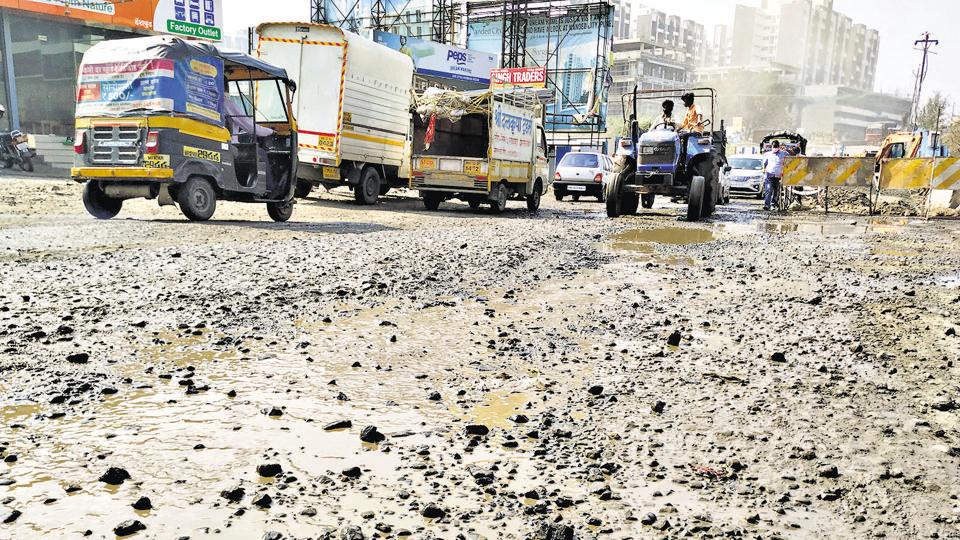
Eleven areas were included in the Pune civic limits in 2017 with the hope that it will finally taste the fruits of development.
Basic amenities continue to elude these 11 villages.
The state of public amenities, according to locals in these villages, now a part of the PMC, has remained unsatisfactory even after three years.
Villages like Kharadi, Ambegaon, Dhanori and Keshavnagar, which have been merged into Pune, have localities that don’t even have basic infrastructure, like a drainage system.
Will the PMC be able to do justice to the 23 new areas that will be merged in the next few months? Especially given that the development of the 11 areas merged in 2017 remains only on paper.
“We were hoping that the PMC will resolve our basic problems such as water, roads and drainage. However, nothing has changed. We are getting water every alternate day for only an hour,” says Satish Shirwale, a resident of Keshavnagar.
According to Shirwale, while development hasn’t taken place, people have been forced to pay additional property tax post the inclusion into PMC.
Located on the eastern part of Pune, Keshavnagar has population of 30,000.
In 2019, PMC aimed to collect at least Rs 150 crore through property tax from the 11 areas, which has seen massive development given their proximity to city and relatively cheaper land prices.
Another resident of Keshavnagar, Sheetal Kanoje, says the corporation had failed to develop amenities like roads and play grounds. “It is like living in a village within the city limits. For us, Pune’s city is converting into a smart city and we still live in a village lacking basic infrastructure.”
Two years after the merger of these areas, PMC conducted a bypoll, when two corporators were elected to represent this large area with a population, as per the 2011 census, of 2.78 lakh, which has now reached four lakh. These areas cover approximately 81 sq kms.
The corporators claimed that with inadequate funds, development in these areas has become difficult, while the state government has not even started a development plan for these areas.
Ashwini Pokale, corporator of Dhayari, part of the 11 merged villages said, “There are a lot of basic problems that remain the same after three years of the merger. We have not seen development. There are no good roads, water supply, drainage or garbage collection. In the city area, PMC spends around Rs 10-15 crore per year in small wards. The corporation spent around Rs 25 crore in the big areas of the 11 merged villages, but the funds are little when the total area is considered. They did repair existing roads in some villages.”
While the PMC has sanctioned Rs 100 crore in 2019 in its annual budget for the merged villages, the civic body has not yet been able to spend it to carry out basic development like roads, water, garbage, street lights and healthcare.
Abhishek V Barve, a resident of Blue Springs Society, Ambegaon Khurd, said, “For the last three years, the corporation has given excuses that they don’t have enough money for development. The corporation is charging property tax which is more than the gram panchayat taxes. We are ready to pay taxes, but we want basic facilities. However, we are not getting it yet.”
Located on the southern part of Pune, Ambegaon has grown exponentially with multiple real estate projects. It is also adjacent to the Mumbai-Bengaluru highway, which attracts heavy traffic.
Recently, the central public works department undertook the widening of the Katraj-Navale bridge which passes through Ambegaon.
Residents like Mangesh Joshi, an engineer, said the road widening will help decongest traffic, though issues of garbage and sanitation need to be addressed in Ambegaon, where he recently purchased a flat.
Ambegaon was just another village on the outskirts of Pune’s city limits until 1999, when it became one of the few villages to be incorporated within the Pune municipal limits.
Seventy-five per cent of this area was incorporated then, and the remaining part, which was still under the gram panchayat, was merged in 2017.
Ambegaon has mostly developed as a residential hub for the middle class who wish to move in to larger spaces at affordable rates.
Ganesh Dhore, another corporator representing Phursungi, says, “Corporation is collecting taxes for the last three years. However, they have not provided the service that we want. Most of the villages receive water through tankers. In some parts of the village there is alternate-day water supply. Garbage collection and disposal is another big problem. Corporation has repaired some main roads. One village gets hardly Rs 2 crore for development. In this year, due to Covid-19, a tender of only Rs 70 lakh has been floated so far.”
Namdev Gavali, a resident of Lohegaon says, “We are still living in a village. We are not part of Pune city as we are lack basic facilities. Pune is becoming a smart city, and we are struggling to get water. We are live in an apartment, but face garbage collection and drainage problems. We haven’t seen any significant change in our life after merging with the PMC.”
Lohegaon, like other areas merged in 2017, enjoys an urban-rural mix; the benefits of urbanisation and mountains on the outskirts as a boundary, with a highway passing through the area.
Thus, developers and builders from Pune and Mumbai have strategically built large residential complexes offering a variety of choices from simple, to lavish homes.
The 2017 merger
The decision to merge 11 areas was part of a 2014 notification issued by state government to originally include 34 areas in the PMC. Accordingly, the state facilitated the merger of 11 areas in 2017, expanding Pune. Now the state has given the nod for 23 more areas to be included in PMC limits.
Still waiting for PMC’s development

“We are still living in a village. We are not part of Pune city as we lack basic facilities. Pune is slowly becoming a smart city, and we are struggling to get water. We live in an apartment, but face garbage and drainage problems.”
Namdev Gavali, Lohegaon

“In last three years, we are paying only property tax to PMC. We are still waiting for basic facilities like water, road and drainage. We have to get water from private tankers. We heard that PMC has decided to implement a 24x7 water supply project, but, I don’t know when we will get water.”
Vijay Jadhav, Undri

“The corporation had failed to develop amenities like roads and play grounds. It is like living in a village within the city limits. For us, Pune’s city is converting into a smart city and we still live in a village lacking basic infrastructure.”
Sheetal Kanoje
Keshavnagar
“Corporation is collecting taxes for the last three years. However, they have not provided the service that we want. Most of the villages receive water through tankers. In some parts of the village there is alternate-day water supply. Garbage collection and disposal is another big problem. ”
Ganesh Dhore
corporator, Phursungi
“For the last three years, the corporation has given excuses that they don’t have enough money for development. The corporation is charging property tax which is more than the gram panchayat taxes. We are ready to pay taxes, but we want basic facilities.’
Abhishek Barve
Blue Springs Society, Ambegaon Khurd


