
 E-Paper



Startup Saturday: Lessons from the 10% - succe$$ is 100% possible
Founders of startups Druva and Icertis share secrets of success


The success rate for startups the world over is 10%. Pune, therefore, as a share of startups globally, does have at least a handful that have bucked that abysmal success rate.

Unicorns - $1 billion valuation - are in the city. And then, there are others well on the way to being e-conomic powerhouses. Druva and Icertis are home-grown unicorns. iDFresh sells 60,000kg of batter daily. Namita Shibad dives into the narratives of these startups, as the founders share secrets of success
Seize the opportunity - Icertis
Samir Bodas and his cofounder Mohnish Darda recognised a trend when they set up Icertis in 2009.
“We understood that the cloud was going to be a huge trend that you either ride or not. We chose to jump on for a ride,” says Bodas.
Jumping onto the opportunity wave is one thing, but delivering on it, is quite another.
Says Bodas, “Cloud computing may have presented the opportunity, however one has to work through the wave. When Icertis was started, contract lifecycle management (CLM) was a small part of larger buy-side or sell-side process automation suites. Very few were innovating around their CLM modules. As a result, contracts were treated as an afterthought and not a core business asset.”

Bodas saw the potential
“We added value to contract management. We powered it with artificial intelligence (AI) that unlocks the commercial value embedded in a company’s contracts. By transforming these static documents into strategic digital assets, enterprises can protect against risk, improve compliance, accelerate business velocity, and optimise commercial relationships over the entire life of the contract. Today, the ICM platform helps customers worldwide manage over 6.5 million contracts, with an aggregate value of $1 trillion,” says Bodas.
“The success mantra in the journey was to focus on the enterprise market and to be the best at tackling the hardest contract management problems while making our platform the easiest to use. And that hasn’t changed since joining the unicorn club. We still see plenty of opportunity in that segment of the market,” says Bodas.
Learn Forte
Be passionately committed to a values-driven approach to doing business – how we get there is as important as the destination. This is captured in the acronym FORTE (Fairness, Openness, Respect, Teamwork, Execution). Everyone we work with embodies these values from employees to investors.
Innovating a superior product - Druva
Started in 2008 as a SaaS company, today Druva has $100 million annual recurring revenue and 700-plus employees globally.
Milind Borate, the co-founder, says in the early days of 2008, the founders saw the opportunity in providing a better product. “When we started, our competitors sold legacy products and repurposed server backup products for protecting data on laptops. Druva’s initial success was because we took a fresh look at laptop data protection and built a far superior product than the competition. We continue to lead in innovation in the data protection space as a service,” says Borate.

Identifying a need and innovating a better product is not the only criteria for success. Says Borate, “While I believe it is essential to identify a need it is equally necessary to pivot when called for. The successful transitioning of Druva products from on-premise deployment to public cloud deployment, from a software license model to Software as a Service (Saas) model has been critical for our success.”
Success will never allow you to rest on your laurels.
Says Borate, “Any organisation is built on four pillars: team, product, customers, and finance. All four aspects are equally important. For a startup, the first challenge is building the right team. We built our team at Druva with people who shared the vision of reinventing data protection. A lot of our team growth happens through employee referrals. We also spend time and effort to ensure that new team members adopt Druva culture so that we all work together as a team.”
Explore and take risks
Borate feels that this is a “very, very, good time for startups. There is ease in access to talent, funding and markets are more open. It is a very, very good time to explore and take risks.”
Technology aided with deep commitment to quality - iD Fresh
iD Fresh makes and sells the ubiquitous idli-dosa batter. PC Musthafa started this company in 2005 in a small rented room in Bengaluru, with a wet grinder, a weighing machine, a rented scooter and a sealing machine. Today his startup has revenue of Rs 210 crore and is looking to cross Rs 1,000 crore in the next four years. iD Fresh has also been listed as a Harvard Business Review case study.
So what took idFresh from a small rented room to 45 cities across India, UAE, Ajman and now even the US?
Musthafa says it is technology and a deep commitment to quality, but as he speaks it is evident that it was many things done right that have seen this phenomenal growth. “When I started I was very sure that I wanted my batter to be the best. Just like your grandma made at home. And that involved no compromises, starting from the raw materials used. I would use only the best quality raw materials even if the dal was Rs 150/kg,” he says.
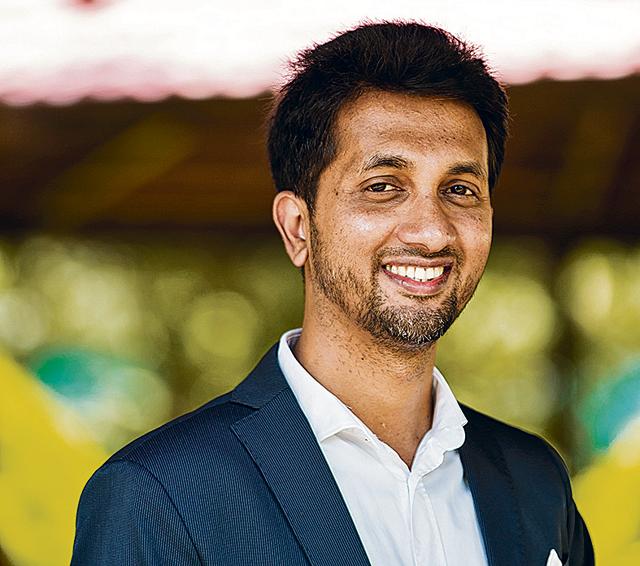
The next thing Musthafa realised he needed to make amma style batter was to get the grinding machine right. “In those days the commercial grinders could grind 1.5 kg of dal at a time. I realised the importance of a grinder in preparing a great batter. Germany was the country that made all food processing machines. I went there and realised that the Germans don’t know what an idli is, so how could they understand what is needed to grind a great batter?”
“I looked around the country and found that the grinders they made for the US markets to make mustard paste fit my need perfectly,”says Musthafa, “Our grinders can grind 60,000kg of batter per day.”
With the grinder in place Musthafa was ready to mass produce his batter. The next question was freshness. How to maintain freshness of a batter that can go bad quickly? “Other manufacturers use additives, preservatives in their product to keep them going for longer periods of time. I don’t.”
That meant faster decomposition. “In the early days we would get 30% returns. It was impossible to do business with wastage of this scale. The question for me now was how to reduce this?” says Musthafa.
From the beginning he set up his own distribution channel with temperature controlled vans and crosschecks on stores and storage facilities. “Our vans carry the batter at 7 degrees C and even the shopkeepers have to maintain this temperature constantly. Our batter lasts for seven days, after which it is useless.”
Setting up processing sites next to markets, having his own delivery system, zero preservatives and still 30% returns. “To tackle this, I used common sense and some technology. We collected data from each of the 45,000 shops on our list on a daily basis. Using AI and algorithms we were able to predict usage of each and every shop. we could predict days when demand would be more or less. In addition to this we realised that we had to tackle the packets before they started to rot,” he explains.
“So even if they have a shelf life of seven days, we would pick up unsold batter packets on day two or three, from various shops. These we sell to restaurants and other institutional buyers at a discounted rate. They use it up quickly and we avoid wastage. Today our wastage rate is 2%,” he claims.
Musthafa used technology, common sense and out-of-the-box thinking to ensure that his customers got the very best batter.
Keep on innovating
In this age of instant gratification, it’s important that one practises patience and perseverance. Building a business that is sustainable and scalable is crucial even if it does not give you high profits instantly. And the only way to grow is to keep innovating. Use your common sense to find gaps and figure out a way to fill it.
The outside view
Advait Kurlekar, CEO, Upohan management consultants
If you look at the statistics you will see that most startups fail because either there is no market for their product, or alternatively they fail to seize the opportunity when it presents itself. Sometimes founders overestimate their potential. It’s important to remember to see the opportunity before you seize it. S/he needs to be clear about what it is that they want to deliver. What is the need in the market that they will meet or what is the pain point you will address? It has to be meaningful enough for you to build your narrative around it. And this story has to be internally and externally consistent. Your thought processes, policies, team, culture all must be in sync with your raison d’etre. So you can’t say you want to grow 10X and not hire more people? Your story has to match both internally as well as externally.
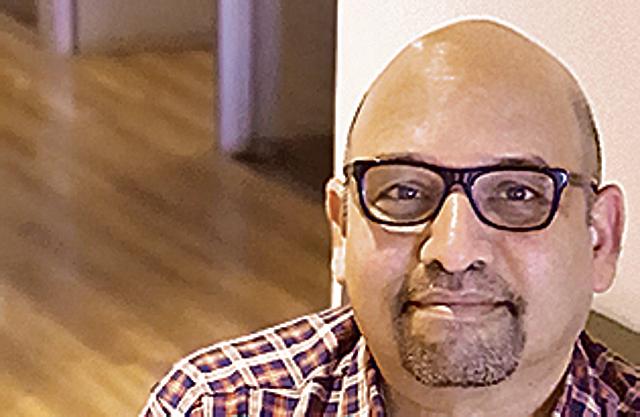
The other thing I’ve noticed is that founders tend to ape others. Everyone wants to be an Uber in her/his category. They immediately want to be a unicorn. I think it’s important to define success. Initially you may have non-paying customers so your next goal should be to convert them into paying customers, then to get more customers, then expand to other geographies and so on. Grow from Rs 1 crore to Rs 5 crore, and so on. Funding is not a critical definition of success. If your operating income is ok, you may not need funds straightaway.


