
 E-Paper



Area under basmati to dip 30% in Punjab
Decline in the area of premium quality rice will mean area under common varieties and grade-A varieties will go up in the state. Rice exporters have blamed the policies of the government for the plight of growers and dip in area under basmati despite the state authorities emphasising on enhancing area under aromatic varieties of crop as part of crop diversification programme.


The area under basmati is set to dip 30% in Punjab on account of low prices fetched by growers and problems faced in sowing of high-yielding 1509 variety last year.
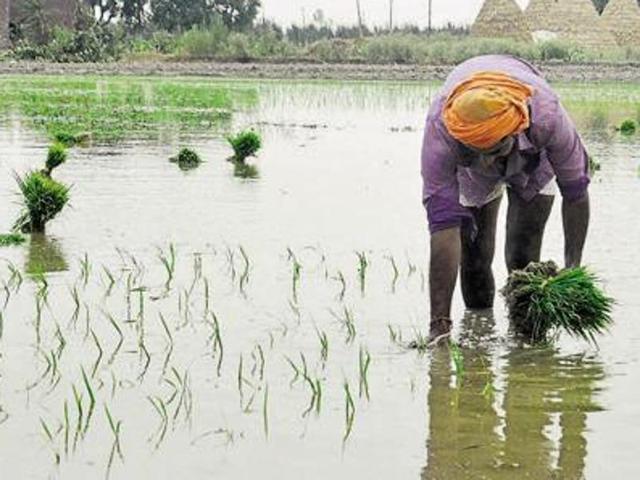
Decline in the area of premium quality rice will mean area under common varieties and grade-A varieties will go up in the state. Rice exporters have blamed the policies of the government for the plight of growers and dip in area under basmati despite the state authorities emphasising on enhancing area under aromatic varieties of crop as part of crop diversification programme.
Also read | Pending payments: Angry Punjab rice millers threaten to boycott paddy lifting
“We feel the area under basmati crop in Punjab will go down by 25-30% this season,” director of the Punjab Rice Millers and Exporters Association Ashok Sethi said.
Punjab is expecting basmati area of about 5 lakh hectares in the current kharif season, which is about 35% lower than what the state saw acreage in last sowing season.
The area under basmati in Punjab stood at 7.63 lakh hectares and 8.62 lakh hectares in 2015-16 and 2014-15, an official of Punjab agriculture department said.
Punjab’s major basmati growing areas — Amritsar and Gurdaspur — have seen sharp dip in sowing of basmati paddy this year. “Of the 1.73 lakh hectares of total paddy last year in Gurdaspur district, 60% of area was under basmati. But this year, the area under basmati has shrunk to 30% of total sowing area and rest is with other varieties,” said an official of agriculture department in Gurdaspur.
Must read | Punjab ‘emptying’ reservoirs to grow water-guzzling rice
In Amritsar, area under basmati went down by 25,000 hectares of total area of 1.80 lakh hectares. “Growers have replaced the area under basmati 1509 variety with ordinary varieties of paddy after facing problem in its lifting last year,” said Amritsar chief agricultural officer BS Chhina.
Farmers last year felt harassed after PUSA Basmati 1509 variety was not picked up by rice sellers and exporters, citing high broken content which caused its price going even below the minimum support price.
“The main reason behind decline in basmati crop is lower rates fetched by growers and faulty policies of the government,” said Sethi adding that government “failed” in helping growers on basmati 1509 variety issue.
Last fiscal, farmers got `2,000-2,200 per quintal an average for basmati crop including PUSA 1121 which was far lower than what they had earned in corresponding period of 2014-15, he said.
With sowing almost complete, the area under paddy in Punjab has reached 30.14 lakh hectares as of now which is one of the highest acreage witnessed in the state.


