
 E-Paper



Can poetry fight cancer? Facebook fund drive for Chandigarh student shows how
Amy decided to seek help on Facebook, and posted: “Anam is a beautiful human and a poet. A lot of us would have heard him recite his poems in many open mics. Anam is diagnosed with cancer and of course it’s sad beyond telling, for me to break this news... It is possible for us to help him! I lost my mom to cancer and I know how this battle is.”


When an actor-writer from the city heard of a fellow poet’s sudden diagnosis of leukemia, or blood cancer, her first reaction was helplessness. Not only because the disease is potentially fatal, but also because her friend, Anam Narula, a 21-year-old BSc student at DAV College, Chandigarh, does not have the means to get the expensive treatment.
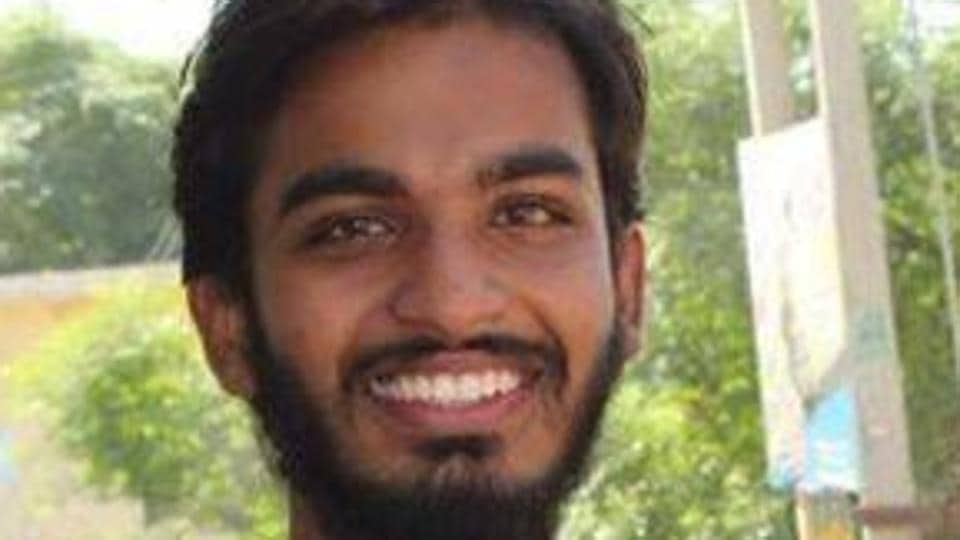
The only son of a private firm employee and a teacher from Faridkot, Anam had been getting some support from grandparents, but the amount was too big for them too. His family raised around Rs 3.6 lakh. He needs Rs 25-30 lakh for a bone-marrow transplant, as per documents, at Christian Medical College and Hospital in Ludhiana.
Amy Singh decided to seek help on Facebook, and posted: “Anam is a beautiful human and a poet. A lot of us would have heard him recite his poems in many open mics. Anam is diagnosed with cancer and of course it’s sad beyond telling, for me to break this news... It is possible for us to help him! I lost my mom to cancer and I know how this battle is.” She asked people to get in touch with her: “I’m quite helpless on my own.” It got some response.
An hour later, around 9pm, she hit upon an idea, of writing poems. Not just to raise his morale, but to raise money. Her new FB post read: “If there’s a poem you want to be written for your girlfriend, your boyfriend, your siblings, teacher, parents, friends, anybody to convey anything! Please approach me. I would love to write it. But I will charge you anything from 200-500 rupees per poem. Because I am donating this amount for Anam’s treatment... PS: Can poetry save life? Yes, it can!”
She says, “I thought I’d raise whatever little I could. Rs 15,000 max!” That was May 28.
Team builds
She was joined in the task by others, some of them superstars of the spoken-word poetry movement in India.
Paramvir Singh, Shivam Dhall and Avleen Kaur, students and poets, came on board; and the big names include Bengaluru-based Shantanu Anand, co-founder of the Airplane Poetry Movement, which is India’s biggest spoken word poetry platform; Bharath Divakar, Daniel Sukumar, and Khawaja Musadiq. At least one photographer, Akshay Kapoor, offered free shoots if you donate Rs 2,000 or more. On FB, he too underlined the power of poetry in what has fast turned into a movement: “I think there’s no better way of helping someone and getting yourself something as beautiful as words and yourself.”
The donation figure stood at Rs 12 lakh, and counting, as on June 1. “We are halfway there already!” said an elated Avleen.
The poetry alone has gathered about ₹2 lakh. But the team sees that the rest of the money, coming through direct donations to Anam’s bank account or e-wallets, is because of the uniqueness of the pitch. A petition on crowdfunding website milaap.org has got stupendous response, and a Facebook page has been made too. Local clubs and philanthropists who wish to remain anonymous have put in a chunk.
Short of words
Before any of it happened, Anam’s father took a loan against a plot worth Rs 5 lakh for his treatment. “I’ve been getting marketing jobs that pay around Rs 10,000 a month,” says Raman Narula. Anam’s mother Monica Jain Narula can spare a similar amount from her job as Hindi teacher in a private school. Her parents, both retired government teachers, have been supporting Anam’s dreams.
Raman says, “My heart sank for three days after he was diagnosed (on May 24). Initially, we were told we needed ₹6 lakh for chemotherapy alone. Now, we’ve learnt he’d need surgery. We were so desperate that even my in-laws were thinking of selling off their house. I used to get teary-eyed while talking about it, even to doctors.”
He adds, “Now, I have so much strength thanks to these kids, but I don’t have any words for what they’ve done.”
The job is only half done, so the team is planning fundraisers that include a poetry showcase, an art exhibition, and a marathon, besides other organisations holding such events too. For Anam.
“This whole episode shows that we must have hope, however little, in humanity,” says Avleen.


