
 E-Paper



Pakistani poet who decried Partition | Column
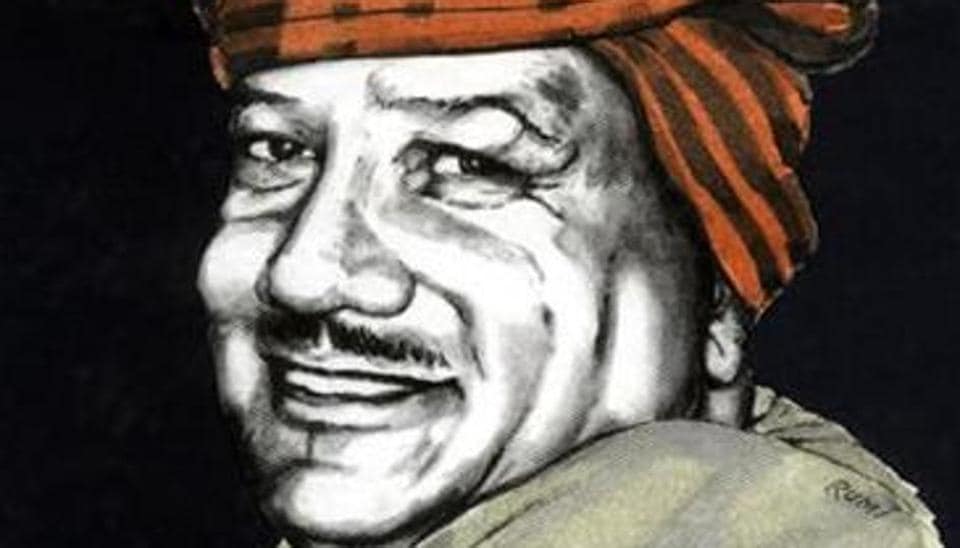
Jawaharlal Nehru famously gave Daman the title of ‘Poet of Freedom’ when he recited a poem at a public gathering in 1930 wherein the towering Congress leader was present. The friendship between the two lasted long.

 Prefer HTon Google


Seventy years is a long time. It’s time to look back and ponder over what happened in the month of August in 1947. Of course, we got our freedom but at a very heavy price for it came with Partition in hand. The worst sufferers were Punjab and Bengal which were mercilessly cut through by the malevolent Radcliffe Line.
With communalism raising its nasty head all over the world, our sub-continent not excluded, many of us are turning back to the dreadful August of 1947, in which a million people were killed and several millions displaced.
The reason behind looking back into our tragic past by setting up museums, holding symposia, publishing books or writing articles on those times is the desire that such a division never happens again.
One of the articles I came across in this context is by Pakistani poet and columnist Mahmood Awan who lives in Ireland, but his heart still beats for the Punjab that was. In his column ‘Politics, partition and poetry’, he points out that out of the estimated 14.5 million displacements, 78% of the population transfer took place in the west Punjab.
Coming to poetry, the lament of Awan, the poet, is that there was not enough in Punjabi writings that gave voice to the pangs of Partition and the only two early responses came from Amrita Pritam in India and Ustad Daman (1911-1984) in Lahore.
While Amrita’s poem ‘Ajj aakhan Waris Shah nu’ is being commemorated, it is also time to remember Daman’s verses that came just a few months later in 1948.
A few lines from the poem went thus: “Barbad ihna azadian ton hoye tusi vi ho, hoye asin vi haan/ Akhan di laali payi dassdi hai, roye tusi vi ho, roye asin vi haan (We were ruined by this Independence and so were you/ The red eyes reveal we cried a lot and so did you).”
Daman’s father was a Muslim tailor and mother a washerwoman, and he was originally named as Chiragh Din. He managed to complete his matriculation, but could not get a job of a clerk he wanted. He went through life wearing, as he said, the ‘crown of poetry’ on his head and not “bowing before anyone”.
He recited poems at the Congress gatherings in the gardens and streets of Lahore during the 1920s. Satire was his forte.
Jawaharlal Nehru famously gave Daman the title of ‘Poet of Freedom’ when he recited a poem at a public gathering in 1930 wherein the towering Congress leader was present. The friendship between the two lasted long.
He was also known as poet of the gardens. This may seem strange for now we know poets of Facebook, Instagram or SMS! He remained a people’s poet always and never lost touch with the voice of the people who wanted peace and freedom.
No wonder he had false cases foisted upon him and was jailed. But that did not deter him from writing poetry of rebellion. His famous lines still remembered by many are “Pakistan dian maujan hi maujan/Chaare passe faujan hi faujan (Pakistan revels in joy with army all round).”
During the Partition, his house was burnt down because he was taken to be as a Congress supporter. Nehru offered him citizenship of India but Daman said he would not be able to live anywhere other than Lahore. And now his tomb is in the premises of ‘mazaar’ of Lahore’s Sufi poet Shah Hussain as Daman wanted.
The best compliment came to him from his friend and celebrated poet Faiz Ahmad Faiz. When Faiz was asked why did he not write in Punjabi, he replied, “I could not compete with the old masters like Sultan Bahu, Bulleh Shah, Waris Shah and others. The only one who could be ranked with them today is Ustad Daman.”
An ailing Daman was seen at the funeral of Faiz when two people brought him in a rickshaw. Daman died 13 days later. It was only after his death that his admirers published a collection of his poems called ‘Daman de Moti’ (Pearls of Daman). A salute, indeed, to the great Punjabi ‘darvesh’ poet!
nirudutt@gmail.com


