
 E-Paper



Staring at paddy season power peak, PSPCL asks grid to increase limit
The PSPCL is seeking extension of its limit to draw from the Northern Grid for peak demand, as paddy will need huge amount of water that is drawn from tubewells run on electricity.

 Prefer HTon Google


Although the Punjab State Power Corporation Limited (PSPCL) has been maintaining a public posture of sound position in spite of closure of the thermal plant at Bathinda and two units at Rupnagar — that took out 880 MW capacity generation — it is now seeking extension of its limit to draw from the Northern Grid for peak demand, as paddy will need huge amount of water that is drawn from tubewells run on electricity.
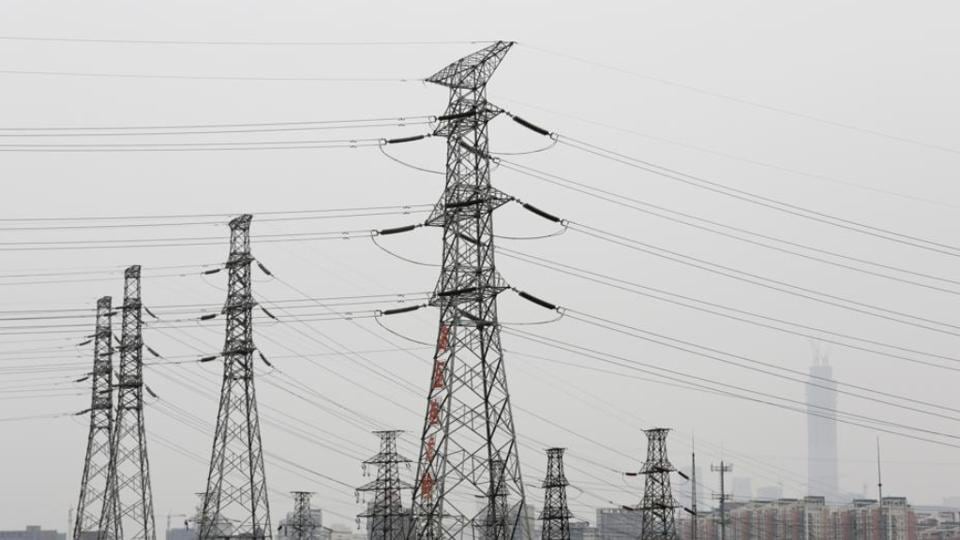
PSPCL chairman-cum-managing director (CMD) A Venu Prasad, in a letter (accessed by HT), asked the Northern Region Load Dispatch Centre (NRLDC) to enhance the state’s TTC/ATC (total transmission capacity/available transmission capacity) limits of 7,000/6,400 MW by 500/600 MW for the upcoming paddy season. Paddy is to be sowed, as per government directions, in mid-June.
In January this year, a month after the state cabinet closed down the units at Bathinda and Rupnagar, the PSPCL requested the NRLDC to enhance the limit by 1,100 MW, but the NRLDC raised it by only 300 MW.
In its letter now, the PSPCL says peak demand, which was 11,705 MW in the paddy season last year, is expected to be 12,500 MW this year. If the limits are not enhanced, the PSPCL will be able to meet up to 12,000 MW of demand only, it adds. Thus, it will have to impose cuts of 500 MW or more if demand goes even higher.
“PSPCL depends on inter-state power corridor for tie-ups out of state, and in case of any limitation in these corridors, shortage of power due to unavailability from state-run or private thermal plants cannot be met from outside the state. And due to any limitation or fault in inter-state transmission lines, too, the shortfall has to be met from surplus generation within the state. But, after the closure of 880-MW state units, Punjab has neither surplus limits nor its own generation,” said a senior PSPCL engineer who did not want to be named.
Worse, coal stock for all thermal plants at national level and the private plants of Punjab is lower than desired. Stock position of private plants at Rajpura, Talwandi Sabo and Goindwal Sahib is only for 2.7 days, 2.8 days and 9.1 days, respectively, although as per guidelines for plants at more than 1000 km from the coal mine — which is the case here — stock of 30 days has to maintained.
“Stock of 30 days is absolutely imperative for reliability of generation at the time of onset of peak summer season. Due to monsoon, the mining output and its transportation too gets adversely affected,” said the engineer.
Another senior officer, who did not want to be named, said, “In the past, some private plants have never operated continuously at full capacity. If they do that, PSPCL could sell power to recover some of the fixed cost being paid to these projects.”
However, coal stock for government-owned Rupnagar and Lehra Mohabbat plant units is sufficient for 31 and 29 days, respectively, as the units remained mostly shut during recent months.


