E-Paper



‘Bought my first house in Bengaluru. Did I make a mistake?’ 30-year-old’s EMI post sparks debate
Financial experts say homebuyers must factor in maintenance, GST, interiors and other recurring costs, not just EMIs, before buying a property

 Prefer HTon Google


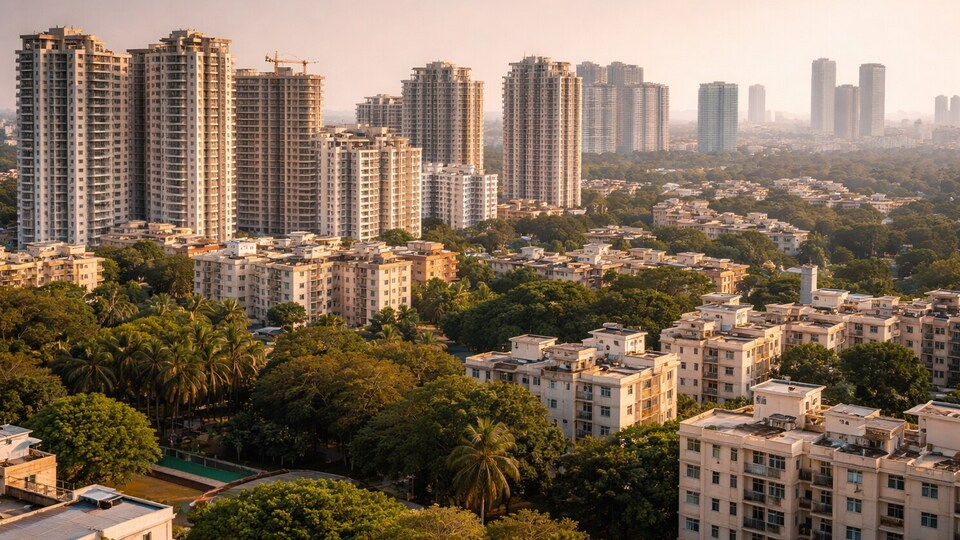
A Bengaluru homebuyer’s candid post questioning whether buying his first apartment was a financial mistake has triggered a wider debate around home ownership in one’s early 30s amid rising EMIs and soaring housing costs. The buyer, who booked an ₹84 lakh duplex apartment in Budigere in 2024, said that a ₹50,000 monthly EMI, upcoming registration and interior expenses, and ongoing family responsibilities had pushed him into severe financial stress despite a recent salary hike.
The post resonated with many young professionals navigating similar pressures in India’s urban housing markets. However, several Reddit users argued that the buyer was not financially ruined but merely “asset-heavy and liquidity-light” at this stage of life, noting that real estate ownership often strains short-term cash flow while building long-term wealth.
“I grew up in a lower-middle-class family and there were many times during childhood when we struggled financially, delayed school fees, skipped school picnics because we couldn’t afford them, sometimes even worrying about food. Because of that, owning a house always felt like “security” to my parents. I’m now in my early 30s, unmarried, and have been living in Bangalore for around 8 years. In 2024, my parents strongly pushed me to buy a house. I ended up booking a 1600 sq ft 2BHK duplex apartment in Budigere for 84L. At that time, I was earning around 1.2L/month. The EMI itself is 50k, and I was also paying 13k rent where I currently stay, so saving money became difficult,” the post said.
After switching jobs last year, the homebuyer said his monthly income increased to around ₹1.7 lakh, helping improve his financial position slightly. However, he noted that despite the higher salary, he was only able to save about ₹11 lakh after accounting for regular expenses. With the apartment now ready for possession, he said additional costs, including registration, TDS, and other charges amounting to nearly ₹8.3 lakh, along with at least ₹5 lakh for basic interiors, have added to the financial pressure.
Also Read: Is buying property in your early 30s a smart investment move? Redditor’s dilemma sparks debate
‘You are asset-heavy and liquidity-light’
Many users responding to the post argued that the situation reflected a temporary cash-flow crunch rather than financial ruin.
“You are not financially ruined. You are just asset-heavy and liquidity-light right now. Very different situation,” one of the Redditors wrote. The user pointed out that by Bengaluru standards, an ₹84 lakh property with a ₹50,000 EMI against a ₹1.7 lakh income was not necessarily an unsustainable mismatch, especially for someone intending to settle in the city long term.
“The stress is coming because possession-stage costs hit together: registration, interiors, shifting, furnishing, maintenance, and EMI already running. That phase shocks almost every first-time buyer,” the comment said.
Several users noted that people from financially insecure middle-class backgrounds often associate home ownership with emotional safety, while simultaneously fearing the monthly financial burden that follows.“Home ownership feels emotionally safe, but monthly cash compression feels emotionally dangerous at the same time. Both feelings can exist together,” another user wrote.
‘Initial years are hard’
Several Redditors shared personal stories of struggling years of financial stress after buying property, only to see both salaries and property values rise significantly later.
One user recalled purchasing a ready-to-move apartment in 2017 for ₹50 lakh, including registration costs, while earning a salary of only ₹55,000 per month.
“In 2017, I paid 36k EMI on a 55k salary. Now paid off loan in 2024 by switching jobs, used bonuses to pay loans fast etc. Initial years are hard but you reap benefits after 5 or 6 years,” the user wrote, pointing out that the same apartment is now worth around ₹1.1 crore.
Buying a flat? Factor in maintenance costs, GST, while planning finances, experts say
Experts say homebuyers should evaluate a property's total ownership expenses rather than just its initial price. “This requires accounting for all recurring costs, which include monthly maintenance fees, GST charges, property tax obligations, and upcoming maintenance and repair expenses,” says Pramod Kathuria, founder and CEO, Easiloan.
The annual expenses associated with these cash outflows should be calculated to determine their total cost over the time period the homeowner intends to keep the house.
“People underestimate post-purchase costs; interiors alone can be expensive. Even basic work like cupboards and lighting can cost ₹15 to ₹20 lakhs, and if you want a premium look, expenses can go much higher,” Suresh Sadagopan, founder of Ladder7 Financial Advisories, said.
“Your first house doesn’t have to be your last. If the budget is tight, start with a smaller place, build savings, and upgrade in a few years rather than overcommitting now,” he said.
(Disclaimer: This report is based on user-generated content from social media. HT.com has not independently verified the claims and does not endorse them.)