E-Paper



Dabur India Limited leases 1.62 lakh sq ft warehousing space in Uttar Pradesh at ₹26 lakh per month
Dabur India Limited has leased a warehousing space in Hasanganj, Unnao, Uttar Pradesh, for nine years, with a security deposit of ₹1.3 crore

 Prefer HTon Google


Dabur India Limited has taken on lease a 1.62 lakh sq ft warehouse in Hasanganj, Unnao, Uttar Pradesh, for nine years at a monthly rent of nearly ₹26 lakh, as per documents accessed by Propstack.
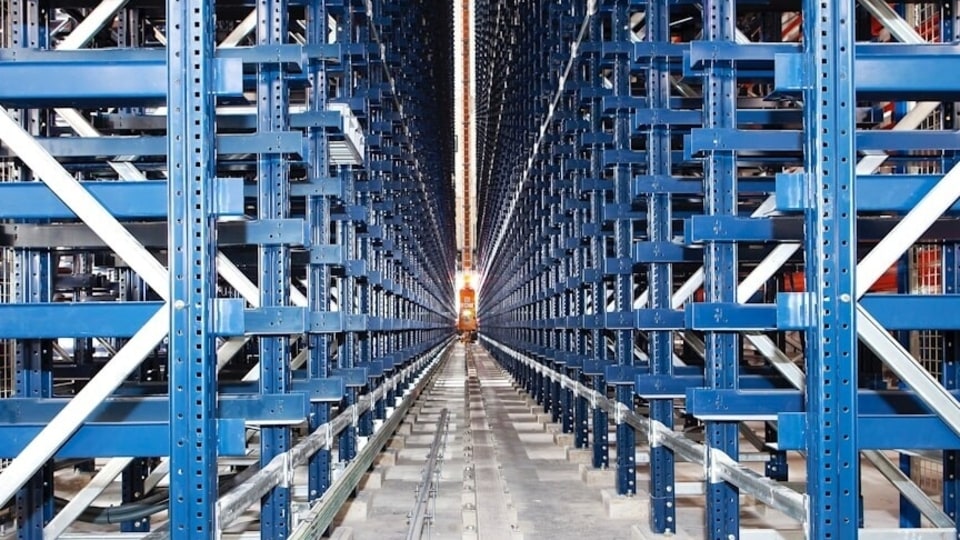
The facility, located in Hasanganj, has been taken on a long-term lease from Satram Builders, the document showed.
The lease for ₹25.93 lakh per month, which commenced on December 12, 2025, was transacted at a rental of ₹15.60 per sq ft per month for the main warehouse area and ₹7.8 per sq ft per month for a 7,500 sq ft mezzanine floor, it showed.
The company paid a security deposit of ₹1.3 crore, and the rent will be increased by 4% annually, the document showed.
A list of questions has been sent to Dabur India and Satram Builders. The story will be updated if a response is received.
Previous warehousing transactions
In January, Apple's key supplier Jabil’s arm, Jabil Circuit India Pvt Ltd, leased a 4.1 lakh sq ft warehousing facility in Pune district’s Ranjangaon at a monthly rent of ₹94.84 lakh for a 10-year tenure. The facility has a built-up area of about 3.17 lakh sq ft, while the chargeable area stands at 4.13 lakh sq ft. Jabil Circuit has also paid a security deposit of ₹5.69 crore, according to the sub-lease document.
Earlier, DHL Supply Chain India Pvt Ltd leased a 3.5 lakh sq ft warehousing space near Chennai for a monthly rent of ₹77 lakh for 11 months. The facility is located at Value Spaces Logistics and Industrial Park in Polivakkam, Thiruvallur district, around 47 km from Chennai. The lease officially commenced in two parts, one on November 15, 2025, and another on December 15, and DHL paid a security deposit of ₹2.3 crore.
Warehousing market in India
According to a report by Savills India, the industrial and logistics real estate sector grew steadily, starting the year on a positive note, with absorption reaching 18.5 million sq. ft. in Q1 2026, an 15.6% Y-o-Y increase from 16 million sq. ft. in Q1 2025. Tier-I cities accounted for 79% of this absorption, while Tier-II and Tier-III cities contributed 21%.
Pune emerged as the second‑largest contributor to overall absorption (24%), primarily driven by its growing manufacturing footprint followed by Delhi-NCR and Mumbai with 19% and 12% respectively. The Tier II and III cities together accounted for 21% of total absorption. In terms of supply, Delhi-NCR accounted for the highest share at 20% in Q1 2026, followed by Pune at 18% and Chennai at 17%, while Tier-II and III cities together accounted for 16% of the total supply, the report showed.