E-Paper



Karnataka relaxes building norms: Bengaluru set for taller, integrated developments in industrial corridors
Karnataka’s new norms have raised FAR limits in KIADB zones to 5.2, enabling taller, denser developments and reshaping industrial corridors across Bengaluru

 Prefer HTon Google


Karnataka’s decision to relax building norms under the Karnataka Industrial Areas Development Board (KIADB), allowing a floor area ratio (FAR) of up to 5.2 through premium payments, is set to significantly reshape Bengaluru’s skyline.
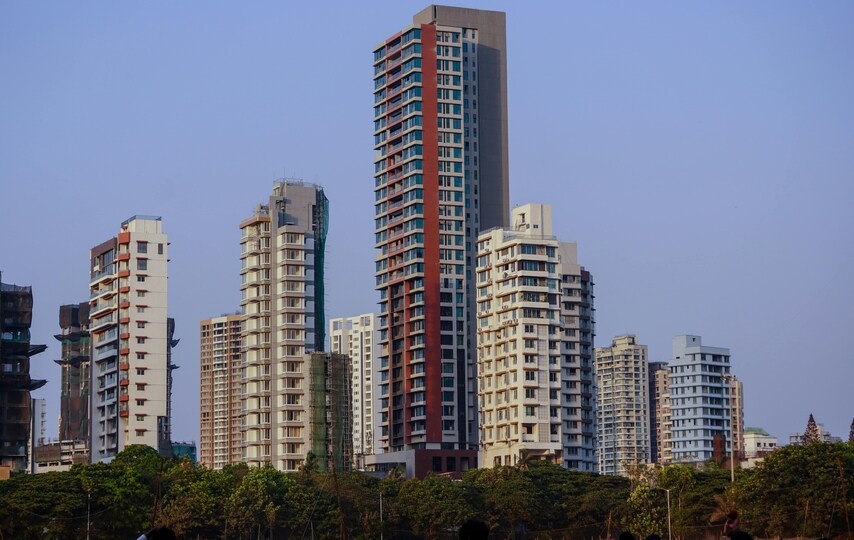
The move is expected to spur large-scale expansion across industrial, commercial and residential projects along the state’s industrial corridors. By permitting a substantially higher FAR, the government has paved the way for denser, taller and more integrated developments within KIADB-notified zones, spanning factories, logistics parks, data centres, office spaces and even housing, experts said.
The state government, on February 6, has eased building regulations under KIADB, allowing a floor area ratio (FAR) of up to 5.2 through premium purchases, officials said.
Earlier, industrial plots abutting roads wider than 30 metres were capped at an FAR of 3.25. Under the revised norms, these parcels can now have a FAR of up to 5.2, allowing significantly taller and denser developments. Plots along 24–30 metre-wide roads are eligible for an FAR of up to 4.8; those on 18–24 metre-wide roads can build up to 4.0 FAR; while roads measuring 12–18 metres permit 3.6 FAR. Even smaller access roads are covered, with plots along roads narrower than 12 metres now allowing FARs of 2.45 to 2.8, KIADB said.
What is FAR, and why does it matter in real estate?
Floor Area Ratio (FAR) is a planning metric that determines the amount of built-up area a developer can construct on a given plot of land. It is calculated as the ratio of a building’s total floor area to the size of the plot. A higher FAR allows taller or denser buildings, while a lower FAR restricts vertical and horizontal expansion.
For example, on a 10,000 sq metre plot with an FAR of 2, a developer can build up to 20,000 sq metres of floor space. If the FAR is raised to 5, the permissible built-up area jumps to 50,000 sq metres on the same land.
How will the higher FAR reshape the real estate market?
Experts say the most immediate impact will be a sharp increase in the development potential and, therefore, the value of land along key industrial corridors around Bengaluru.
“Developers can add more built-up area to the same plot, making it easier for factories, logistics parks, data centres, and commercial and residential applications to work together. This should make land values more stable, speed up the start of projects, and make investors more interested in these small markets,” Ashish Sharma, Regional Director and City Head, Bengaluru, ANAROCK Group, said.
Industry experts say this improves project viability and reduces the pressure to acquire large land parcels, which have become increasingly expensive and time-consuming. Better land utilisation is also expected to stabilise land prices in emerging micro-markets, accelerate project launches, and attract greater interest from institutional investors and large occupiers seeking scale.
Will residential areas also be affected?
In the short term, the impact on residential neighbourhoods in Bengaluru’s inner city is expected to be limited, as the policy is primarily targeted at KIADB-notified industrial estates located in emerging and peripheral zones, Sharma said.
These areas, which are still evolving, are likely to see the first wave of higher-density development driven by industrial, logistics, and commercial projects that take advantage of the relaxed FAR norms, he said.
Over time, however, the effects could spill over into the housing market. As employment, infrastructure and economic activity intensify around these industrial clusters, housing demand may gradually migrate outward, Sharma said. “ But as jobs and activity pick up in these areas, demand may slowly shift, with some people moving from central Bengaluru to well-planned townships near industrial clusters.”
Also Read: Bengaluru real estate: Apartment sizes shrink 8% as developers cut space to keep homes affordable
Beyond factories: Benefits, risks and wider implications
While the changes are being rolled out in industrial districts, their influence will extend well beyond factory plots, Sharma said. The higher FAR applies not only to manufacturing units but also to commercial buildings, infrastructure projects, and integrated townships with residential components that fall within KIADB limits. This broad applicability allows developers to plan larger, more complex projects that combine multiple uses on the same parcel of land, he said.
“Key benefits include better use of land, improved project economics, the ability to build vertical factories and multi-level warehouses, and stronger employment clusters that can spur housing and retail development in the area,” Anarock said.