E-Paper



Who pays for vehicle damage if the basement parking area gets flooded? What residents should know
Bengaluru real estate: Legal experts say homebuyers can approach RERA within five years for structural defects like faulty drainage causing basement flooding

 Prefer HTon Google


Pre-monsoon showers in Bengaluru have once again laid bare the fragility of infrastructure within gated communities, after a resident flagged severe waterlogging in a basement parking area, raising pressing questions around vehicle safety and liability. A Reddit user described nearly a foot of water accumulating after a brief spell of rain, enough to endanger parked cars.
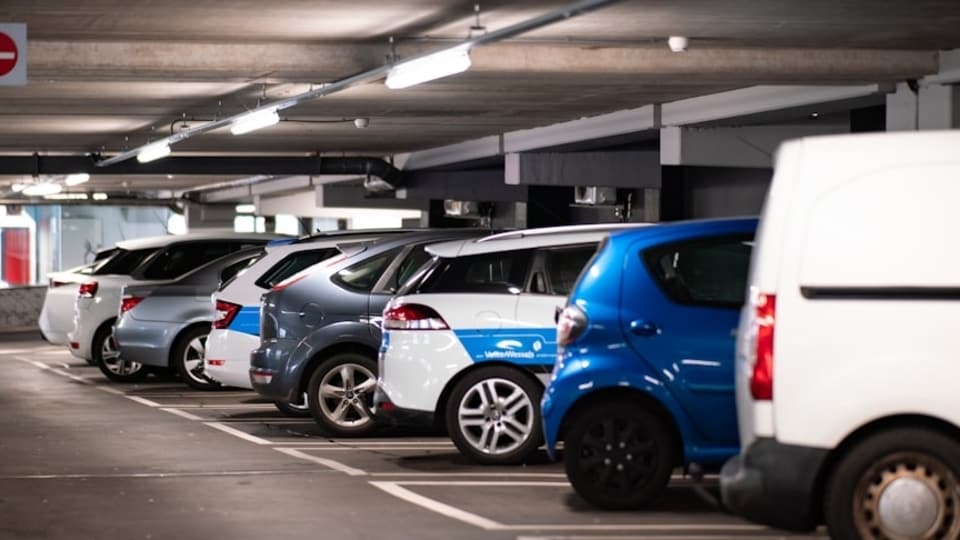
In a city where monsoon flooding routinely seeps into housing complexes and damages vehicles, the episode has rekindled a familiar debate on whether drainage design and maintenance practices in residential projects are keeping pace with Bengaluru’s growing urban challenges.
“After recent rain, a huge amount of water has entered the parking lot. It went up to a foot high. Surprised that a single rainfall can lead to this much waterlogging,” the Redditor wrote, questioning who would be responsible if vehicles were damaged.
“If the level rises further, vehicles are definitely at risk. In a situation like this, who is actually liable for the damage? Builder, association, or is it on the owners?” he said.
Liability unclear, residents point to insurance and maintenance gaps
Redditors pointed out that, in most cases, vehicle damage is covered by motor insurance rather than building liability insurance.
“To answer your question: the insurance companies are liable for any damage to your car, so top up on that policy,” one of the Redditors wrote, while also flagging the need for preventive maintenance. “There should be proper drainage in place… Hope the association/build has gotten the chambers cleaned pre-monsoon.”
Others took a more cautious stance on liability. “Wherever you park, you park taking the risk. No parking takes liability, all liability is yours,” another user said, underscoring the limited accountability often seen in such situations.
Some users pointed to the technical limitations of the basement design itself. “Every basement is designed to withstand only so much rain… the drainage and evacuation capabilities… cannot keep up sometimes. That’s the risk you take, and that’s why you have insurance,” one Redditor said.
Legal experts weigh in
Legal experts noted that, in general, the residents’ association has no role in the original design of drainage systems or core infrastructure. Its responsibility is limited to maintenance after handover.
“If the issue arises within the defect liability period, generally five years under the RERA Act, 2016, homebuyers can approach the RERA court, which may direct the developer to rectify defects such as inadequate drainage or faulty design. However, RERA typically focuses on corrective action and may not award compensation for consequential losses like vehicle damage,” Akash Bantia, an advocate, said.
Under the RERA Act, the defect liability period is a five-year window from the date of possession during which the developer is responsible for fixing structural defects at no cost to the homebuyer.
Chandrachud Bhattacharyya, another advocate, said liability may also depend on the project's stage and the nature of the defect. “Till the occupancy certificate (OC) is obtained, the responsibility of maintaining the project rests with the developer, and several judicial precedents have held that maintenance during this period must be undertaken at the builder’s cost,” he said.
Bhattacharyya said that the defect liability framework remains central to such disputes. “If waterlogging is proven to be a result of design or construction failure, the builder is liable within the five-year defect liability period. Homebuyers would need technical evidence, such as reports from engineers or architects, to establish that structural or design deficiencies caused the damage,” he explained.
Also Read: Haryana affordable housing policy mandates one car parking: Will it increase apartment prices?
Bantia noted that once the defect liability period has lapsed, seeking remedies becomes more difficult under RERA. “In such cases, affected parties may consider approaching consumer courts, where there could be a stronger case for claiming damages if negligence or structural defects in drainage can be established. That said, the outcome depends on evidence and the specifics of the case.”
Legal experts emphasised that, in practice, insurance remains the first line of protection. “Motor insurance policies are designed to cover such risks, and vehicle owners should ideally claim damages through their insurer. Legal recourse against developers or other parties may take time and is often uncertain, whereas insurance provides immediate relief,” Bantia said.
Can the complaint against the developer be dismissed as a matter of force majeure?
Legal experts also clarified the applicability of the force majeure clause. Under the RERA Act, force majeure refers to extraordinary events or circumstances beyond the developer's control that prevent a project's timely completion. The law defines it as situations arising from natural calamities or external disruptions that could not have been reasonably anticipated or avoided.
“Unusually extreme events, such as cyclones, earthquakes, or disruptions like the COVID-19 pandemic, may qualify as force majeure under the RERA Act, as they are beyond the control of the developer and could not be reasonably anticipated,” Bhattacharyya said. “In such situations, developers may be granted relief, including extensions of timelines or limited protection from liability, provided they can establish a direct impact on project execution.”
“However, routine or even heavy monsoon rainfall does not fall within this category, as it is a predictable, seasonal occurrence. Developers cannot typically invoke force majeure for issues like basement flooding or waterlogging arising during the monsoon, particularly if these stem from inadequate drainage design or poor construction,” he said.
(Disclaimer: This report is based on user-generated content from social media. HT.com has not independently verified the claims and does not endorse them.)