E-Paper



A dream resurrected
An association launched an outright war for homes almost lost in the Noida Extension land acquisition imbroglio. Its members now see light at the end of the tunnel


A few years ago, Abhishek Kumar was happy with his marketing job with a leading corporate... until he booked an apartment in 2010 in Noida Extension. “The advertisement ‘roti, kapda aur makaan’ caught my fancy and I decided to put in my hard-earned money in an affordable housing project there,” he recollects.

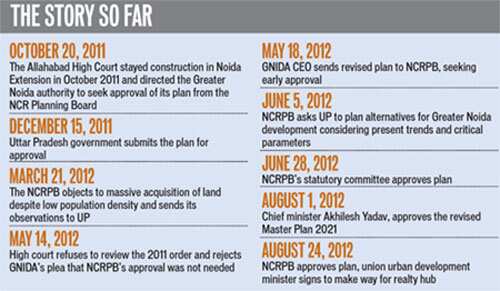
That was perhaps the happiest phase of his life till farmers of 12 villages moved court, seeking quashing of land acquisition in villages such as Shahberi, Patwari, Haibatpur, Bisrakh, Itaidha, Ghanghola, Devla, Roza-Yakoobpur and in a major setback the Allahabad High Court in October 2011 cancelled the land acquisition of three villages in Greater Noida - Deola, Shahberi and Asadallapur.
“Banks had stopped funding the project. We were caught between the devil and the deep blue sea. It was then that we decided to form the Noida Extension Flat Owners Association (NEFOMA) on Facebook. As many as 1500 buyers signed up with us,” he says.
‘I quit my job’
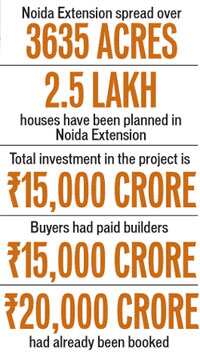
“I was unable to give time and attention either to the association or to my job when the issue came up and things took a bad turn. The issue was not resolved for months and I received transfer orders for Pune. It was then that I decided to quit my job and devote all my time to my war for a home. Noida Extension became my passion. I had to ensure that the R12 lakh each that others and I had invested did not go waste. I was staying on rent and had just one aim – to get a house,” he says.
The beginning
There were initially five members who started NEFOWA and “in the beginning we spent about R25,000 to make calls, send messages, travel to Lucknow etc. We paid from our pockets. Later, we started asking other apartment owners like us for the money to hold meetings and dharnas,” he says. Did he have any past experience that helped him take up the fight? “I come from Jharkhand and have worked for the cause of the adivasis. That background helped a lot. More than big builders, it was the small builders we had issues with – they would often refuse to meet us. The biggest hurdle was that there was no regulatory authority. We are now planning to take up the cause of setting it up,” Kumar adds.
Breaking point and biggest achievement
The biggest challenge was perhaps when the transition of the government took place. "We thought the new government would scrap the project but that did not happen. That was the biggest challenge," he says. Their biggest achievement as a joint forum was when urban development minister Kamal Nath himself handed over the approved draft Master Plan from the National Capital Region Planning Board (NCRPB) to them. "We were the first ones to receive it. It could have been sent directly to the authority but we received the letter first because it was a buyers’ fight. That was one of our happiest moments," Kumar says.
Lessons learnt
During the long-drawn struggle Noida Extension Flat Owners Welfare Association (NEFOWA) is beginning to see light at the end of the tunnel. After the NCRPB approval came through in August last year, some builders got greedy, increased prices and cancelled bookings. The battle is not yet over. “It is going to be a long drawn one. We only hope that the builders deliver a quality product and possession is given to us on time. They’ve promised us March 2015.”
Advice to others
Never lose hope. Always remain united. If there is unity, any battle, no matter how tough, can be won. “Initially we would face problems meeting senior people. Later, it was a cakewalk. There are always people who are ready to give you a patient hearing. Once contact is established and people are convinced about your cause, it helps them take fast decisions.” Also, try and establish contact with all forums before going to court. That ought to be the last resort.
Future plans
Nationalised banks have finally started funding the project. “In the course of our fight, we now know who a quality builder is. We have also asked the Greater Noida Authority for the list of builders who have stopped making payments to it. We will blacklist those who have not paid up dues to the authority,” he says.
Here’s a look at how and why the Noida Extension land acquisition issue reached flashpoint
Greater Noida Industrial Development Authority (GNIDA) acquired 3,635 hectares of land between 2005 and 2010 for industrial use
In 2008, it changed the land use from industrial to residential (group housing) and continued with acquisition
Farmers began moving court in 2007
2,500 hectares allotted to builders in 2009. In October 2011, court said that construction could go on in Greater Noida after Master Plan was approved by NCRPB
R1,747 crore is the amount GNIDA earned through sale of land
R800 per sq mt is the rate at which the authority acquired land
R12,000 per square metre is the price at which land was sold to builders
First, farmers of 12 villages moved court, seeking quashing of land acquisition. The villages include: Shahberi, Patwari, Haibatpur, Bisrakh, Itaidha, Ghanghola, Devla, Roza-Yakoobpur
Later, other villages of Greater Noida also moved court, taking the total number of villages to 40