
 E-Paper



Lawn Bowls: An unforgettable golden triumph for India
No one saw it coming and that makes the women’s fours Lawn Bowls gold that much more special.

 Prefer HTon Google


As the Indian women’s fours team beat New Zealand in the semi-finals for a Commonwealth Games medal, a few officials seated in the stands offered the Indian flag for the four women as part of their celebrations, the kind usually reserved after winning tournaments and medals. “Aaj nahi, kal (not today, tomorrow),” Anju Luthra, the team’s manager, replied.
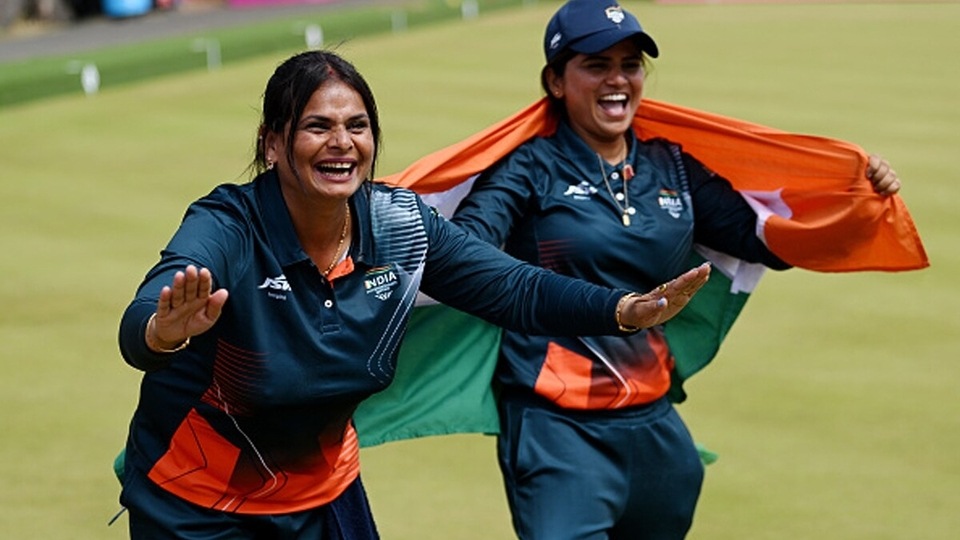
The humble refusal signalled bold ambition.
And there they were a day later on Tuesday - Rupa Rani Tirkey, Lovely Choubey, Pinki and Nayanmoni Saikia draped in the tri-colour as the four upgraded themselves from the astonishing to the apogee, from the secured silver to a glossy gold.
The women’s fours team had beaten 2014 CWG champions South Africa 17-10 in the final that swung one way to another as much as the curl on that ball on the greens of the Royal Leamington Spa. Overturning a 6-1 deficit against New Zealand, India started the final with an 8-2 lead. South Africa caught up at 8-8 at the 10th end but once India snuck ahead again at 12-10, they soared. And with it brought lawn bowls to living room chatter and social media clatter back home.
It, by far, tops the shock-and-awe medal list from among the large Indian contingent from the 2022 Birmingham CWG. All of its four architects may not hang around for too much longer in the sport to witness its ripple effect first hand, but they’ve potentially set the ball rolling - quite literally - for a younger and wider Indian presence in lawn bowls.
Olympic sportspersons swear by the four-year periodization cycle leading up to the next Games. The Indian lawn bowls players also go by the same time frame. In their case, however, the CWG is literally all they have to look for as a major event. Domestic tournaments and National Games apart, only a few have the means to travel abroad for international tournaments with their own money.
For the women that coasted all the way in Birmingham, the ride took off from the gates of New Delhi 12 years ago. Through the near-misses stops at Glasgow and Gold Coast that gave them “sleepless nights” aplenty, they kept moving along keeping their personal priorities aside.
Rupa, 33, got married on January 30 this year, and spent just a month at home before checking into a three-month-long national camp for the CWG. “I asked my husband whether I should go since it comes once in four years,” she said. The Ranchi woman will re-evaluate her presence for the next four-year cycle after reuniting with her family. So will the 34-year-old Nayanmoni, mother to a six-year-old daughter.
Lovely delayed her wedding until she crossed 40, and now wishes to dedicate more time to her “naya naya husband”, as she jokingly addressed him. “This sport has been a big part of my life since 2010. It will be nice to also enjoy a good family life now,” the 42-year-old said.
Not that age is any bar in lawn bowls which the Indian members call a “9-99” sport. Scottish bowler Rosemary Lenton is 72 and one of the oldest able-bodied athletes at this CWG. Six of India’s 10-member squad are aged 35 or above, but the younger ones are increasingly starting to show up. And this medal, much like the spurt of bowlers cropping up for the 2010 CWG at home, could well pull in a lot more of them.
Guwahati’s Tania Chaudhary and Delhi’s Navneet Singh are the youngest members of this squad at 27. Tania - cheering animatedly from the stands for her other four female colleagues - picked up the sport when she was 13 during the pre-2010 CWG hunt, while Navneet drifted away from cricket as a teen.
“The perception that lawn bowls is an old person’s game is slowly changing,” Navneet said. “Here we have a participant from New Zealand who is just 14 years. Tania also was 13 when she started playing it. So we will see younger players come up in the future. And this medal will go a long way in that in our country.”
Young or old, Lovely hoped whoever it is that dons the Indian jersey and goes to Victoria for the 2026 CWG is provided a much better and longer helping hand by those who govern sport in India, including their own national federation.
“This medal is very important for our sport because this will ensure there are changes brought about in the federation and SAI (Sports Authority in India) in how they look at lawn bowls and those who play it,” Pink said.
The dearth of synthetic greens has limited lawn bowls’ presence to only a handful of pockets in the country. Rupa has no doubt that what they’ve done in a posh upscale town in central England will untap into a deeper seepage of lawn bowls in India.
“It will grow lawn bowls to more places in India,” she said. “And that’s a big win too.”


