E-Paper



Game of the Century: How Italy and West Germany turned a World Cup semi-final into football's greatest drama
The FIFA World Cup contest between Italy and West Germany in 1970 was a semi-final on paper. However, in reality, it became something far greater.

 Prefer HTon Google


The 2026 FIFA World Cup is around the corner, and, as in the previous few editions, we can expect a few humdingers. The tournament has repeatedly delivered thrillers, and some matches have even turned into goal-fests. Some games are remembered for their quality, while others are known for their significance. But only a few contests have managed to transcend both to script their place in the sport's folklore. One such occasion came on June 17, 1970, under the floodlights of Mexico's Azteca Stadium, where Italy and West Germany went toe-to-toe, and the result was so extraordinary that it became known as the Game of the Century.
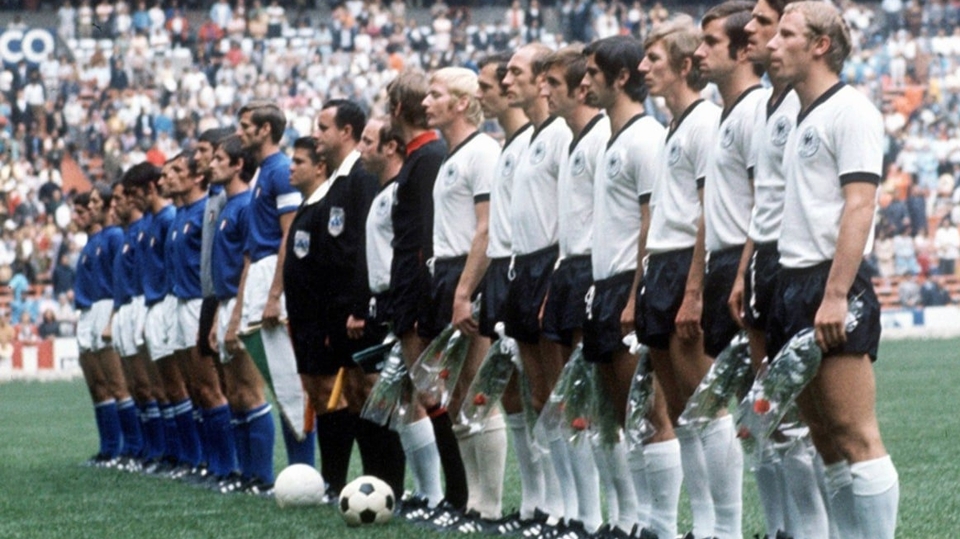
On paper, it was a World Cup semi-final. However, in reality, it became something far greater. The players from both teams battled fatigue, courage, and desperation to create one of the sport's most unforgettable spectacles. For 90 minutes, the match seemed relatively straightforward. Italy, the defending champions, took an early lead through Roberto Boninsegna in the 8th minute. Once in the lead, Italy decided to hold back and defend their advantage.
Also Read: Netherlands arrive with a World Cup spine strong enough to dream, and flaws sharp enough to fear
West Germany attacked relentlessly but struggled to break down the Italian defence. As the clock ticked toward full time, it seemed that Italy would win the title. However, it was then that sport once again showed that there are no guarantees.
German defender Karl-Heinz Schnellinger, who spent most of his club career in Italy and had never scored for West Germany before, barged into the penalty area and equalised three minutes into stoppage time. The score was level, and this marked the beginning of a chaotic evening.
Extra time chaos
When the extra time began, madness was unleashed. Just five minutes into extra time, Gerhard Müller put West Germany ahead. The prolific striker appeared to have completed the comeback, but Italy responded before long. Three minutes later, Tarcisio Burgnich levelled the score from a corner, and suddenly the match was racing beyond all rationale and logic.
The momentum swung again five minutes later. Luigi Riva restored Italy's lead with a powerful finish, only for Müller to strike once more and make it 3-3 seven minutes later. Then came perhaps the defining moment of the match.
Also Read: Iran expecting FIFA-issued multiple-entry US visas for 2026 World Cup amid security fears and Donald Trump remarks
Moments after Müller's equaliser (110th minute), Italy launched another attack. Midfielder Gianni Rivera, one of the great playmakers of his generation, arrived unmarked inside the penalty area and calmly swept the ball into the net. Italy led 4-3.
Seven goals had been scored till now. Five had come in extra time. The final minutes became a test of survival. Players cramped, staggered and chased shadows. Every clearance felt monumental. Every attack carried the possibility of another twist. Yet this time Italy held firm. When the whistle finally sounded, the scoreboard reflected an almost unbelievable reality: Italy 4, West Germany 3. This score was unimaginable, considering how the normal time ended 1-1.
What made the Game of the Century remarkable was its transformation from a tense tactical struggle into a football fever. The players didn't just execute strategies; they competed on pure determination.
The image of Franz Beckenbauer, playing with a dislocated shoulder strapped to his body because substitutions had already been used, became one of the defining photographs of World Cup history. Around him, teammates and opponents alike pushed themselves beyond their limits in pursuit of a place in the final.
However, this effort wasn't enough for Italy to win the FIFA World Cup as the side fell short against Brazil in the summit clash. Brazil, led by Pelé, defeated them 4-1 in the final. Yet while Brazil's triumph crowned the tournament, the semi-final remained its emotional centrepiece.
More than half a century later, the Game of the Century still stands as a reminder of football's unique capacity for drama. It showed that greatness is not always about perfection. Sometimes it emerges from chaos, fatigue and refusal to surrender. For 90 minutes, Italy and West Germany played a World Cup semi-final. For the next 30, they created a legend.