
 E-Paper



Cooking, tracking colour codes: Training abroad amid the pandemic
Used to staying in sports hostels or hotels where all their needs are catered to, training during the pandemic forced two of India’s most accomplished boxers to learn life skills as well. To stay safe amid the pandemic, they shared an apartment near their training base.

 Prefer HTon Google


Vikas Krishan and Neeraj Goyat were involved in sparring of a different kind during their training stint in the United States late last year. As soon as their gloves would be off after sessions at the Charles Houston Recreation Centre in Virginia, the boxers would head to their apartment and get on to doing household chores. The friends would bring their competitive streak into it as well, throwing challenges while cooking and cleaning.
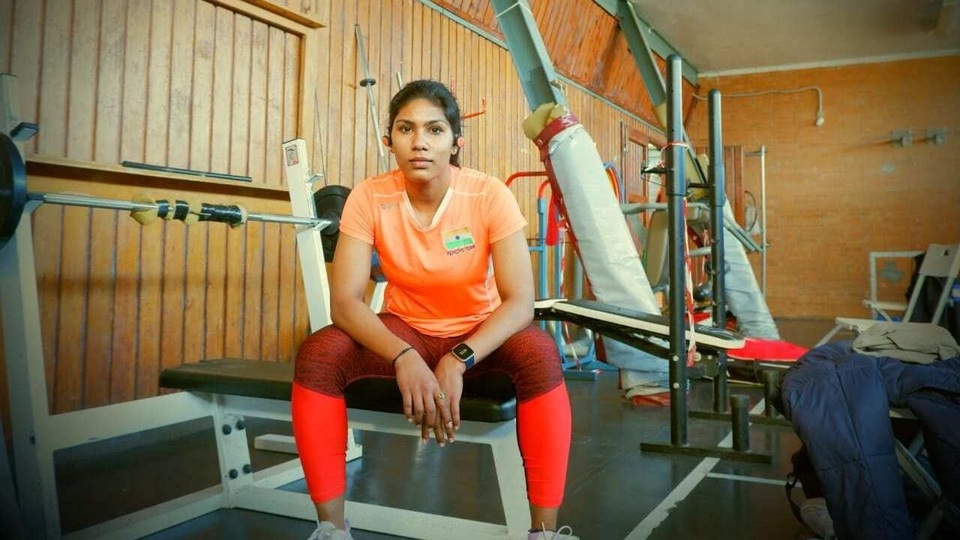
“It was a very different experience of training abroad this time around,” said Krishan. “We have never done any kitchen work. But at the end of our two-and-a-half month stay, I learnt to cook. I would tell Neeraj I can now cook better than anyone and Neeraj would give it back saying he can now compete with anybody in cleaning dishes.”
Used to staying in sports hostels or hotels where all their needs are catered to, training during the pandemic forced two of India’s most accomplished boxers to learn life skills as well. To stay safe amid the pandemic, they shared an apartment near their training base.
Krishan picked up cooking from the person giving him boxing lessons, coach Ronald Simms, who heads the boxing programme at the Inspire Institute of Sports (IIS) in Bellary, Karnataka.
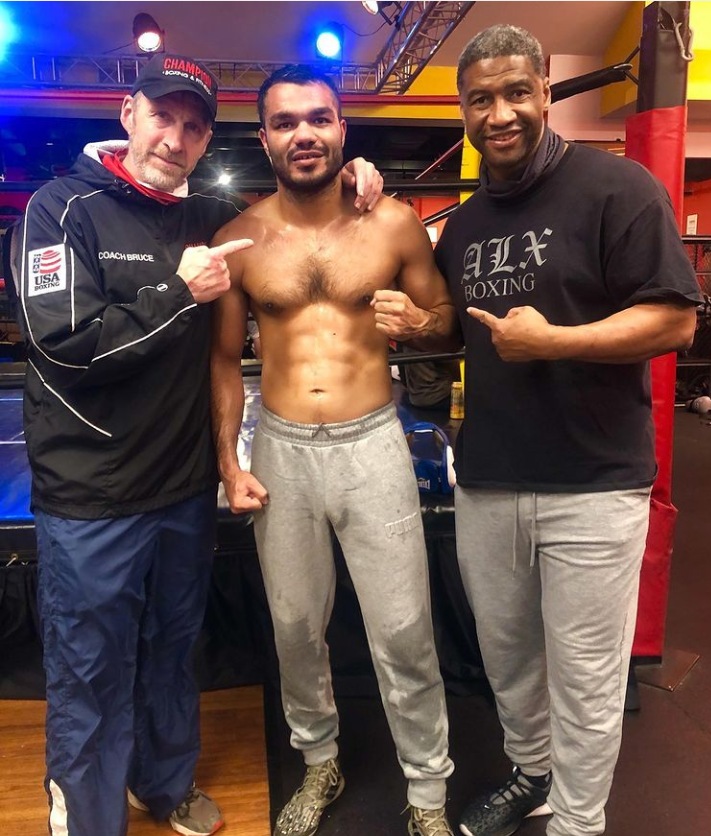
“Ron is an awesome coach—now I know he is also an awesome cook,” Krishan said.
Despite the challenges of leaving their base during the pandemic, many of India’s top Olympic prospects went abroad for training stints once international travel through “air-bubbles” became possible last September. For many, this was essential after months without training, with no clarity on when camps and competitions would restart in India.
Some like wrestler Bajrang Punia are charting their course with personal coaches—Punia is training in Michigan, US. Vinesh Phogat is training in Hungary and Poland. Weightlifter Mirabai Chanu went to the US to remedy a long-standing back problem.
G Sathiyan, India’s top-ranked table tennis player at world No. 32, travelled to play for Okayama Rivets in Japan’s T-league before heading for a second stint in the Polish Superliga last month. In Japan, Sathiyan spent two weeks in quarantine in November, in a tiny room that barely took in a queen-sized bed.
“It was a bed-size room, and I was in a limited quarantine. I was allowed to walk in a one km range—you can’t take transport—and train for two hours a day. There were one or two players the club arranged for me to train with but I could not use the gym,” Sathiyan said. “But imagine spending the rest of the day in one small room. That was the toughest part, physically and mentally.”
Curbs in Italy
Fencer Bhavani Devi flew to Livorno, Italy in November to train under her coach Nicola Zanotti in her quest to become the first Indian fencer to qualify for the Olympics. It was after eight months that Bhavani squared up in full gear against an opponent. For all those months, she had shadow-fenced on the terrace of her house with her coach giving instructions online.
“It was a relief. I was very happy to wear my kit and fence after eight months. We are waiting for the calendar to start. Only after 14 days of quarantine and a negative result was I allowed to start training,” said Bhavani.
Her apartment is a few kilometres away from the training centre in the coastal city. Bhavani has to constantly update herself with the changing hotspots of the city to pick the route she can cycle to the training centre.
“The zone changes every week depending on the number of cases, like red, orange, yellow…the safest is green,” she said. “But no region has been green yet, I think. We change from orange to yellow, and some days red too. You can't travel out of the region unless you have an emergency. Especially in red, you can't travel to other cities in the same region. You cannot go out after 10pm, and must always wear a mask.”
In the club too, mask is a must if not engaged in a bout. “The changing rooms are locked for a long time; we have to maintain distance with each other when not fencing, and no handshakes,” said the world No. 45.
Managing the flock
While individuals have their stories, managing a contingent has its own challenges. The boxing team of 25—14 boxers and 11 support staff—was the first Indian Olympic contingent to compete internationally in France and Italy, in October-December. They trained at the Olympic Centre in Assisi, sparring with the Italian national team. But the experience of their previous visit last February, when they had to make a quick exit with Italy announcing lockdown, almost came back to haunt them. The cases were on the rise again in late October and the city was placed under partial lockdown.
“The Italian team had some Covid cases; other teams that had Covid cases also had to withdraw boxers from tournaments. You have to face all this—this is a new reality. We were extremely careful. We had to get tested so many times—when you leave a city, when you land in a new city…none of our boxers got Covid fortunately,” said Indian team’s Italian high performance director Santiago Nieva, who has been tested 13 times since October. The team is now back, and trains at the IIS centre in Bellary.
Amit Panghal, world championships silver medallist and India’s big hope in 52kg, won gold in the first competition at Alexis Vastine International Boxing Tournament in Nantes, France but the experience was unique.
“There was no crowd in the stands,” he said. “I like the noise around me, it gives me positive vibes. I was facing an opponent after so many months. I did not know how the body would react. I was cautious because you don’t want to rush and get injured.
“For two months it was only training, hotel and competition venues. The rules were strict, we could not have ventured out,” said Panghal, who has qualified for Tokyo.
Self-isolation blues
The most difficult part is self-isolating in a foreign country. That is why Sathiyan chose not to go to Tokyo for a second stint and instead went to play in the Polish Superliga, on the promise of a quarantine relaxation.
“It is exhausting. First, I have to be in quarantine at home, where there is still a family around, go there and stay in quarantine, come back and have another quarantine—14 days of inactivity takes the body back by one month. You take another 10 days to recover. That leads to a lot of discontinuity in fitness,” said Sathiyan.
The athletes have had to endure uncertainty and cumbersome travel processes too. Sathiyan first went abroad to play in October, in the Polish Superliga, after a month’s wait for visa.
“That itself was a long fight, to get visa and approval from authorities. I was supposed to go mid-September but it got pushed till October end.”
The regulations were stricter for Japan but once Sathiyan got the invite to play for the Rivets—he is the first Indian to play in the Japanese league—he grabbed the opportunity to compete in one of the best leagues in the world, and also visit the Olympics host city.
“I was lucky to get the opportunity to go to Tokyo in these times. There were a lot of procedures and paperwork—to get the Covid test done from their prescribed clinic and get a form signed by the doctor, stamped by the hospital,” he said.
The five weeks in Tokyo helped Sathiyan sharpen his game.
“It was worth going through everything because of the sheer quality of matches and training I had, playing against higher-ranked opponents. I got into Olympic mode and felt that extra energy, which was much needed after this long pandemic.”


