
 E-Paper



'You’re not going to see anything like Serena Williams ever again'
Rick Macci, who trained Serena from age 9 to 14, opens up on first impressions and her enduring greatness

 Prefer HTon Google


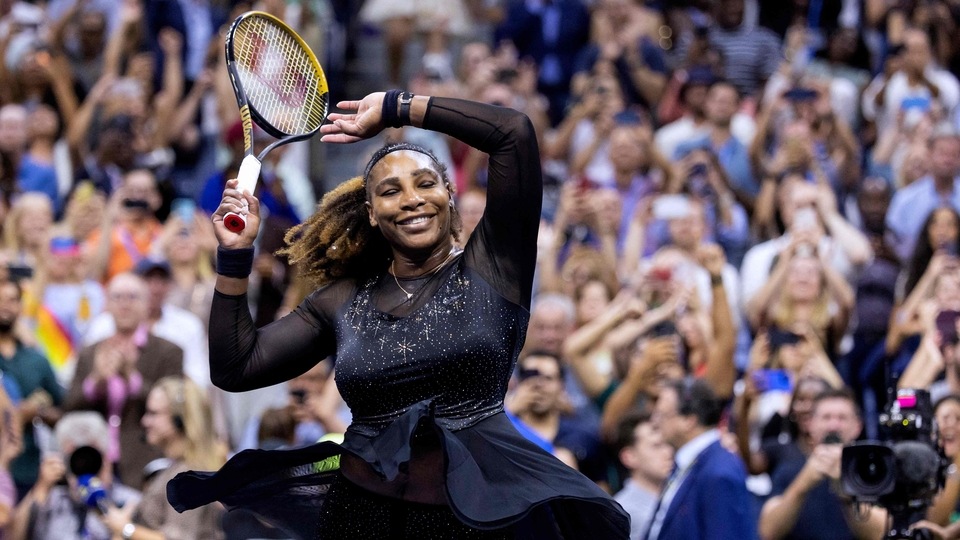
Serena Williams’ likely finale run at the US Open is playing out for that bit longer. Her turning-back-the-clock, 7-6(4), 2-6, 6-2 victory against world No. 2 Anett Kontaveit in the second round may have surprised a few given how little she’s played (and won) this season, but not the 40-year-old herself. “Well, I'm a pretty good player,” Serena said on court.
Not what Rick Macci thought for that first hour in 1991. Visiting Compton, California, for a meeting with the Williams family, it was the first time he’d seen Venus, then 10, and Serena, 9, on a tennis court. Macci—among his long list of trainees by then included Jennifer Capriati who reached the world No 1 at 14—can still vividly picture those “strong arms and legs, the hair and beads flying off the heads” of the two sisters. However, the coach wasn’t to be blown away.
“These two girls, it was like a train wreck. I wasn’t impressed for the first hour,” Macci tells this paper. “Remember, I had Capriati, so my blueprint for greatness was like no other.”
It took one little instruction for that assessment to be drastically altered, and for that blueprint to be forever rewritten.
“When I said let’s play competitive points—it was me and Serena against Venus—the whole landscape changed,” Macci says. “They started popping the popcorn with extra butter, the footwork was so much better, the preparation that much more focussed. But the wild card was this burning desire to get to the ball. There was a rage inside not only Venus but also Serena. They ran so hard to get to the ball, they almost fell. And I’m sitting there going: woah.”
Macci would go on to coach the sisters for the next few years—he trained Serena from age 9 to 14—as they moved from Compton to his academy in Florida with the most influential figure of their lives, father Richard Williams, in tow. “I told Richard, and it was more about Venus then, ‘Listen, you’ve got the next female Michael Jordan in your hands’. He puts his arms around me and goes, ‘No brotherman, I’ve got the next two’,” Macci says.
Purest athlete
Venus was the more promising prospect back then, but there was something about Serena that struck Macci.
“Even though she wasn’t anywhere near Venus’s level, she had all the time in the world. She never seemed rushed, and I’ve never really seen that in many other players. The second thing was, she kind of knew where you were going to hit the ball even before you did. But more than anything else, it was this burning desire under the hood.
“She was going to be big, strong, fast, very flexible, very explosive and filled with this rage. She was like a pit bull. When she got hold of your head, she wasn’t going to let go. Even at 9, she was one of the purest athletes I’d ever seen in my life. They (the sisters) just needed financial help and some right coaching. As they say, the rest is history, and here we are 30 years later.”
And 23 Grand Slam singles titles later, in Serena’s concluding chapter at her home Slam. Macci, 67, flew to New York to witness “the end of the greatest female tennis player ever to hold a racquet, and, in my opinion, the biggest female athlete of all time”.
“But she’s that same little girl I saw in Compton at 9,” he says.
The girl with that innate physicality and mindset to boss the tennis court. Macci says it's always been the way he coaches his trainees ranging from Capriati to Maria Sharapova to Andy Roddick—“to attack, to understand the geometry of the court, to cut the court, to attack the second serve, to control the baseline”.
“Now, doing that with Serena,” he adds. “Not only did she buy into it, but also brought in these incredible genetic attributes to the table. So I really got to maximize the assets. But it was also the mental part—once she got hold of you, she didn’t let go. So it was the total package. She checked every box and even created a few more.”
It is one thing to possess those in-built genes and be a gifted prodigy, quite another to translate it into an unmatched aura and career that Serena has carried all along. The sisters though knew from that young age what they were destined for: “brainwashed to be the world No 1,” as Macci puts it.
“That’s a different mindset,” he says. “And those are the most important years. The cards you’re dealt with at a young age, whether it be biomechanically, technically or strategically, it can have a huge impact on a youngster’s life. It’s very hard to change muscle memory when you get older. So those qualities were built in her from a young age. But it was the environment, the motivation, the inspiration. Even as a kid, when she was 10-11, we always talked about (Steffi) Graf, (Martina) Hingis, (Monica) Seles, Capriati. We never talked about another 12-year-old.”
A little prankster
Serena sure wasn’t like any other 12-year-old. She also wasn’t like the Serena we’re so accustomed to watching on the tennis court, intimidating the person on the other side of the net by her sheer presence.
“You see this intense, brutal, fiery athlete on court. But Serena Williams, every day after practice—good day, happy day, bad day, sad day—she’d say, ‘Rick, thank you very much’ and would give me a hug. Not only that, they brought their books to the court, and if it rained, they’d go to my office and study. This is why Richard’s role was so big. It was more about life lessons. She was one of the most considerate, giving people I’ve ever met,” Macci says.
And, strange as it may sound, one of the naughtiest. “She was a little prankster,” Macci says. “She was happy-go-lucky, always smiling. That’s why she turned pro later than Venus (in 1995) and it took a little longer for her to mature. But once she won that first Grand Slam at 17 at the US Open, there was going to be no stopping this young lady.”
Indeed. Add another 22 of those singles Slam titles, 14 of them in doubles partnering Venus, Olympic gold in singles and doubles, 73 WTA singles titles and 319 weeks as the undisputed and untouched No. 1 women’s player in the world. Yet more than any of these peak-setting numbers, two facets have stood out for Macci in the evolution of the great-to-be Serena to the great Serena over her nearly three-decade long career.
“The longevity. To be at the top of the world for that long; I mean, she was No 1 at age 35. She just loves the battle. There’s a Compton street fight in this little girl. Be it with anybody anywhere, she just loves a competition. And greatness is that—it’s hard to let go.”
Just be yourself
Greatness firmly attached, she has also revolutionised women’s tennis in a way very few have, with that power-packed, emotionally-driven way of playing the game.
“She’s always had that brutal, competitive side to her,” Macci says. “But I think what’s she done with women’s tennis is showed the world that you can wear your emotions on your sleeve. You can give those fist bumps, you can scream and yell, and it’s OK for a female athlete to be like that. And I think that has inspired many people to just be yourself.”
Macci continues to experience that on ground zero in the US, where he still runs the Rick Macci Tennis Academy in Boca Raton, Florida. The impact of Serena transcends sport, age, gender, colour and form.
“It’s so far-reaching. So many lives. Not just tennis players. Not just the African-American community,” Macci says. “It’s such an inspiration—if I can do it, this little girl from Compton, anything in the world is possible. The fact that she leads by example, you have no idea how this has motivated so many people. What I like is that she stresses on believing in yourself, on education… all these right things. It’s not just about how hard she can hit a tennis ball or a young lady with the best serve of all time.”
Could there be another one like Serena, the greatest of all time?
“You’re not going to see anything like this ever again,” Macci says. “This is what I tell everybody: she wasn’t even in the front row, she wasn’t even in the back row, she wasn’t even in the building. There she was from Compton, with this internal drive baked in extra crisp.”


