E-Paper



Heater vs hot and cold AC: Which heating option works better for winter season
Heaters and hot and cold air conditioners offer different approaches to winter warmth. This article compares their advantages, limitations, costs, and comfort levels to support informed heating decisions.

 Prefer HTon Google


Our Picks
FAQs
Our Picks
| Product | Rating | Price |
|---|---|---|
Havells 13 Fin Oil Filled Room Heater (OFR) | Advanced New U-Tech Fast Heating Fins with 10-Year Warranty | 2900W | ISI Approved | PTC Fan Heater | Inclined Control Panel | BlackView Details  | ₹12,799 | |
 | ||
Orient Electric Comforter Collection 11 fin Oil Filled Radiator | Advanced S-Shaped Fins |2900W Power| with PTC Fan Heater| 3 Heat Settings | 2 Years Warranty, BlackView Details | ₹8,899 | |
| ||
Havells Adnis Room Heater| Dual Heat Setting 900/1800 Watt| Safety with Overheat Protection| Adjustable Thermostat Control Knob| Fire Retardant Material| Cool Fan Function| 2 Year Warranty (White)View Details | ₹1,799 | |
| ||
Maharaja Whiteline Lava Quartz Adjustable Room Heater, 3 Quartz Heating Elements, 1200 watt - 1 Year Warranty (White)View Details | ₹1,895 | |
| ||
Havells 11 Fin Oil Filled Room Heater (OFR) | Advanced New U-Tech Fast Heating Fins with 10-Year Warranty | 2900W | ISI Approved | PTC Fan Heater | Inclined Control Panel | BlackView Details | ₹11,380 | |
| ||

Research-Backed Choices
Every product we recommend is chosen through a combination of Primary Research and Secondary Research.
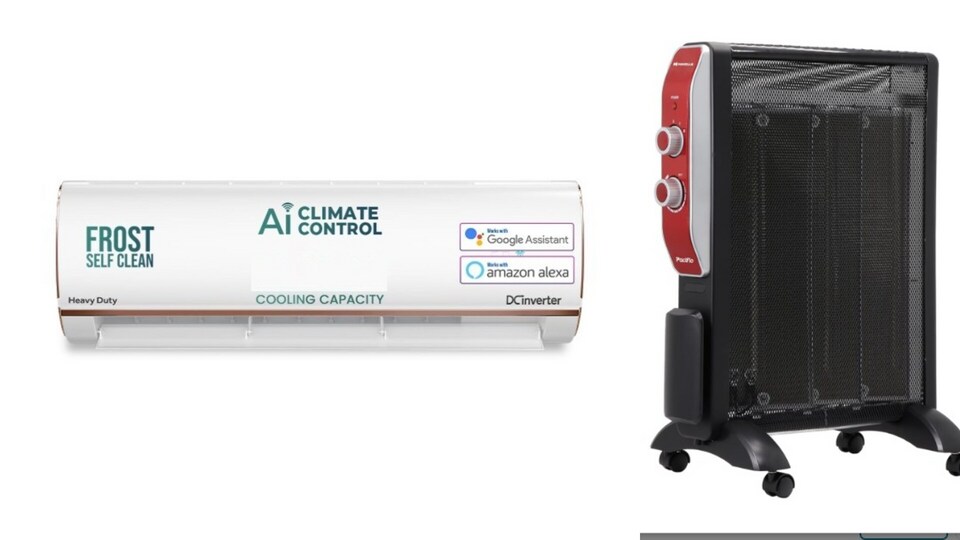

As winter settles in and indoor temperatures begin to drop, the question of how best to heat living spaces becomes more relevant. Many households face a common decision: rely on a dedicated room heater or use a hot and cold air conditioner to stay warm. Both options promise comfort, yet they work in very different ways and suit different needs. Understanding how each performs, where it excels, and where it falls short helps clarify which solution aligns better with specific living conditions and usage patterns.
A room heater is designed solely to produce heat, while a hot and cold air conditioner serves a dual purpose by offering both cooling and heating from the same unit. On the surface, the choice may appear straightforward. In practice, factors such as room size, insulation, energy consumption, installation requirements, and daily usage habits play a much larger role. Comparing these two heating options side by side reveals how their strengths and limitations shape the overall heating experience.
How room heaters work and where they fit best:
Room heaters generate heat through different mechanisms, including convection, radiant heating, or oil-filled systems. Their primary role is to warm the surrounding air or objects directly, making them effective for creating quick warmth in enclosed spaces. One of the most noticeable advantages of room heaters is their simplicity. Portability is another advantage. Many heaters can be moved easily from one room to another, allowing targeted heating without warming the entire home.
However, this focused approach also introduces limitations. Room heaters are generally designed for short-term or limited-area use. Heating larger rooms or open spaces requires higher capacity models, which consume more electricity. Over extended periods, this can lead to noticeably higher energy costs. Safety is another consideration. While modern heaters include features such as tip-over protection and thermal cut-offs, they still require careful placement. Prolonged use demands attention to ventilation and clearance from flammable materials. Noise levels can also vary, with fan-based heaters producing sound that may become distracting during quiet activities or sleep.
Top deals for you:
Advantages and drawbacks of using room heaters:
The strongest advantage of room heaters lies in their ability to provide immediate warmth exactly where it is needed. They do not require installation, making them suitable for rented homes or temporary use. The upfront cost is generally lower compared to installing a hot and cold air conditioner, making heaters accessible to a wide range of users. Room heaters also offer flexibility. Users can switch them on only when required, avoiding the need to heat unused spaces. This targeted usage can be efficient for short durations.
On the downside, room heaters are less effective at maintaining consistent temperatures over long periods. They often cycle on and off, leading to fluctuations in warmth. In poorly insulated rooms, heat loss can be rapid, forcing the heater to work harder. This increases power consumption and reduces efficiency.
How hot and cold air conditioners approach heating:
Hot and cold air conditioners use heat pump technology to regulate indoor temperature. Instead of generating heat directly, they transfer heat from outside air into the room. This method allows them to deliver warmth efficiently, even during colder weather, while also functioning as a cooling system during summer. One of the key strengths of a hot and cold air conditioner is consistency. Once the desired temperature is set, the unit works to maintain it steadily. This creates a more uniform indoor environment without the sharp temperature changes associated with some heaters.
These systems are particularly effective for larger rooms or spaces that require extended heating. They distribute warm air evenly, reducing cold spots and improving overall comfort. Since the same unit handles both heating and cooling, it simplifies climate control throughout the year. Installation, however, is more involved. Wall mounting, electrical adjustments, and outdoor unit placement require planning and professional setup. This increases initial cost and makes the solution less flexible for temporary arrangements.
Top deals for you:
Advantages and disadvantages of hot and cold air conditioners:
The primary advantage of a hot and cold air conditioner is efficiency over long-term use. Heat pump technology typically consumes less electricity compared to traditional resistance-based heaters when used continuously. This makes it suitable for households that rely on heating for several hours each day.
However, these systems are not without drawbacks. Initial investment is higher, both in terms of purchase and installation. Performance can also be influenced by outdoor temperatures. In extremely cold conditions, heating efficiency may reduce, leading the system to work harder to maintain warmth.
Similar articles for you:
PTC heaters vs OFR heaters: A clear comparison to help you pick wisely
Best water heaters: Top 10 picks from brands like Venus, Havells and more
Disclaimer: At Hindustan Times, we help you stay up-to-date with the latest trends and products. Hindustan Times has an affiliate partnership, so we may get a part of the revenue when you make a purchase. We shall not be liable for any claim under applicable laws, including but not limited to the Consumer Protection Act, 2019, with respect to the products. The products listed in this article are in no particular order of priority.