E-Paper



My 1.5-ton AC struggled to cool my living room, so I switched to a 2-ton AC — but there’s a catch
My 1.5-ton AC couldn’t cool my living room, so I upgraded to a 2-ton model. The cooling improved — but the switch came with unexpected trade-offs.

 Prefer HTon Google


Our Picks
Our Picks
| Product | Rating | Price |
|---|---|---|
Haier 2 Ton 3 Star HEXA Inverter Split AC (6300 Watts, Copper, 7 in 1 Convertible, Heavy Duty, HD Filter, Frost Self Clean, Cools at 60°C, 20 mtrs Air Throw - HSU24HD-ANW3BN-INV- White)View Details  | ||
 | ||
Carrier 2 Ton 3 Star, New Star rated, Wi-Fi Smart Flexicool Inverter Split AC (Copper, Convertible 6-in-1 with Wi-Fi with Geo-Fencing,Smart Energy Display,New star Rating, ESTER EDGE Gxi WiFi-CAI24EE3R36W0, White)View Details | ||
| ||
Cruise 2 Ton 3 Star Inverter Split AC with 7-Stage Air Filtration (100% Copper, Convertible 4-in-1, PM 2.5 Filter, Anti-Rust Technology, CWCVBM-VQ1W243, White)View Details | ||
| ||
Panasonic 2.0 Ton 3 Star New Star rated Premium WiFi Inverter Smart Split AC (DustBuster Tech,Matter Enabled,AI, Higher Airflow, Copper Cond.,8in1 Convertible,4-Way,PM0.1 Filter,CS/CU-SU24BKY3W,White)View Details | ||
| ||
Blue Star 2 Ton 3 Star, Inverter Split AC (Copper, Convertible 5 in 1 Cooling, Auto Defrost, Dust Filters, Blue Fins, IE324YNU, White)View Details | ||
| ||

Research-Backed Choices
Every product we recommend is chosen through a combination of Primary Research and Secondary Research.
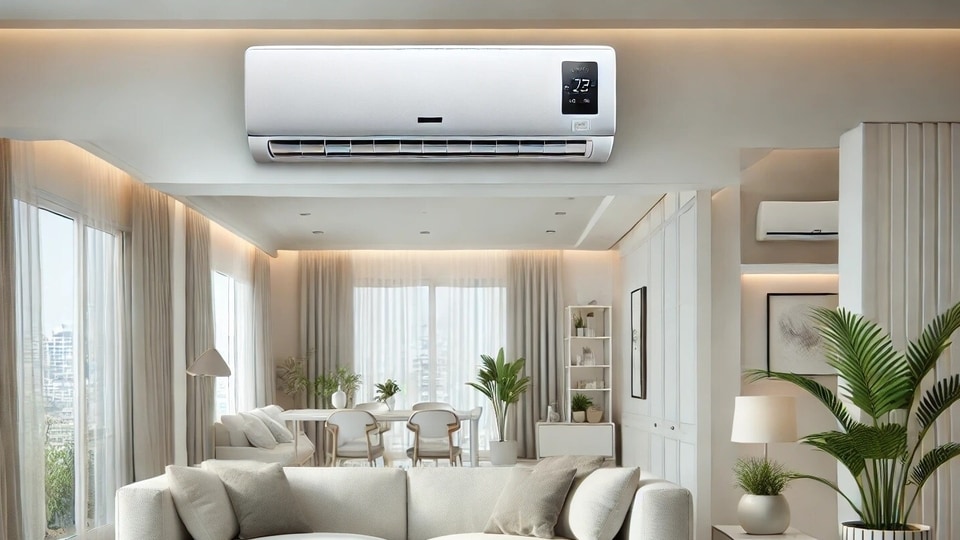

For the longest time, I assumed a 1.5-ton AC was “enough” for a typical living room. After all, it’s one of the most commonly purchased capacities in Indian homes, and it worked fine in my bedroom. So naturally, when I installed one in my living room, I expected the same performance.
But things didn’t go as planned.
Over the past few summers, the cooling in my living room felt inconsistent. The room never quite reached the temperature I set on the remote. On extremely hot afternoons, the AC ran non-stop, yet the air never felt as cool as it should. That’s when I started digging deeper to understand whether the problem was the AC, the room size, or my expectations.
What I discovered eventually pushed me to switch to a 2-ton AC. And while it did solve a big problem, it also came with its own set of surprises.
Why I decided to upgrade to a 2 ton AC
The biggest challenge was that the AC took too long to cool the living room, and even after running for an hour, it struggled to bring the temperature down on hot days.
On paper, a 1.5-ton AC is supposed to handle medium-sized rooms. But living rooms are rarely “standard”. Mine is slightly larger, opens into a corridor, and has a big window that gets direct sunlight in the afternoon. As a result, the AC was constantly working at full capacity.
This led to three noticeable issues:
- The room didn’t cool evenly
- The AC ran almost continuously during peak heat
- Electricity bills were higher than expected
That’s when I began to suspect the AC wasn’t the right size for the space.
Best 2 ton 3 star ACs on Amazon
How I realised the AC capacity was the issue
After reading expert opinions, checking AC tonnage calculators, and talking to a couple of technicians, one thing became clear that my room size needed more cooling power.
A 1.5-ton AC can generally handle rooms up to around 150–170 sq. ft. comfortably, depending on factors like insulation, ceiling height, and sunlight exposure. My living room, however, was larger and more open. So, the AC wasn’t faulty but undersized for the job.
Was a 2-ton AC the right solution?
Once I realised the problem was capacity, upgrading made sense. A 2-ton AC offers:
- Higher cooling capacity
- Better airflow across larger spaces
- Less strain on the compressor in big rooms
I also learned that when an AC is correctly sized, it doesn’t have to run at full capacity all the time, which can actually improve efficiency in some scenarios.
Still, I had a few doubts. Would the electricity bill shoot up? Would the AC feel too powerful? Would it be worth the extra cost? I decided to find out.
Best 2 ton 5 star ACs on Amazon
Is it easy to install a 2 ton AC?
The installation experience is generally smooth, though it can cost more than a regular AC installation. The outdoor unit is bigger and heavier, and the technician checks whether the wiring can handle the increased load.
Once you switch it on, the difference will be immediately noticeable. The cooling gets faster, and the airflow feels stronger. The living room cools evenly within minutes instead of slowly getting cooler over time. You will also notice that on hot afternoons, the room temperature stabilises much quicker than before.
How cooling improves after upgrading to a 2-ton AC
Upgrading from a 1.5-ton to a 2-ton AC can noticeably improve cooling performance, especially in larger spaces. The most obvious change is consistency. A higher-capacity AC can bring down the room temperature faster and maintain it more steadily, reducing the strain on the compressor.
Users typically notice:
- Faster cooling after switching on the AC
- More even cooling across the room
- Reduced load on the compressor due to shorter cooling cycles
- Better comfort during peak afternoon heat
In larger living rooms, a 2-ton AC is generally better equipped to handle heat load, especially in homes with large windows, open layouts, or direct sunlight exposure.
The catch: What to keep in mind before upgrading to a 2 ton AC
While the upgrade offers clear cooling benefits, it’s not without trade-offs.
Higher upfront cost: A 2-ton AC is usually more expensive than a 1.5-ton model. Installation may also cost more due to a heavier outdoor unit and possible electrical adjustments.
Higher power consumption (in some cases): A higher-capacity AC can draw more power, especially if used at very low temperature settings or for extended hours. Energy-efficient models can help offset this.
Not ideal for small rooms: Installing a 2-ton AC in a small room can lead to uneven cooling and higher humidity, making the room feel uncomfortable.
Larger outdoor unit: The outdoor unit is bigger and heavier, which may require additional space and stronger wall support.
Factors to consider while choosing AC tonnage
Selecting the right AC capacity is more complex than just measuring room size. While square footage is a starting point, several other factors directly influence how much cooling power a room actually needs. This is often referred to as heat load, and getting it right makes the difference between efficient cooling and an AC that constantly struggles.
1. Ceiling height: Most capacity charts assume a standard ceiling height of about 8–10 feet. If your living room has a higher ceiling, the air volume increases, which means the AC must cool a larger space. In such cases, even if the floor area suggests a 1.5-ton AC, the actual requirement may be closer to 2 tons.
2. Number and size of windows: Windows are one of the biggest sources of heat gain. Large glass panels, especially if they are single-pane or not heat-treated, allow more heat to enter the room. Rooms with multiple or oversized windows typically require a higher-capacity AC to maintain stable cooling.
3. Sun exposure throughout the day: A room that receives direct sunlight — especially from the south or west — heats up much faster. Homes on top floors or corner flats also experience more heat gain through roofs and walls. This added heat load can easily push cooling requirements beyond what a smaller AC can handle.
4. Number of occupants: Every person in a room generates body heat. In spaces that frequently host multiple people, like living rooms or family rooms — the AC has to work harder to offset this heat. This becomes especially noticeable during gatherings or daytime use.
5. Insulation and ventilation quality: Good insulation helps retain cool air, while poor insulation lets heat seep in. Gaps in windows, poorly insulated walls, or open layouts connected to other rooms increase the cooling demand. Ventilation also matters, rooms that allow hot air to enter continuously will need stronger cooling.
All these factors contribute to total heat load, which means choosing the right AC tonnage isn’t as simple as picking the biggest unit available. An undersized AC will run continuously and still underperform, while an oversized one can cool too quickly without properly removing humidity. The most efficient and comfortable setup comes from matching the AC capacity to the actual cooling requirements of the space.
Who should consider a 2-ton AC?
1. Large or open-plan living rooms: If your living area is spacious (typically above 180–200 sq. ft.) or connected to other open areas like a dining room, hallway, or open kitchen, a 1.5-ton AC may struggle to cool the entire space evenly. A 2-ton AC offers higher airflow and cooling capacity to maintain a consistent temperature across larger spaces.
2. Rooms with high sun exposure: Rooms that face direct sunlight for long hours, especially through large windows or balcony doors, tend to heat up faster. Top-floor apartments or rooms with poor external shading absorb more heat through ceilings and walls. In such cases, a higher-capacity AC helps maintain stable cooling even during peak afternoon heat.
3. Homes with multiple occupants: Human bodies generate heat. Living rooms often have more foot traffic and longer usage periods compared to bedrooms. If your family frequently gathers in one room or if the space doubles up as a work-from-home zone, the heat load increases, making a 2-ton AC more suitable.
4. Hot and humid climates: In regions where temperatures stay high for months or humidity levels are elevated, an AC has to work harder to maintain comfort. A 2-ton AC is better equipped to handle both temperature control and moisture removal in such conditions.
5. Rooms with higher ceilings or poor insulation: If the ceiling is higher than standard or if the room lacks proper insulation, more cool air is needed to achieve the same comfort level. A larger AC helps compensate for this increased cooling requirement.
That said, bigger isn’t always better. For compact bedrooms or well-insulated spaces, a 1.5-ton AC usually provides efficient cooling without unnecessary power consumption or upfront cost. Choosing the right tonnage depends on room size, heat load, usage patterns, and local climate — not just the desire for faster cooling.
Similar stories for you
Disclaimer: At Hindustan Times, we help you stay up-to-date with the latest trends and products. Hindustan Times has an affiliate partnership, so we may get a part of the revenue when you make a purchase. We shall not be liable for any claim under applicable laws, including but not limited to the Consumer Protection Act, 2019, with respect to the products. The products listed in this article are in no particular order of priority.