
 E-Paper



Samsung Galaxy S25 Edge review: New featherweight champion
Samsung Galaxy S25 Edge features a sleek, ultra-thin design. But does its slim profile truly justify its price? Let's find out in our review.

 Prefer HTon Google


You may be interested in

10% OFF
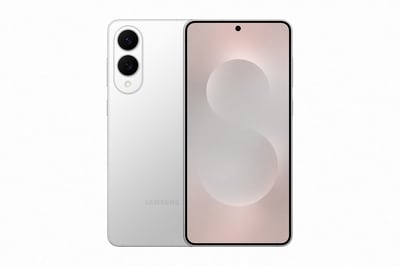
Samsung Galaxy S25 edge
 12 GB RAM
- 256 GB Storage
- 6.7 inches Display Size

₹1,09,999
₹1,21,999Check Details


Galaxy S25 Edge review:After months of speculation, Samsung officially launched the Galaxy S25 Edge globally on May 13, 2025. This new model is one of the thinnest phones released recently, with a unique design. But is it enough to choose over other Galaxy S series phones?
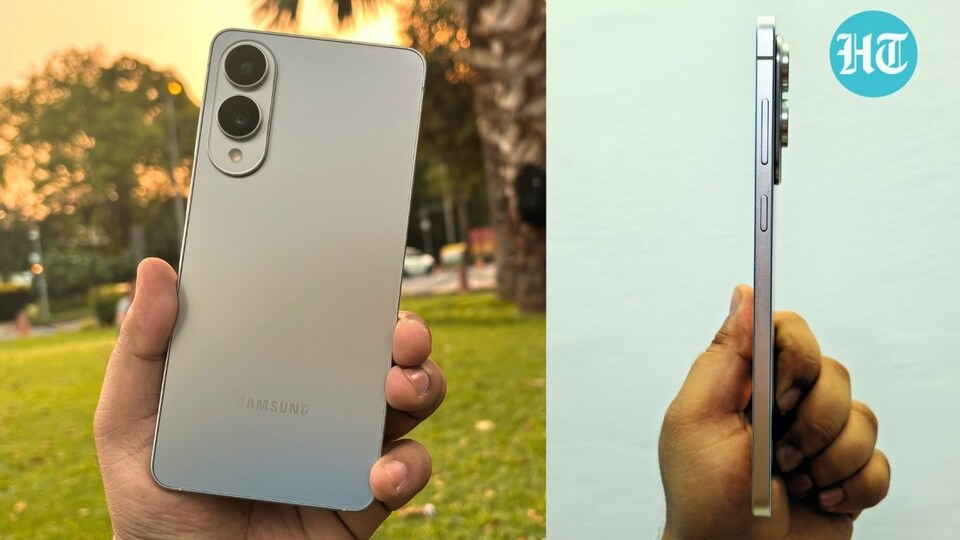

At first glance, Galaxy S25 Edge might not grab your attention, as it looks like another premium smartphone with a familiar design. However, having used it for some time, I now understand where it sits in Samsung’s line-up, and why the company claims it is the slimmest mobile phone in Samsung's history.
The S25 Edge borrows key features from both the S25 Ultra and S25 Plus, including a 200MP camera, Snapdragon 8 Elite processor, and a large 6.7-inch display, all packed into an unusually thin and light titanium body. This slim frame is the phone’s standout feature, but its price, starting at Rs. 1,09,999 in India, places it near the Ultra and above the Plus variant, making you wonder if the design alone justifies the flagship.
Also read: Samsung Galaxy S25 review: Flagship features in a handful package
The hardware is undoubtedly top-tier, and the One UI 7 experience remains consistent across the S25 series. However, given that similar specs are available at a lower price elsewhere in Samsung’s lineup, the question remains: is a thinner, lighter phone worth the extra cost? I’ve been using the Galaxy S25 Edge 5G as my daily driver for more than two weeks now, and here’s my in-depth review to help you decide whether it's worth the price, depending on your priorities in a smartphone, how it compares to other models in the series, and who it's best suited to.
Samsung Galaxy S25 Edge Review: Unboxing and Design
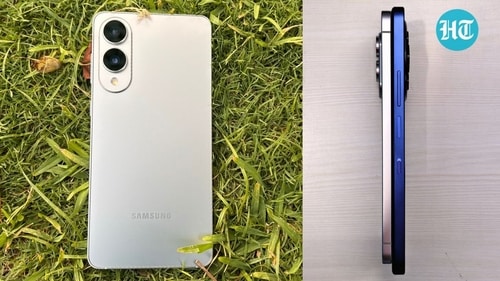
When you hold the Samsung Galaxy S25 Edge for the first time, its design immediately tells you how much effort the manufacturers had put into the device, especially when you compare it to its sibling, the Galaxy S25 Plus. At just 5.8mm thick and weighing just 163 grams, this phone slips easily into my pocket without adding any noticeable weight or burden. For context, the S25 Plus (review) shares the same 6.7-inch screen size but feels heavier and thicker at 7.3mm and 190 grams, making the Edge stand out for its slimness.
On the other hand, the device is made of a titanium frame, which offers the same material found in the S25 Ultra, with tough protective glass on both sides - Gorilla Ceramic 2 on the front and Gorilla Glass Victus 2 on the back. Samsung claims the front glass offers the same durability as the Ultra's, though it lacks the Ultra’s anti-reflective coating. Like other models in the S25 lineup, the Edge carries an IP68 rating, so it can easily handle dust and water immersion without any trouble.
Also read: Samsung Galaxy S25 Plus review: ‘Ultra’ experience without the hefty price tag
In addition, the S25 Edge's button placement is also familiar: volume and power buttons sit on the right, a SIM tray, USB-C port, and speaker sit at the bottom, while the left side remains clean of controls. The phone has a single front camera inside a small cutout at the top of the display, and two rear cameras in a pill-shaped bump on the back.
While the overall design of the device is flat, the camera bump does stick out noticeably due to the phone’s thin body. This causes the phone to jiggle on flat surfaces and can interrupt finger movement when holding the device horizontally.
Holding it for extended periods didn’t cause any trouble. The shape finds a balance, not too sharp, not too soft. Compared to the Plus and Ultra models, this one seems to have found a middle ground that avoids pressure points in the hand. The titanium frame fits neatly with the glass, and whether I’m reading, watching, or just scrolling, the weight feels evenly spread out. Even with a case on, the slim build avoids that oversized feeling many large phones tend to bring.
The design shares cues from other recent Galaxy models, especially the slim bezels, which are easy to notice once you power it on. The finish on the back gives enough grip to prevent constant slips, though I’ll admit, there was that one time it slipped out of my hand, and I thought it was over for the phone. Thankfully, it held up well, which says something about how well it’s been put together.
Also read: iPhone 16e quick review: Compact but powerful contender
Galaxy S25 Edge Review: Display and Audio

The Samsung Galaxy S25 Edge comes with a 6.7-inch AMOLED 2X display that offers QHD+ resolution and a 120Hz variable refresh rate. While the size still feels a bit large for one-handed use, it’s definitely easier to manage compared to the 6.9-inch Galaxy S25 Ultra. Samsung’s effort to keep the bezels slim pays off here. The screen edges are neat and symmetrical, giving the phone a clean look.
The sharpness of the panel also stands out, and honestly, I think it edges out the S25 Plus’s display. Colours appear strong and maintain clarity even when viewed from an angle, which isn’t always the case with other phones. The brightness level impressed me as well, reaching up to 1,997 nits, slightly higher than the Ultra. However, the lack of an anti-reflective coating means it struggles a bit under direct sunlight, especially when compared to the Ultra’s better handling of outdoor lighting and colour balance.
Still, the Galaxy S25 Edge’s adaptive 120Hz refresh rate makes scrolling and animations feel smooth and natural. I watched several shows on it, and overall, the viewing experience was solid. That said, direct sunlight did cause some visibility issues.
Also read: Samsung Galaxy S25 Ultra review: Almost the perfect Android flagship
On the audio side, the Galaxy S25 Edge keeps its stereo speakers with Dolby Atmos, but sound quality isn’t as strong as I hoped. The output comes off as flat and lacks the fullness you’d want for music, movies, or games. It’s fine for calls and casual media, but it doesn’t deliver a truly immersive sound experience.
Galaxy S25 Edge Review: Camera Experience
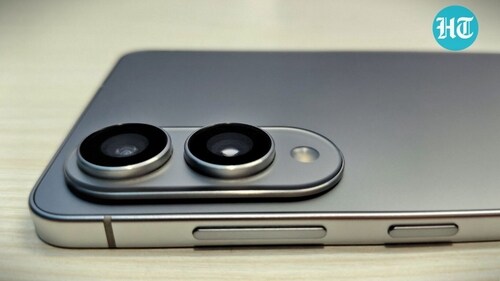
I’ve been testing the Samsung Galaxy S25 Edge’s camera for some time now, and it’s clear Samsung made some trade-offs to keep the phone slim. Unlike other Galaxy S25 models that come with at least three cameras, the S25 Edge sticks to just two: a 200MP main sensor and a 12MP ultrawide. It drops the dedicated telephoto lens, so all zooming relies on the main camera. Also, it has a 12MP front camera for selfies and vlogging.


The cameras stick out quite a bit from the back, which means the phone wobbles when you use it on a flat surface. It’s not a dealbreaker for me, but it’s noticeable if you try typing while it’s lying down. Samsung hasn’t confirmed if the main 200MP sensor is exactly the same as the one on the S25 Ultra, but the Edge does face some limitations without a proper optical zoom lens, which the other S25 models have.


In real-world use, the camera delivers solid results despite having fewer lenses. The main sensor captures sharp images with good colour and dynamic range, especially in natural light. Low-light shots lose some sharpness and get a bit softer, but colours stay true. The lack of a telephoto lens does mean zoomed-in shots aren’t as clean, but the 2x zoom from the main camera still looks good when the lighting is right.
Also read: Oppo Reno 13 Pro 5G review: Well-balanced smartphone with AI smarts, but not without trade-offs
The ultra-wide camera does its job but shows distortion around the edges, and its colour tone doesn’t quite match the main camera. It includes autofocus, which activates Samsung’s “Focus Enhancer” mode for close-up shots and video. It’s a handy feature, even if it doesn’t wow you.


Portrait mode is hit or miss. The camera often struggles to separate the subject from the background cleanly, causing some blur to spill over the edges. Surprisingly, the main camera performs better when used normally, giving clearer images with more depth than portrait shots.


Video-wise, the S25 Edge matches its siblings: it shoots 4K video at 60fps from all cameras, can switch between front and back while recording, and even supports 8K at 30fps. HDR video looks good, and the log format helps if you want to edit footage afterwards.
Where the S25 Edge falls short is in low-light photography. Night shots tend to come out grainy and blurry, which isn’t what you expect from a flagship phone.

In short, the Galaxy S25 Edge’s camera handles everyday shooting well and competes closely with the S25 Ultra’s main shooter. But if you need strong zoom or better night photos, it won’t quite match phones with a dedicated telephoto lens.
Galaxy S25 Edge Review: Software and Performance
The Samsung Galaxy S25 Edge runs on Android 15 with Samsung’s One UI 7 on top. If you’ve used One UI before, the experience will feel familiar, but Samsung has made some notable changes. The biggest shift isn’t just in the look or layout - it’s in how AI is woven into the software. The new Multimodal AI Agents feature stands out by letting you interact visually with the phone’s assistant. You can point the camera at an object and ask it questions, like the best book to calm your mind, or the Instagram-savvy cafes in the town for weekends. This visual AI is powered by Google’s Gemini system and will roll out to the rest of the S25 series soon.
Under the hood, the S25 Edge is powered by the Snapdragon 8 Elite chip built specifically for Galaxy devices. It’s a custom Qualcomm design, different from the usual Cortex cores found in other chips. The processor includes two high-performance cores running up to 4.47GHz and six others at 3.53GHz. For graphics, there’s the Adreno 830 GPU, which uses a new architecture with dedicated memory slices, running up to 1.2GHz on three slices. This setup handles demanding tasks and gaming well.
Furthermore, the handset comes in two configurations: 12GB RAM paired with either 256GB or 512GB of UFS 4.0 storage. That’s solid for multitasking and storing plenty of apps, games, and media.
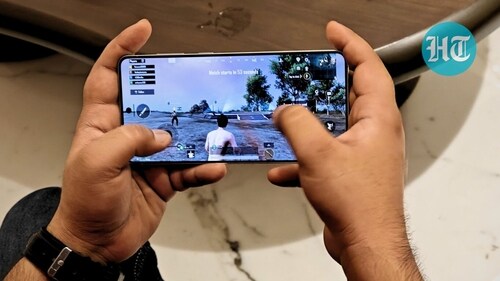
I tested heavy titles like BGMI and Genshin Impact on their top settings. Frame rates stayed consistent, and there was no stutter. Samsung’s Game Side Screen gave me options to adjust performance settings and refresh rates mid-game. Haptics also worked well while typing and during intense action moments.
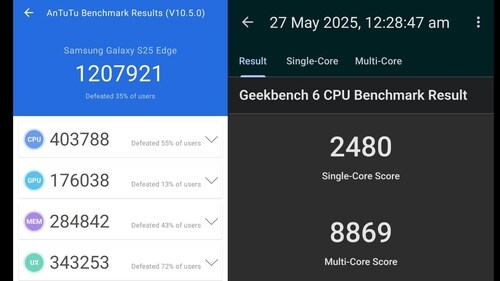
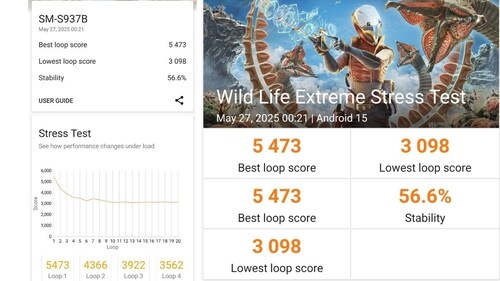
On benchmarks, the Galaxy S25 Edge scores well: 12,07,921 on AnTuTu, and GeekBench 6 gives it 2,480 in single-core and 8,869 in multi-core tests. In the 3DMark Wild Life Extreme Stress Test, it hit a best loop score of 5,473 with just under 56.6% stability.
One of Samsung’s strongest points is its promise of seven years of major OS updates and security patches, plus eight updates for enterprise models. That’s a long support cycle few others offer, giving the S25 Edge an edge in longevity.
Samsung Galaxy S25 Edge Review: Charging and Battery Life
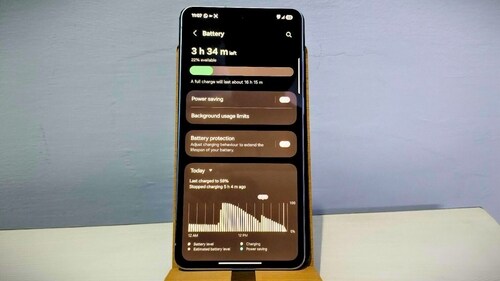
When it comes to battery and charging, the Galaxy S25 Edge takes a different route compared to its siblings. It packs a 3,900 mAh battery, which is smaller than what you find in other models in the S25 lineup. For everyday tasks like browsing social media, watching videos, and messaging, it easily lasts a full day with about 8 to 10 hours of screen-on time, which surprised me in a good way. But if you’re someone who pushes their phone hard, you might find yourself reaching for a charger by evening.
Charging speed is another story. The phone supports 25W wired charging, but the charger doesn’t come in the box, so you need to buy it separately. Samsung says it can get to 55% in half an hour, but in my experience with a faster 65W charger, it took over two hours to fill up completely and got quite warm while charging - something that could worry those cautious about device safety. The slim design is a clear priority here, but if you travel a lot or need a quick charge, this might feel limiting. In a market moving toward super-fast charging, Samsung’s speed here feels a step behind.
Final Verdict
Samsung Galaxy S25 Edge stands out mainly for its slim, lightweight design, making it a good pick if you value portability without sacrificing flagship specs. It brings a solid camera, smooth display, and strong performance wrapped in a sleek titanium frame that slips easily into your pocket. If you’re after a phone that feels light and handles everyday tasks and gaming well, this one delivers.
That said, the phone has some trade-offs. Its smaller battery and slower charging might not suit heavy users or those on the go. Plus, considering its price, the S25 Edge competes closely with the Ultra and Plus models, which offer more features for a similar cost. In short, choose the S25 Edge if slimness and design top your list. Otherwise, exploring the S25 Ultra or Plus could make more sense for balanced performance and features.


