E-Paper



Declassified CIA document says ‘aliens’ turned 23 soldiers to stone in otherworldly encounter
A declassified document posted to the CIA’s website is raising eyebrows with its bizarre claims of an alleged UFO attack on Soviet forces.

 Prefer HTon Google


A declassified document posted to the CIA’s website is raising eyebrows with its bizarre claims of an alleged UFO attack on Soviet forces. The one-page report, which has recently gone viral online, summarises articles published by Canadian Weekly World News and the Ukrainian newspaper Holos Ukrayiny - and was first released to the public in May 2000.
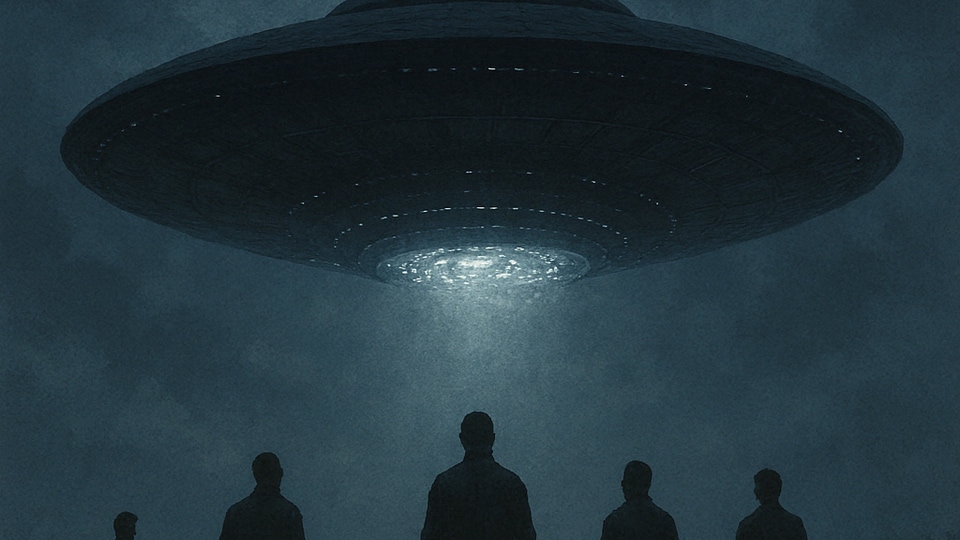
Though the incident reportedly occurred during the Cold War era, it only came to light after the fall of the Soviet Union, when the CIA is said to have obtained a 250-page KGB file detailing the strange encounter.
After the Soviet Union collapsed in 1991, the CIA reportedly got hold of a 250-page KGB file describing the bizarre incident, which supposedly took place during a military training exercise in either 1989 or 1990, somewhere in Siberia.
The report is published on the CIA website.
Soldiers turned to stone
According to the file, Soviet soldiers saw a “low-flying spaceship in the shape of a saucer” flying overhead. One of the soldiers fired a surface-to-air missile at it, bringing it down. After the crash, “five short humanoids” with “large heads and large black eyes” emerged from the wreckage.
Witnesses said the beings came together and “merged into a single object that acquired a spherical shape.” The sphere began to buzz, hiss, and glow with an “extremely bright light.” At that very moment, “23 soldiers who had watched the phenomenon turned into stone poles.” Only two soldiers survived, as they were standing in the shade and weren’t directly exposed to the light.
The report claims that the petrified soldiers and the damaged spacecraft were taken to a secret research facility near Moscow. Scientists there allegedly found that the soldiers’ bodies had somehow been transformed into limestone.
“Horrific revenge”?
One CIA agent quoted in the document described the scene as “a horrific picture of revenge on the part of extraterrestrial creatures, a picture that makes one’s blood freeze.”
“If the KGB file corresponds to reality, this is an extremely menacing case,” the CIA representative wrote. “The Aliens possess such weapons and technology that go beyond all our assumptions. They can stand up for themselves if attacked.”
The document on the CIA website reads: “The KGB report goes on to say that the remains of the UFO and the "petrified soldiers" were transferred to a secret scientific research institution near Moscow.
“Specialists assume that a source of energy that is still unknown to Earthlings instantly changed the structure of the soldiers' living organisms, having transformed it into a substance whose molecular composition is no different from that of limestone.”
Renewed interest in aliens
The CIA document, declassified in 2000, was based on articles from the Canadian Weekly World News and Ukrainian newspaper Holos Ukrayiny. Though the CIA report itself is only one page long, it summarises claims from these sources about the KGB’s 250-page file, which included images, drawings, and eyewitness accounts.
The story resurfaced in public interest after being mentioned on The Joe Rogan Experience podcast, especially as UFOs and UAPs (Unidentified Aerial Phenomena) have become a hot topic since the US Department of Defense formed its UAP Task Force in 2020.
However, some experts remain sceptical. Former CIA agent Mike Baker told Fox News he doubted the story’s accuracy - “If there was an incident, regardless of the nature of the incident, I suspect that the actual report doesn't look much like what has now come out from five or six or seven iterations of what originally was [written],” he said.