E-Paper



Delhi man reveals insights into Uber's pricing algorithm, finds link to phone type, battery
A Delhi entrepreneur's experiment revealed Uber fares varied by device type and battery level, sparking debate on transparency.

 Prefer HTon Google


A Delhi-based entrepreneur's deep dive into Uber’s pricing algorithm has stirred an online debate about fairness and transparency in ride-hailing services. Rishabh Singh, founder of engineerHUB, an online platform for tech placements, shared his findings on X (formerly Twitter), shedding light on how factors like device platform and battery level could affect fares.
(Also read: ‘Burkhe wali ko bewakuf…’: Uber driver refuses to switch on AC, drops woman off in middle of road)
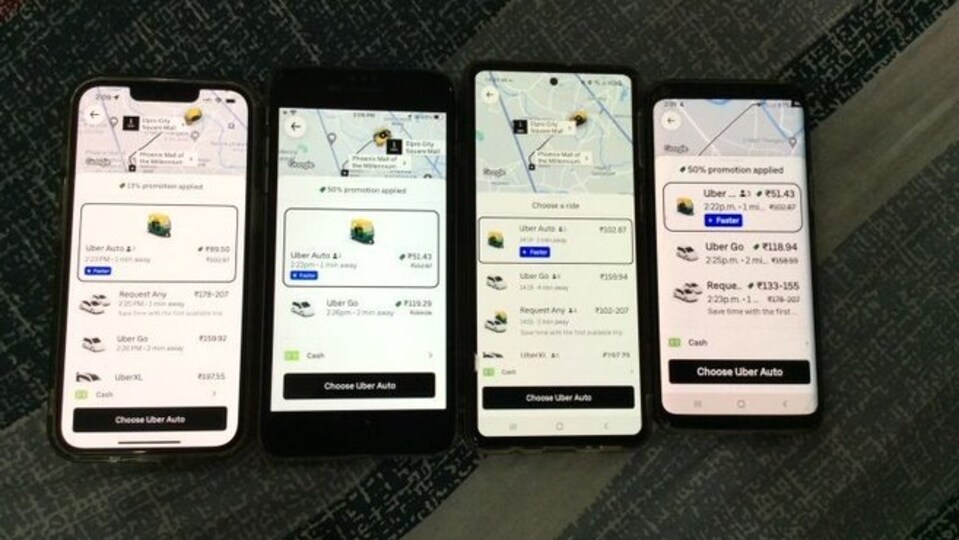
In a post titled “The Curious Case of Uber Fare Discrepancies: Platform and Battery Impact,” Singh documented his experiment with screenshots. Using two Android and two iOS devices logged into the same Uber account, he compared ride fares under identical conditions, revealing striking inconsistencies.
Platform-based pricing differences
Singh observed noticeable fare discrepancies between Android and iOS devices. Discounts such as “13% off” or “50% off” appeared inconsistently, leading him to suspect Uber’s pricing algorithms might vary based on the platform. “Even with the same account, location, and time, the prices were different,” Singh said, speculating this could be part of platform-specific A/B testing or metadata-driven pricing adjustments.
Battery levels and behavioural economics
The experiment took an even more intriguing turn when Singh examined the impact of battery levels. He noted that devices with lower battery percentages consistently displayed higher fares. Singh posited that Uber’s algorithm might perceive users with dying batteries as more likely to accept inflated prices due to urgency. “By leveraging battery data, pricing algorithms could exploit a user’s situational vulnerability,” he explained, linking the phenomenon to behavioural economics.
(Also read: Gurgaon tourist tries to pay Uber driver with fake ₹500 note from ‘Manoranjan bank’, claims it came from ATM)
Call for transparency
Singh voiced concerns over these findings, calling for greater transparency in Uber’s pricing mechanisms. “Users deserve to know if their device data, such as battery levels or platform type, is being used to manipulate fares,” he said. He urged ride-hailing companies to ensure their algorithms prioritise fairness and accountability to maintain trust.
Check out the post here:
Netizens react to findings
Singh’s revelations quickly sparked reactions on social media.
One user commented, “If true, this is deeply unethical.” Another wrote, “I always suspected the battery thing. Thanks for confirming!” A sceptic remarked, “Could this just be a glitch or coincidence?” while others lauded Singh for raising the issue, saying, “We need more transparency in these algorithms.”