
 E-Paper



How climate change is accelerating the ‘decades-long demise’ of the Aral Sea
The shrinking of the once-thriving Aral Sea started with a water division project in 1960 that was aimed to develop the desert region surrounding the waterbody.

 Prefer HTon Google


The Aral Sea, an endorheic lake located between Kazakhstan in the north and Uzbekistan in the south, has nearly disappeared. Once filled with fish and blue water, it was considered one of the largest inland water bodies. However, due to climate change along with “human engineering and agricultural projects gone awry” it has shrunk “less than a quarter of its former size”.
When did the Aral Sea start disappearing?
Before knowing how the waterbody is slowly disappearing from existence, let’s take a look at its history. The lake, the Aral Sea, was made by waters from the Syr Darya and the Amu Darya rivers that were dependent on glacial melt, reports NASA.
Also Read: Black substance floating over Manipur’s Iril river; samples sent for testing
According to the space agency, in 1960 the Soviet Union undertook a major water diversion project where they diverted the Syr Darya and the Amu Darya rivers for irrigation projects. Though the project made the desert region surrounding the sea bloom, it had a devastating impact on the Aral Sea. The waterbody slowly started drying up and today it is on the verge of complete disappearance.
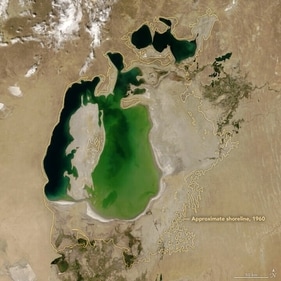
The United Nations Development Program calls the destruction of the Aral Sea “the most staggering disaster of the 20th century”, reports the Associated Press (AP). The program points to the Aral's demise as the cause of "land degradation and desertification, drinking water shortages, malnutrition, and deteriorating health conditions” in the surrounding areas.
Efforts of restoration:
According to AP, international aid organisations, national governments, and even local groups have made various efforts to stop this damage and save the sea. However, experts say that climate change will accelerate the disappearance of the waterbody and increase the suffering of residents around the area.


