E-Paper



Indian jhoola gets rebranded as 'antique Gothic swing' and desis aren't having it
An American artist's post describing an Indian jhoola as a 'Gothic swing' went viral, prompting backlash from Indians who criticized the appropriation

 Prefer HTon Google


First there was turmeric latte. Then came naan bread and chai tea. Then the dupatta got a facelift as a ‘Scandinavian scarf’ and Prada discovered kolhapuris. The latest in this long line of indigenous products getting appropriated by the west is the Indian swing, also known as a jhoola in Hindi.
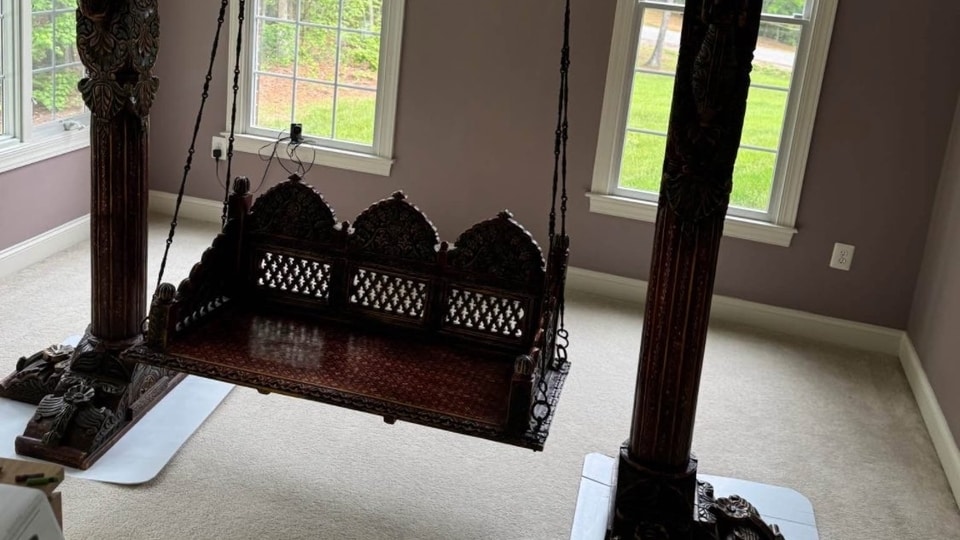
Desi jhoola, videsi packaging
An American artist who goes by the name ‘Anne Chovy’ recently shared an X post describing a jhoola as a “hand carved antique solid wood Gothic living room swing”. She shared a picture that shows an intricately engraved and orante wooden swing – the kind that can be found in older Indian houses.
“Please do join me on the hand carved antique solid wood Gothic living room swing,” the US woman wrote while sharing the image.
Her post quickly went viral on X, racking up over 1.4 million views. However, many desis did not appreciate her description and rushed to inform her that her Gothic swing is actually a jhoola or oonjal.
A critique of cultural appropriation
Users also pointed out that describing the swing as “Gothic” takes away its rich cultural context and erases the centuries of craftsmanship that led to its evolution.
“Expecting yt people to not steal your culture and history is like expecting water to not be wet,” wrote one X user. “This is an Indian Jhoola. How can y'all claim it as gothic?” another asked. A third user simply wrote, “Gothic? Be serious”.
“Stop stealing Indian culture, even the carvings are typical Indian Rajasthani style. Mocks Indians everywhere using stereotypes and tries to steal Indian culture at the same time,” one annoyed X user posted.
“Stop branding everything as western. Respect the culture and the artisans who have spent hours and days perfecting their craft to preserve their heritage only for you idiots to call it Gothic,” another person wrote.
Many Indians accused the original poster of being rude and dismissive in her replies and criticised the west for stealing from Indian culture.