
 E-Paper



A university can no longer afford to teach for the world that was
The real test of a degree is not whether it gets you your first job, but whether it still means something in your tenth year of work

 Prefer HTon Google


When a family chooses a university, they are usually asking one question: will this lead to a good job? It is a fair question, and a placement report can help answer it. But it is the wrong question to stop at. A degree that gets graduates their first job and then ages badly has done only half of what a good education should. The job market a student enters at the age of 22 may look very different by the time they are 32, and that gap is widening as the pace of change accelerates.
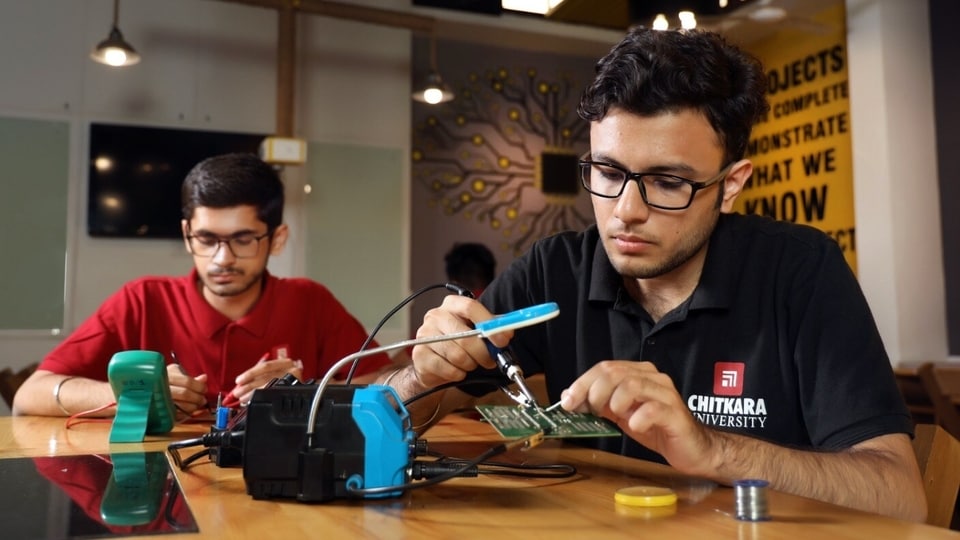
This is the deeper challenge a university has to solve. It is not simply about making a graduate employable on the day they leave, but about developing the kind of professional who remains relevant as their industry continues to reinvent itself. That is much harder to teach, and it is the real measure of whether an institution is keeping pace with the times or falling behind.
The gap between the classroom and the workplace is a choice
Employers have complained for years that graduates arrive knowing the theory but not the practice. It is a familiar lament, often framed as though the gap between what universities teach and what workplaces require were some kind of natural law. It is not. That distance is a design choice.
A curriculum can be written in a faculty room and left untouched for a decade, or it can be developed and revised through continuous conversation with the industries that will eventually hire its graduates. The two approaches produce very different outcomes.
The difference shows up long before placement season. It is there in whether a student has worked on a live industry problem or only a textbook one, whether they have used the tools their profession actually relies on, and whether they have sat across from someone who does the job for a living. When these experiences are built into a degree, the transition into employment can be shorter and less about learning the basics from scratch once the salary has started.
Relevant should not mean narrow
There is a reasonable concern buried in all of this, and it deserves an honest answer. If a degree is tuned too tightly to what industry wants today, does it leave a graduate stranded when today's skills become obsolete? It is a real risk, and it is why genuine industry engagement has to mean more than teaching this year's popular software.
Done well, industry connection produces the opposite of narrowness. A student who has seen how an industry actually thinks, how it defines problems, weighs trade-offs and adapts when conditions shift, has learned something far more durable than any single tool. They have learned how to keep learning within a field that will not stand still.
That is why relevance and academic rigour are not in tension. Theory explains why things work, while industry exposure shows what happens when that theory meets a deadline, a budget and a customer. A serious university has to deliver both, or it has delivered neither.
What this looks like when it is built deliberately
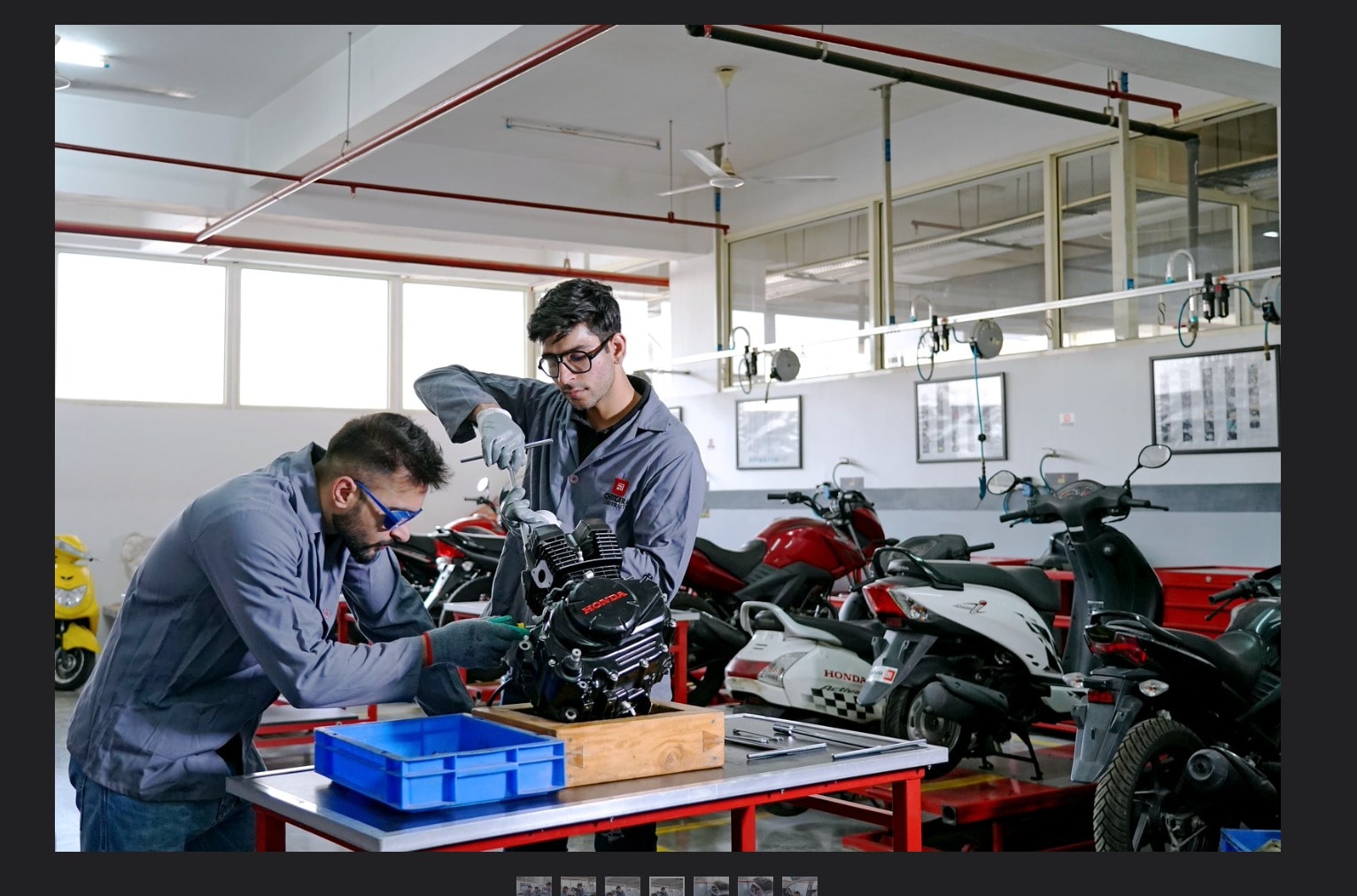
This is where industry-academia collaboration stops being a phrase in a brochure and starts showing up in what a student actually does. At Chitkara University, based in Punjab, this approach is built into how students learn rather than added as a layer around the curriculum.
Industry engagement is not an annual careers fair. It runs through live projects, internships, certifications and applied work carried out alongside professionals who do it for a living. The intent is to create a loop rather than a one-way handover: industry signals what is changing, the curriculum responds, students work with current tools and problems, and what employers see then feeds back into what the university teaches next.
The most concrete form this takes is in the labs. Chitkara University runs more than 50 Centres of Excellence built with industry, among them the Apple iOS Development Centre, the Cisco Networking Lab, the SAP Innovation Lab, the Capgemini Code Experience Center, JioGames Innovation Centre, the Honda Design Lab and the Dassault Systèmes Lab. These are not named after companies as a courtesy. They put students in front of the tools and systems their industries genuinely use, which is very different from simply reading about them.
The same logic runs through the curriculum itself, where degrees are increasingly co-designed with the sectors that need them: an electric-vehicle engineering programme built with ARAI, the country's apex automotive research body; an artificial intelligence and machine learning degree developed with Microsoft; an MBA in data science and artificial intelligence developed with EY India; and a Fintech programme shaped with Deloitte.
Why the placement number is not the only thing to look at
More than 3,000 recruiters visit Chitkara University's career advancement services campuses each year, including Google, Microsoft, Amazon, PwC, EY, Deloitte, Adobe, Infosys and IBM. It is a strong figure, and a meaningful one. But a placement record is the visible end of a much longer process, not the process itself.
Recruiters return in those numbers because of what happens in the years before they arrive: the curriculum built with industry, the labs, the projects and the graduates who need less retraining than their peers. The number is the result. The relevance behind it is what produces that number year after year.
The same principle extends beyond hiring. International university partnerships and global pathway programmes give students exposure to academic and professional environments beyond India through tie-ups with institutions such as Arizona State University, Deakin University, York University and George Brown Polytechnic. It is an increasingly important part of preparing for careers in markets that no longer stop at national borders.
The point of it all
A university cannot teach for the world it was built in. Disciplines shift, tools turn over, and whole professions can appear and fade within a single working life. The institutions that will matter are those that treat that churn as the condition they need to design for, rather than a problem to be managed at the edges.
For a student and a family making a choice, the question worth asking is not only where graduates get placed, but whether the education behind that placement will still be working for them a decade later.
A degree earns its value not on the day it is awarded, but over the decades that follow. Keeping that education relevant across those years may be the harder measure of a university — and one that deserves as much attention as the first job.
The author of this articles is Pro Chancellor, Industry Partnerships, Chitkara University
(Partnered content*)


