E-Paper



Did a million-year-old skull just rewrite our origin story? Researchers say…
Scientists say the Yunxian 2 skull shows humans split into distinct groups over a million years ago, far earlier than believed.

 Prefer HTon Google


A fossilized skull found in China more than three decades ago has been digitally reconstructed, and the findings may rewrite the story of how humans emerged. According to a new study published in Science, the specimen, known as Yunxian 2, suggests modern humans and their closest relatives split far earlier than once believed.
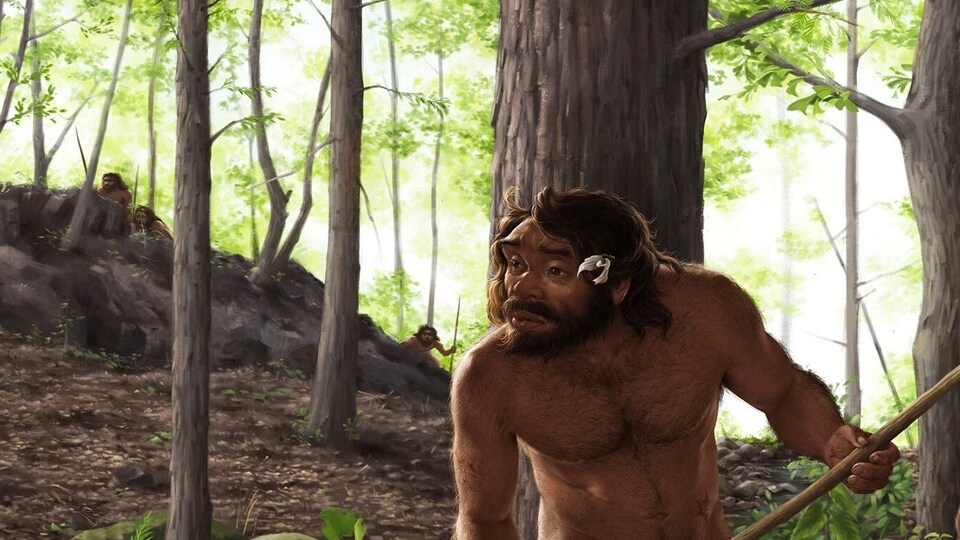
Yunxian skull discovery
The Yunxian skulls were first uncovered in Hubei Province in 1989 and 1990. Both were heavily damaged, making it difficult for the researchers to place them on the human family tree.
For many years, the skulls were assumed to belong to Homo erectus. But with 3D scanning and computer modeling, researchers from China and the UK have managed to “undo" the damage and study the skull in detail.
Also read: Prince Harry and Prince William reunite at Windsor Castle in resurfaced video. Watch
What scientists found
The reconstruction shows features of both earlier and later hominids. Researchers noted that Yunxian 2 has a thick brow ridge and a long braincase, like Homo erectus, but included a larger brain volume and a flatter face, traits that are linked to more advanced humans. Researchers now believe Yunxian 2 represents an early form of Homo longi, a close relative of modern humans and Neanderthals.
“From the very beginning, when we got the result, we thought it was unbelievable,” said Professor Xijun Ni of Fudan University, who co-led the analysis, told the BBC. “But we tested it again and again to test all the models, use all the methods, and we are now confident about the result, and we’re actually very excited.”
A revised timeline
Based on the new findings, researchers estimate that Neanderthals split from the common lineage around 1.38 million years ago, with Homo sapiens diverging roughly 1.32 million years ago. That doubles the timeframe scientists had previously worked with, which placed the split at about 500,000 to 700,000 years ago.
Professor Chris Stringer from London’s Natural History Museum, part of the study team, told The Guardian that “This changes a lot of thinking because it suggests that by one million years ago our ancestors had already split into distinct groups, pointing to a much earlier and more complex human evolutionary split than previously believed.”
The research findings have not gone unchallenged. According to the BBC, Dr. Aylwyn Scally of Cambridge University said the timing estimates are “very difficult to do” and that more fossil or genetic evidence is needed to be sure. If the findings are correct, it would mean that the Neanderthals, Homo longi, and early Homo sapiens may have coexisted for almost a million years, possibly interbreeding and sharing traits.
FAQs:
What is the Yunxian 2 skull?
Yunxian 2 is a fossilized human skull discovered in China in 1990. It dates back about one million years and was recently reconstructed using 3D scans.
Who led the study?
Researchers from Fudan University in China and the Natural History Museum in London co-led the study.
What species did it belong to?
Scientists say Yunxian 2 likely belonged to Homo longi, a sister species closely related to both Homo sapiens and Neanderthals.
What’s next?
Experts say more fossils and genetic data are needed to confirm the revised timeline.